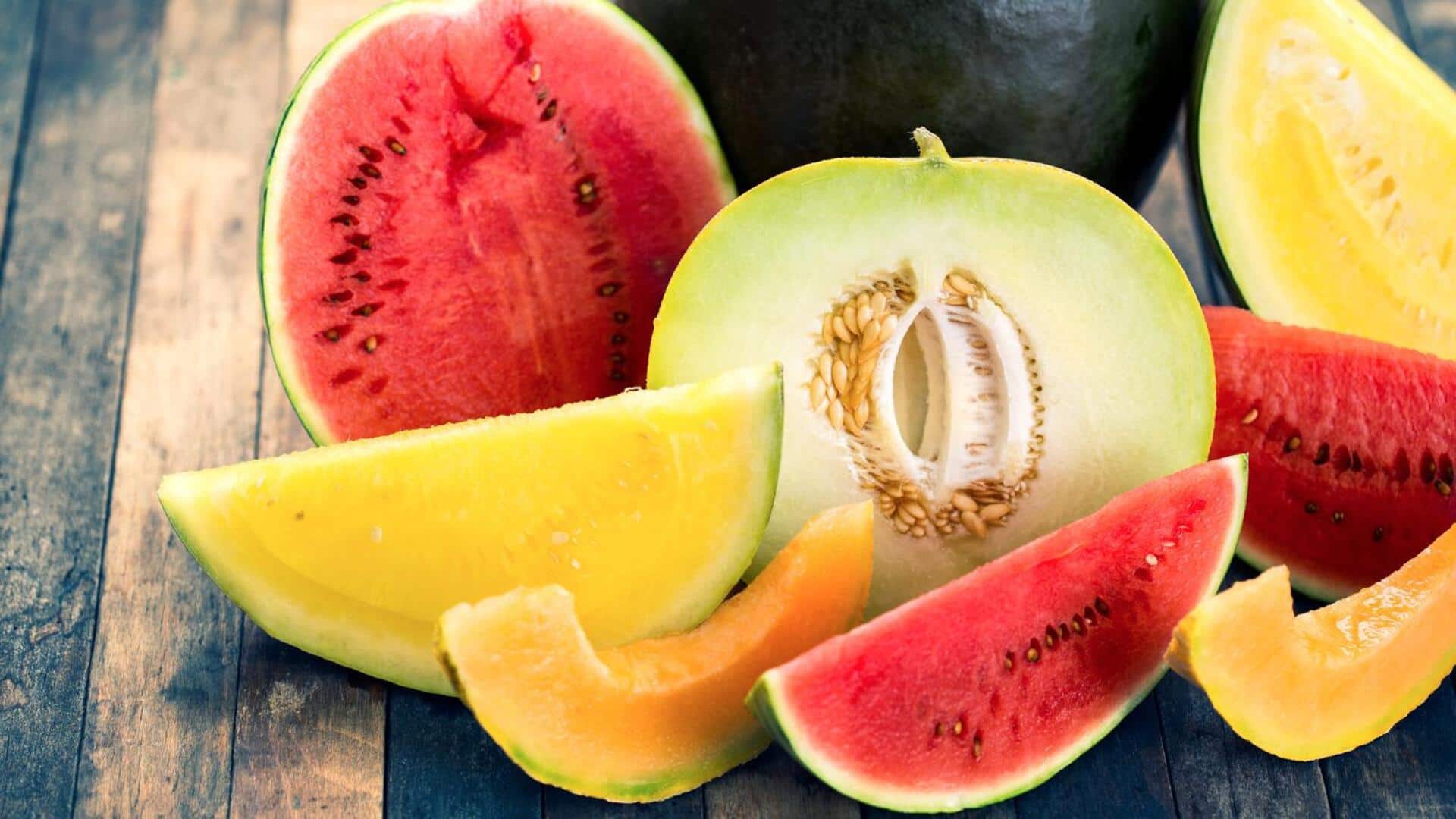
Watermelon v/s cantaloupe: Which is better for hydration?
What's the story
Watermelons and cantaloupes are two of the most popular fruits, especially in the summer. Both are juicy, refreshing, and loaded with nutrients. But if you want to compare their nutritional profiles, which one comes out on top? Here is a look at the vitamins, minerals, and other health benefits that make each fruit unique. Let us find out which one is healthier.
#1
Vitamin content comparison
Watermelons are a great source of vitamin C, giving you about 21% of your daily recommended intake per cup. They also provide some vitamin A through beta-carotene. Cantaloupes, on the other hand, are richer in vitamin A, with about 109% of the daily value per cup due to their high beta-carotene content. They also provide a good amount of vitamin C, but less than watermelons do.
#2
Hydration benefits
Both watermelons and cantaloupes are great for hydration, as they are mostly made up of water. Watermelons have about 92% water content, while cantaloupes have about 89%. This makes them perfect for keeping you hydrated during hot weather or after workouts. Their high water content also makes them low-calorie snacks that can help you maintain your weight.
#3
Mineral content analysis
When it comes to minerals, both fruits provide potassium, which is important for heart health and muscle function. Watermelons give about 5% of the daily value per cup, while cantaloupes provide a higher amount at about 10%. Cantaloupes also provide more magnesium than watermelons, which helps with bone health and energy production.
#4
Antioxidant properties
Watermelons are famous for their lycopene content, an antioxidant linked to lowering the risk of certain cancers and heart disease. Cantaloupes are rich in antioxidants like beta-carotene, which promote eye health by lowering the risk of macular degeneration. Both fruits provide unique antioxidant benefits that promote overall health in different ways.