5 breathtaking rock formations in Western Australia
What's the story
Western Australia is home to some of the most stunning rock formations in the world. These natural wonders are a testament to the region's geological history and offer a unique glimpse into the Earth's past. From ancient gorges to towering cliffs, these formations attract tourists and geologists alike. Exploring these sites gives you an opportunity to witness nature's artistry and learn about its formation over millions of years.
#1
The Bungle Bungles: A natural marvel
The Bungle Bungles are located in Purnululu National Park and are famous for their beehive-like structures. These sandstone domes have been formed over 350 million years, showcasing stripes of orange and black. The park is a UNESCO World Heritage site, attracting visitors with its unique landscape and diverse wildlife. A visit here offers opportunities for hiking, photography, and appreciating the natural beauty of this remarkable formation.
#2
Kalbarri National Park: A geological wonder
Kalbarri National Park is famous for its dramatic cliffs that rise over 100 meters above the Murchison River. The park's rock formations have been carved by wind and water over millions of years, creating stunning views from various lookout points. One of the most popular spots is Nature's Window, where you can see through a natural rock archway, framing the river below.
#3
Wave Rock: Nature's sculpture
Wave Rock is an iconic formation that resembles a giant ocean wave frozen in time. Located near Hyden, this granite structure stretches over 110 meters long and stands about 15 meters high at its peak. The rock has been shaped by erosion over thousands of years, making it an incredible sight for visitors who can walk along its curved surface or explore nearby attractions, like Mulka's Cave.
#4
Pinnacles Desert: A surreal landscape
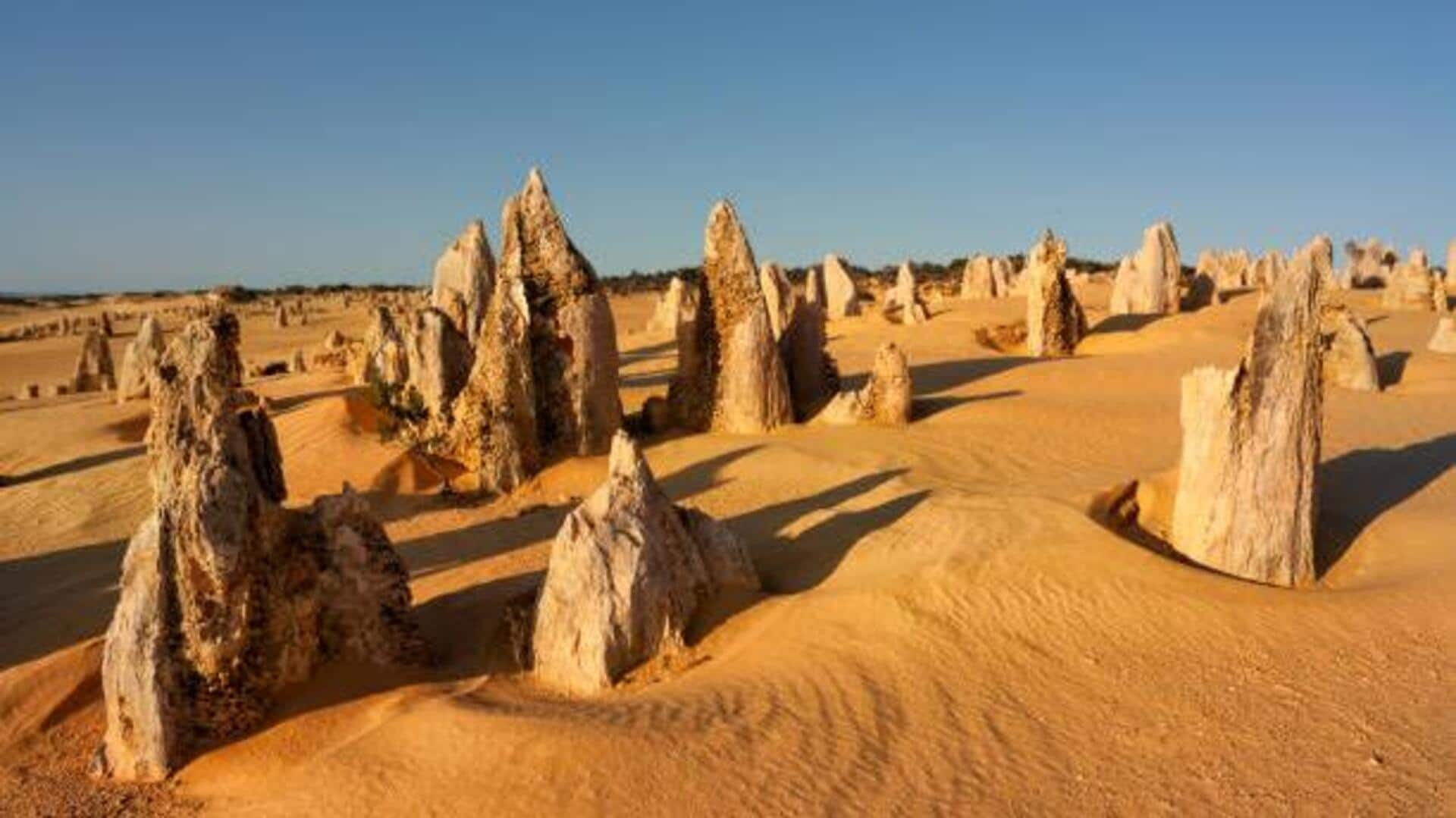
The Pinnacles Desert in Nambung National Park features thousands of limestone pillars rising from golden sands like ancient sentinels. These eerie formations were formed from seashells, which were compacted into limestone millions of years ago, before being exposed through erosion processes. This surreal landscape provides stunning photo opportunities, especially during sunrise or sunset, when shadows play dramatically across the desert floor.