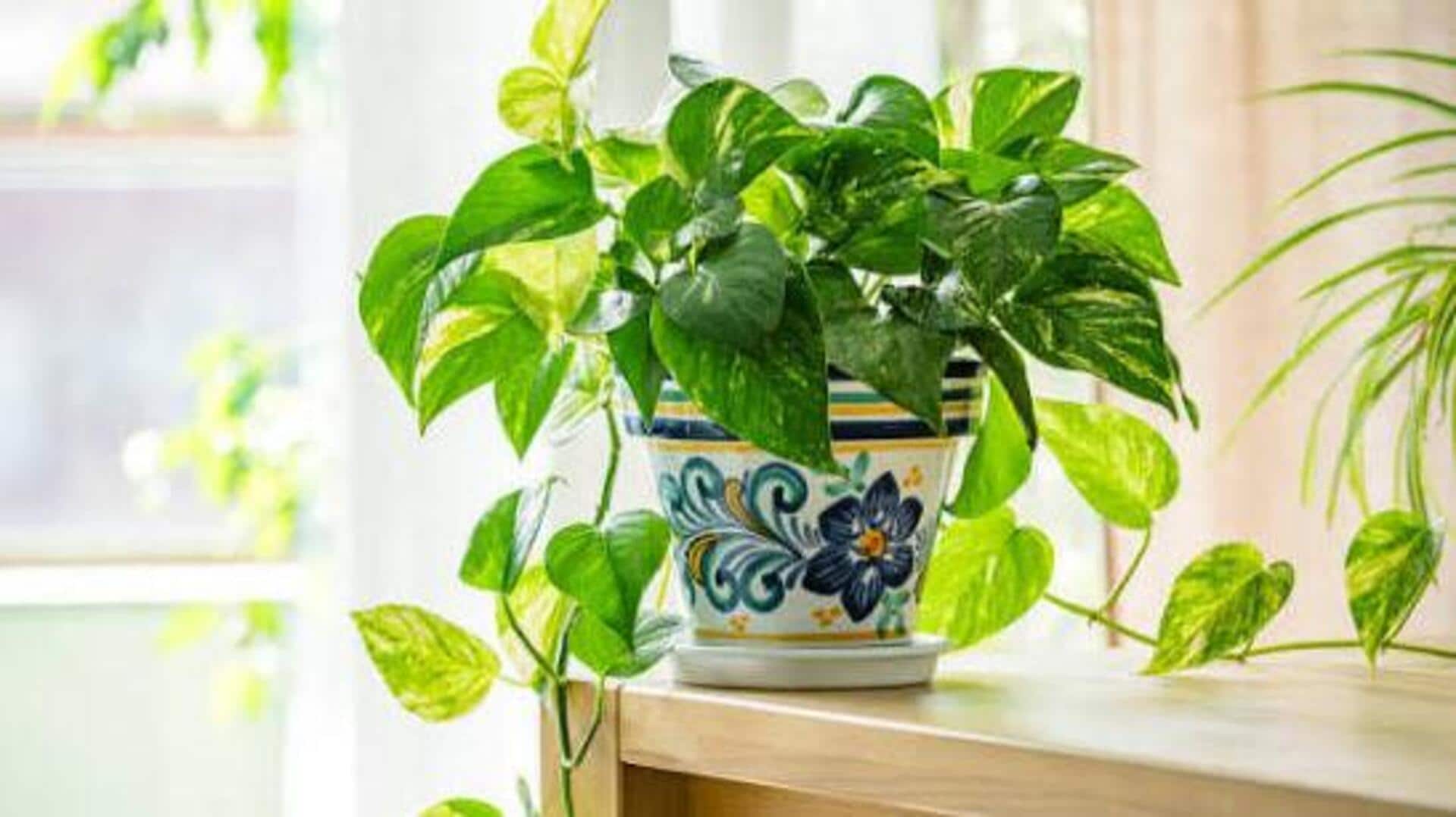
Uneven plant growth? This simple trick may help
What's the story
Rotating potted plants is a simple, yet effective, way to ensure their healthy growth. By changing the position of the plants, you can ensure they receive even sunlight exposure, which is crucial for photosynthesis. This practice helps in preventing the plants from leaning toward one side and promotes balanced growth. Here are some insights into how rotating your potted plants can benefit them.
Sunlight
Benefits of sunlight exposure
Plants need sunlight to perform photosynthesis, which is how they convert light into energy.
If you rotate your potted plants regularly, you ensure that all parts of the plant get equal exposure to sunlight.
This even exposure helps in healthy leaf development and prevents uneven growth patterns.
It also minimizes the chances of some parts getting too much or too little light, both of which can be detrimental.
Leaning
Preventing plant leaning
When a plant does not get enough light on all sides, it tends to lean toward the light source.
This leaning can weaken the stem over time and affect the plant's overall structure.
By rotating your potted plants every few weeks, you encourage them to grow upright instead of leaning to one side.
This practice helps maintain a strong stem and an aesthetically pleasing shape.
Nutrients
Enhancing nutrient absorption
Rotating potted plants also aids in even nutrient absorption through the soil.
If you keep the same side facing up for too long, certain areas may become depleted of nutrients while others remain rich.
By rotating the pot, you distribute nutrient usage evenly across all parts of the soil, ensuring that every part of the root system has access to necessary nutrients.
Roots
Encouraging robust root systems
A well-structured root system is key to a healthy plant.
Rotating potted plants ensures that roots get equal access to moisture and nutrients throughout the soil.
This even distribution encourages robust root growth, which supports the plant's stability and nutrient uptake capabilities.
A strong root system is key to a plant's health, making rotation an important practice for gardeners.