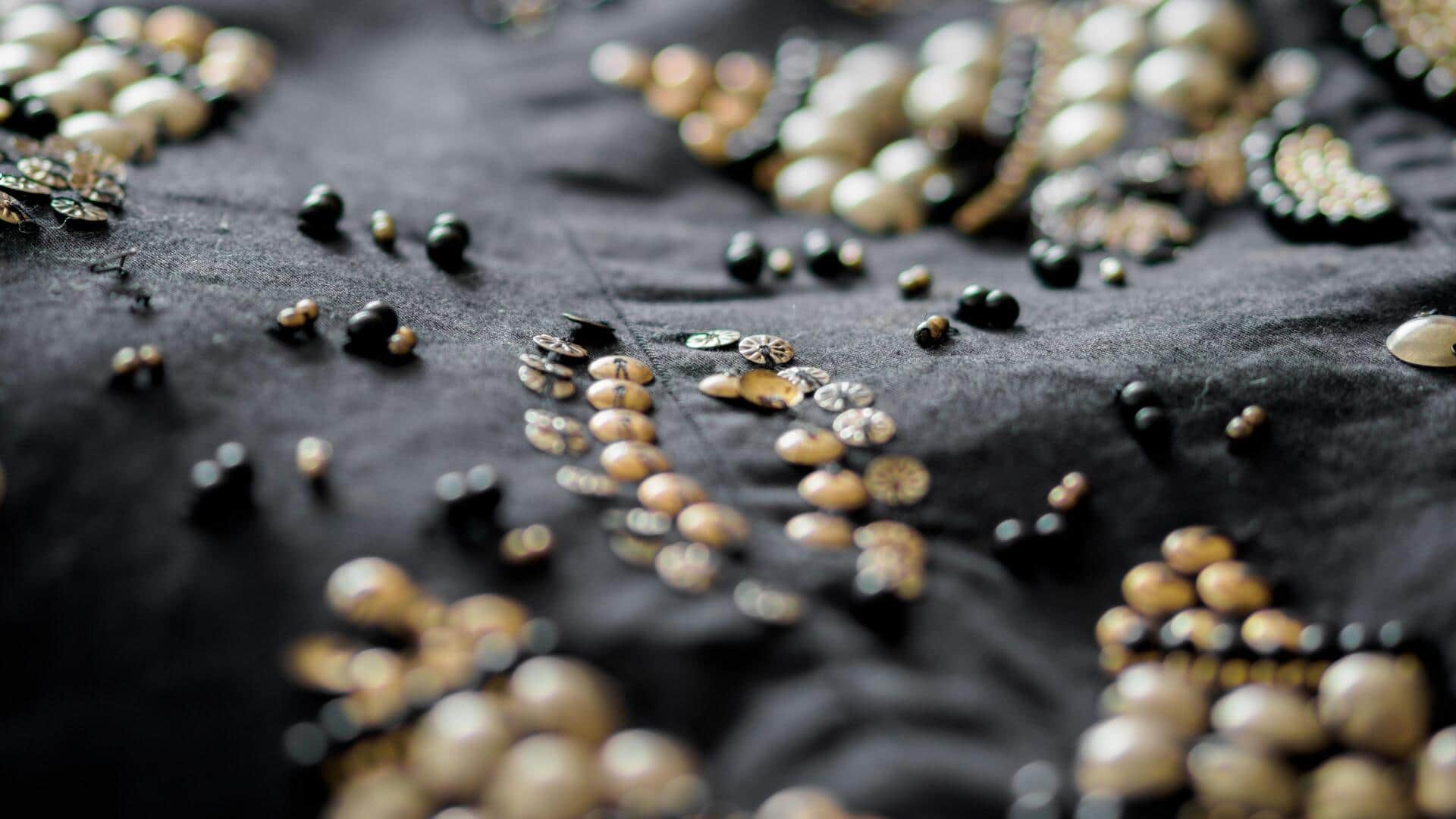
The fascinating story behind zardozi embroidery
What's the story
Zardozi is an ancient Persian embroidery art that has been captivating people with its intricate designs and luxurious materials. The craft involves sewing gold or silver thread onto fabric, creating stunning patterns that have adorned royal garments and ceremonial attire for centuries. With its roots tracing back to Persia, zardozi has evolved over the years, but its essence remains unchanged. Here's a look at the history, techniques, and modern-day relevance of this exquisite art form.
#1
Historical roots of zardozi
Zardozi's history goes back to ancient Persia, where it was used to embellish the clothing of royalty and nobility.
The word zardozi comes from Persian words zar (gold) and dozi (stitching).
The craft was brought to India by the Mughals in the 16th century, who further popularized it by using it on their garments and accessories.
Its historical significance is evident in various museums showcasing pieces adorned with this intricate embroidery.
#2
Techniques involved in zardozi
The zardozi technique involves using metallic threads made of gold or silver to create elaborate designs on fabric.
Artisans use different stitches like couching, chain stitch, and satin stitch to achieve detailed patterns.
Sometimes, semi-precious stones or pearls are added for extra embellishment.
The process requires immense skill and patience, as every piece is handcrafted meticulously by artisans.
#3
Modern applications of zardozi
Today, zardozi is not just limited to traditional garments; it has found its way into contemporary fashion as well.
Designers incorporate this embroidery technique into modern attire like sarees, lehengas, jackets, and more, giving them a touch of elegance without compromising on style.
Apart from clothing, zardozi also embellishes home decor items like cushions or wall hangings.
#4
Preserving the art form
Preserving zardozi requires supporting artisans who keep the craft alive through generations.
Initiatives promoting skill development ensure that younger generations learn this intricate art form.
By investing in authentic pieces made by skilled craftsmen, consumers contribute to the preservation efforts while enjoying timeless beauty.