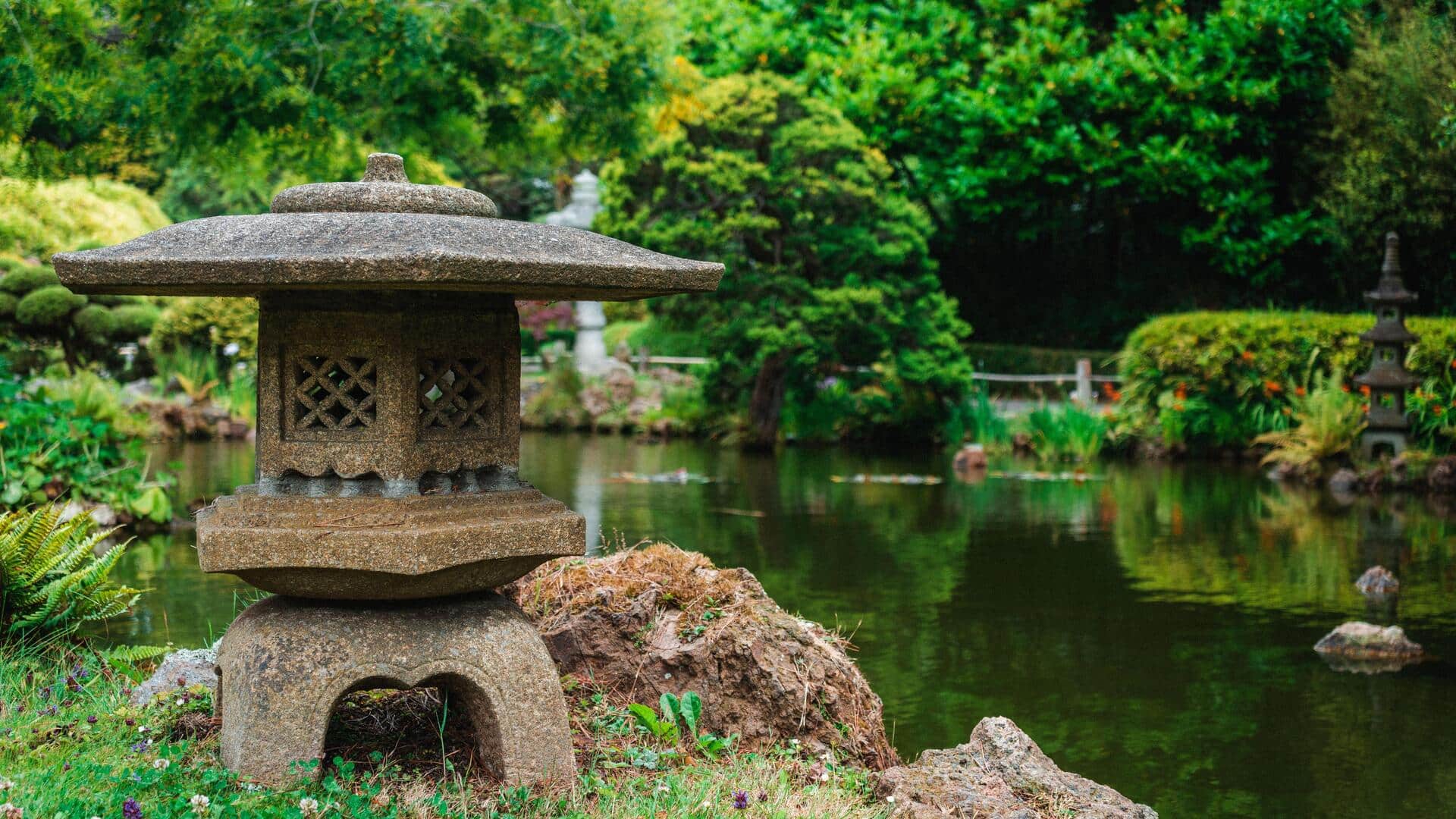
5 beautiful elements of a Japanese zen garden
What's the story
Japanese zen gardens, or karesansui, are famous for their minimalist beauty and symbolic elements. These gardens are designed to promote peace and meditation, using a few carefully chosen elements. Each element in a zen garden has its own significance, contributing to the overall harmony and tranquility of the space. Here are five fascinating elements that make these gardens so special.
#1
Raked gravel patterns
Raked gravel in zen gardens symbolizes water. The patterns made by raking are meant to represent ripples on the surface of water.
This element is also used to encourage meditation, as the act of raking can be calming and meditative.
The patterns can be changed regularly, giving a dynamic aspect to the garden while maintaining its serene atmosphere.
#2
Rocks and stones
Rocks and stones are vital in Japanese zen gardens, representing mountains or islands in an ocean.
Their placement is deliberate and symbolizes natural landscapes.
The size, shape, and arrangement of these stones are carefully considered to maintain balance within the garden's design.
They provide focal points for contemplation and add texture to the garden's layout.
#3
Moss patches
Moss patches add a lush green contrast to the otherwise monochromatic palette of a zen garden.
They symbolize growth and resilience, while also adding a soft texture underfoot or visually when viewed closely.
Moss requires little maintenance but adds significantly to the aesthetic appeal by softening hard lines created by rocks or gravel paths.
#4
Water features
While traditional zen gardens may not have water bodies, they often have elements that mimic water, like pebbles arranged in circular patterns or small ponds with colorful fish swimming around them.
These features add life to the otherwise still environment, creating movement through sound (like flowing water) or sight (with colorful fish).
#5
Bamboo fences
Bamboo fences are commonly used in Japanese zen gardens, as they provide privacy without completely obstructing views from outside intrusions.
These include passersby looking into private spaces.
They also act as windbreakers during storms, protecting delicate plants inside from harsh weather conditions outside their boundaries.