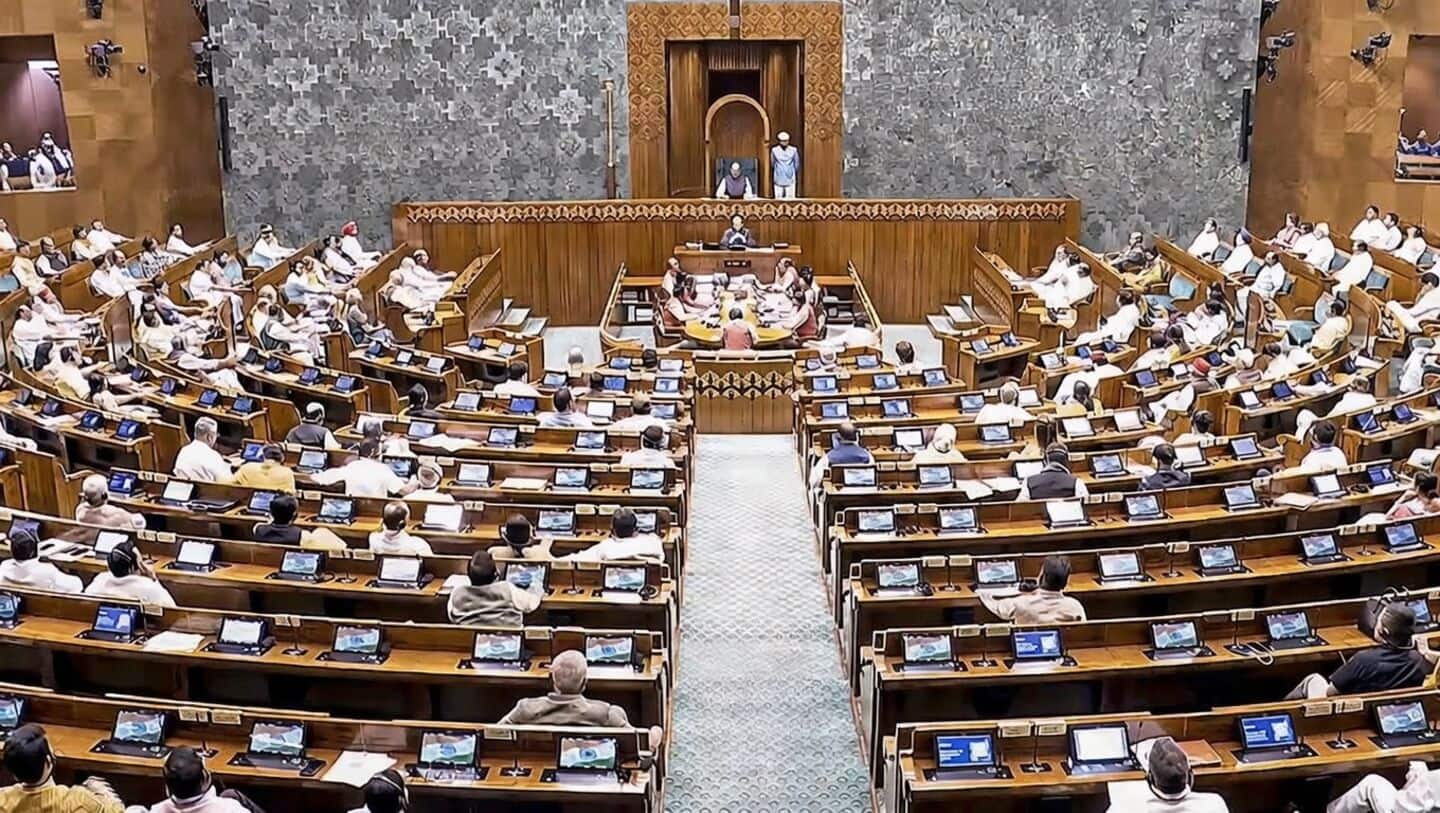
Government proposes expanding Lok Sabha from 543 to 850 seats
What's the story
The central government has proposed a major expansion of the Lok Sabha, increasing its strength from 543 to 850 seats. A draft bill has been shared with Members of Parliament (MPs) for discussion and passage. The proposal includes allocating 815 seats to states and reserving 35 for Union Territories. If passed, these changes would come into effect from the 2029 general elections.
Women's quota
Proposed expansion aligns with Women's Reservation Act
The proposed expansion is also in line with the Nari Shakti Vandan Adhiniyam (Women's Reservation Act), which seeks to reserve one-third of Lok Sabha seats for women lawmakers.
The act was passed by Parliament in September 2023 and signed into law by President Droupadi Murmu on September 28, 2023.
To implement this reservation, a fresh Census and delimitation exercise was initially required.
Delinking proposal
Government plans to delink reservation from census, delimitation exercise
The government now proposes to delink the reservation from a fresh Census and delimitation exercise. Instead of waiting for the delayed 2021 Census, it plans to use 2011 Census data.
This would allow implementation by the 2029 general elections.
The expansion plan also includes increasing seats for Scheduled Castes and Tribes, with SC seats rising from 84 to up to 136 and ST seats increasing from 47 to up to 70.
Constituency redrawing
Delimitation Bill to redraw constituency boundaries
The government plans to introduce a Delimitation Bill, 2026, to redraw constituency boundaries based on 2011 Census data.
This is aimed at ensuring southern states like Kerala and Tamil Nadu aren't penalized for successful population control efforts.
The exercise would be done on a pro-rata basis to maintain relative political weight across states.
Legislative process
Constitutional amendments required for implementation
Implementing these changes requires two major constitutional amendments, which would need a two-thirds majority in both Houses of Parliament.
The Budget Session of Parliament has been extended for this purpose, with a special three-day sitting planned to discuss and pass the proposed amendments.
If passed, these changes would significantly alter India's parliamentary representation and pave the way for greater women's representation in the Lok Sabha.