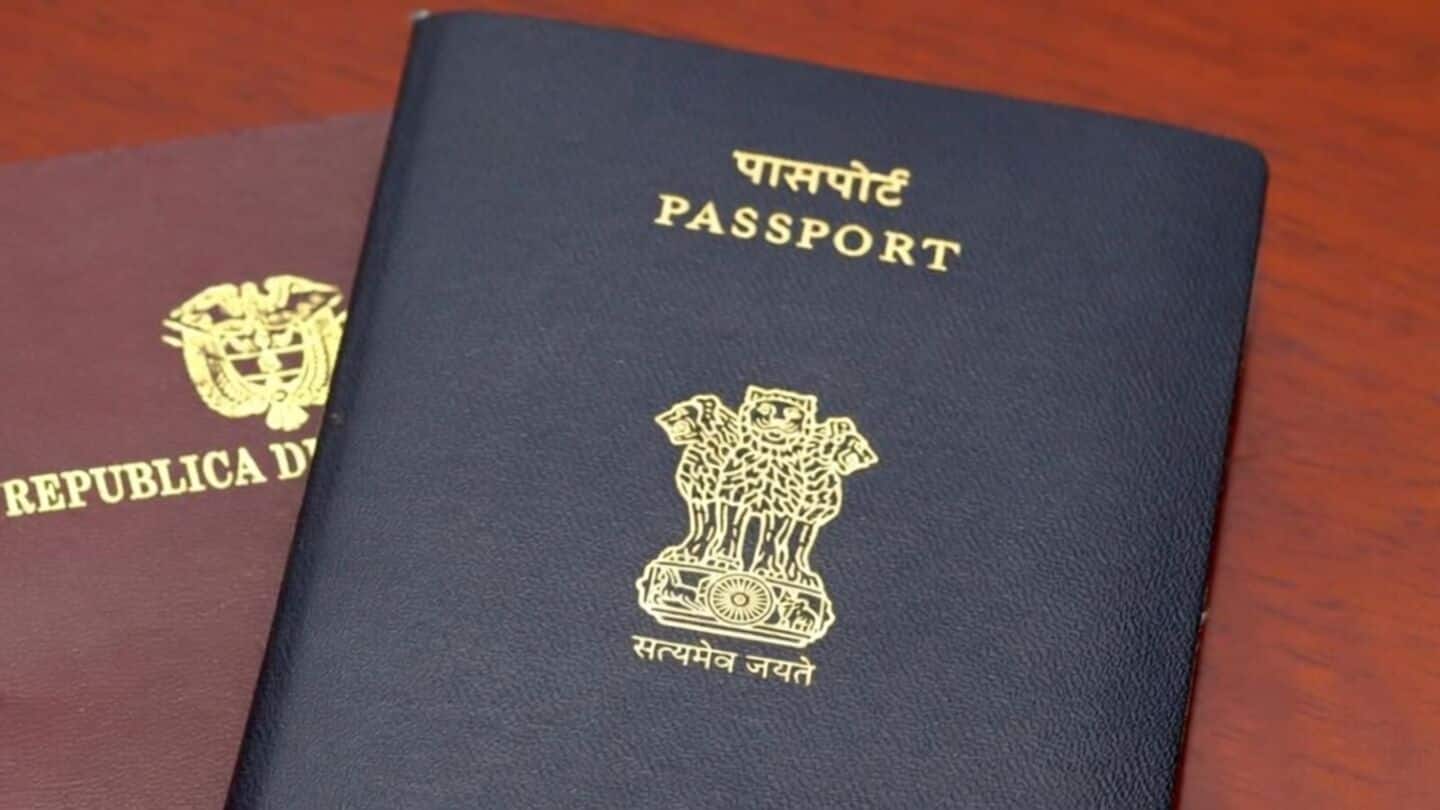
Indian passport valid document for SIR identification: Election Commission clarifies
What's the story
Indian passports are still among the 12 valid supporting documents for voter registration under the Special Intensive Revision (SIR) process, Election Commission of India (ECI) officials said on Thursday. This comes after a controversy over a recent clarification by the Ministry of External Affairs (MEA). The MEA had clarified that an Indian passport is not conclusive proof of citizenship but a travel document under the Passports Act, 1967.
Voter registration
Passport continues to be valid document for voter registration
"Passport was and continues to be one of the documents to establish identity," an official said.
The clarification comes amid confusion over whether a passport can be used as proof of citizenship.
On Thursday, the Indian government clarified that the passport has never been proof of citizenship.
It defended its position by citing Section 20 of the Passports Act, 1967. This section allows the Centre to issue passports or travel documents to non-citizens if deemed necessary in the public interest.
Legal authority
Former foreign secretary weighs in on debate
Former Foreign Secretary Nirupama Menon Rao also weighed in on the debate, saying that while an Indian passport is powerful evidence of citizenship in everyday life and international travel, it is not conclusive proof in legal disputes.
She said the MEA's statement was legally correct, as a passport is issued under the Passports Act, while citizenship status falls under the Citizenship Act.
"One law regulates the document; the other regulates the legal status," she said.
Policy clarification
PIB's December 2019 explainer on NRC, CAA
On December 20, 2019, the Press Information Bureau (PIB) released an explainer on the National Register of Citizens (NRC) and Citizenship Amendment Act (CAA).
It clarified that citizenship can be proved by documents related to date and place of birth.
The PIB stressed that citizenship is decided under the Citizenship Rules, 2009, which are based on the Citizenship Act, 1955.
Citizenship in India can be obtained in five ways: by birth, descent, registration, naturalization, or incorporation of territory.