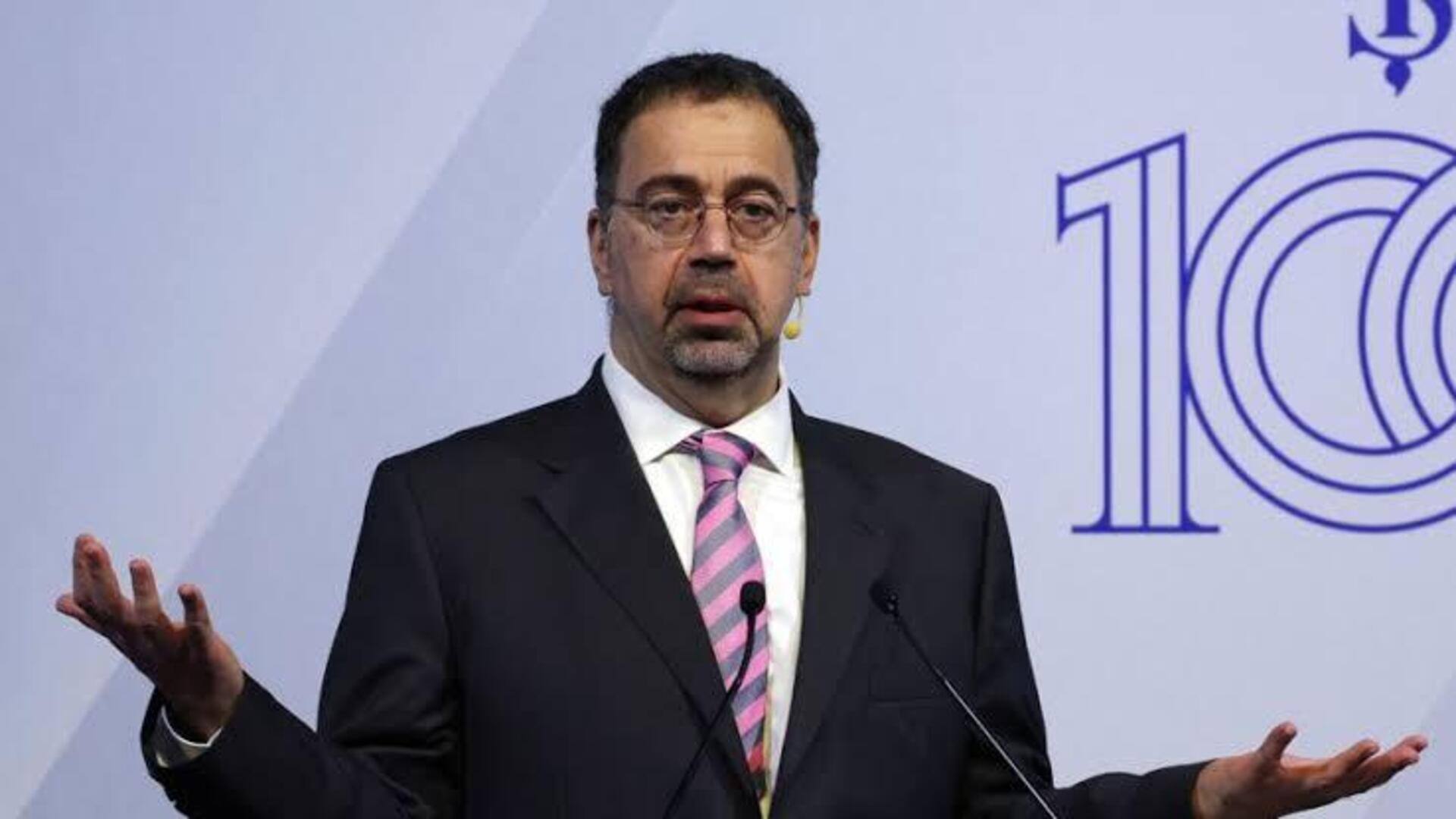
AI could replace just 5% human work, says Nobel winner
What's the story
Nobel Prize-winning economist Daron Acemoglu has said that artificial intelligence (AI) could replace only about 5% of the work currently done by humans in the next decade. The estimate comes from Acemoglu's long-standing cautious view on AI-driven automation. He believes that only a small share of tasks are likely to be profitably automated in the near term, contrary to popular predictions. Acemoglu received Nobel Memorial Prize in Economic Sciences in 2024.
Task replacement
Acemoglu's estimate explained
Acemoglu's 5% estimate isn't a prediction of job loss, but rather a projection of task replacement by AI.
This is an important distinction as most jobs involve a mix of tasks.
For instance, workers could use AI for some parts of their work while continuing to perform other tasks that require human judgment or interaction with others.
Implementation hurdles
Redesigning workflows for AI integration takes time
Acemoglu also highlights the practical challenges of implementing AI.
Even if a model can do a task, companies have to redesign workflows, integrate the tech into existing systems, and ensure its output is reliable. These changes can take longer than developing the AI itself.
He advocates for "pro-worker AI," where technology is designed to enhance employee capabilities rather than just reduce their numbers.
Economic disparity
Economic impact of AI and productivity gains
The economic impact of AI has been uneven, with companies benefiting the most from it using it to redesign workflows and pursue new growth opportunities.
Acemoglu's research suggests that AI could lead to a modest increase in overall productivity over a decade, but the gains could vary significantly across industries.
Some repetitive, predictable computer-based tasks may continue to be automated.