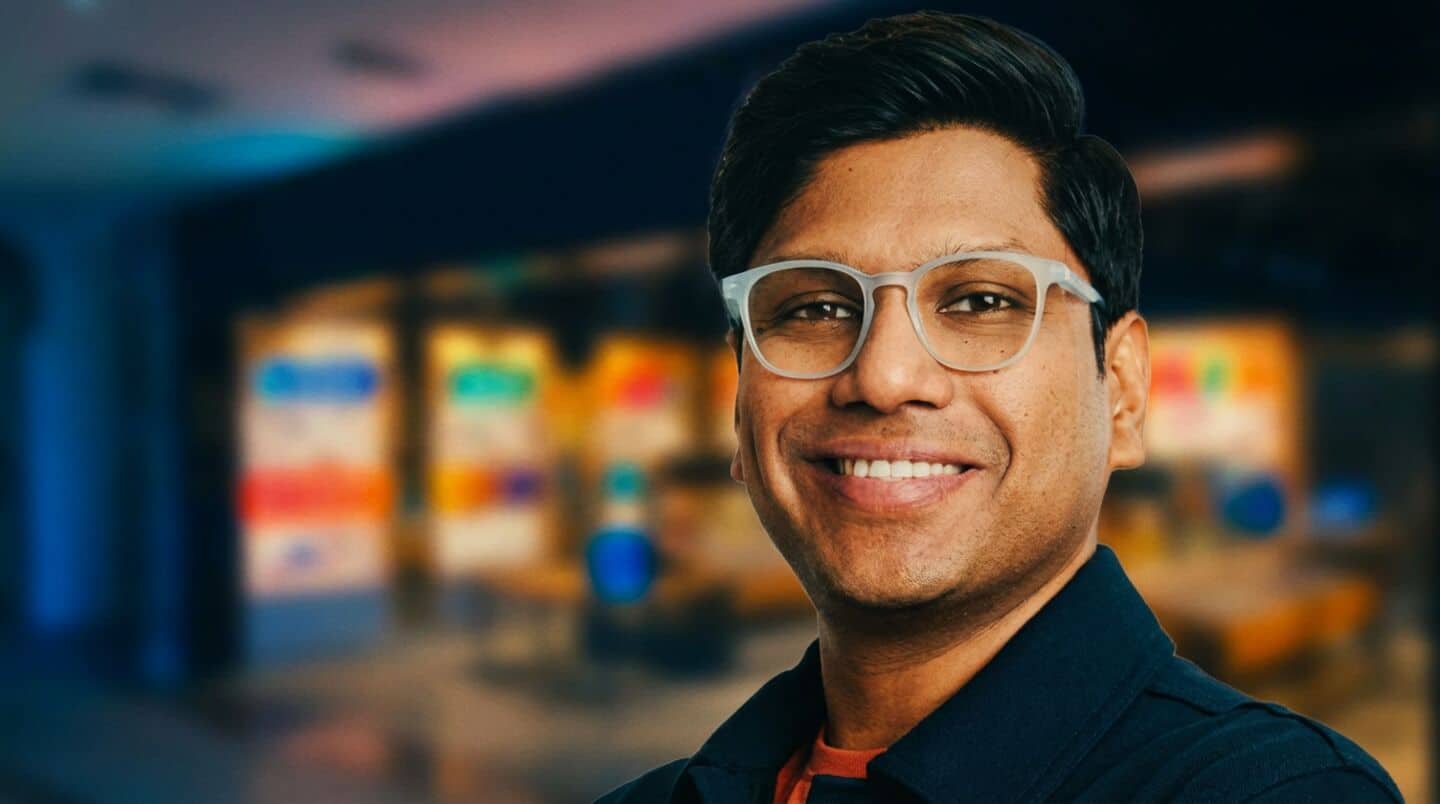
Gen AI boosts productivity 10x at Lenskart, says CEO
What's the story
Eyewear retailer Lenskart is leveraging artificial intelligence (AI) to revolutionize its operations. The company's co-founder and CEO Peyush Bansal said in an interview with Moneycontrol that AI is now the backbone of their business. "Our early AI bets are paying off now," he said, referring to investments made years ago in analytics and data platforms.
Strategic growth
Early AI investments paying off
Bansal noted that their early investments in AI capabilities through Tango Eye and GeoIQ are now paying off.
These systems, initially intended for store productivity and site selection, have become more powerful with generative AI advancements.
"What that investment could do was 'X' till last year — now it is able to do 10X," he said, attributing much of the recent operational gains to "GenAI or agentic AI."
Profit surge
Lenskart's Q3 FY26 earnings soar
Lenskart recently reported a massive jump in its fiscal third-quarter earnings, with consolidated net profit rising over 70 times year-on-year to ₹131 crore.
Revenue from operations also saw a 38.3% YoY increase to ₹2,307.7 crore in Q3 FY26.
The company credits AI-led optimization for reshaping execution across its network and enabling next-day delivery coverage expansion to over 60 cities from around 30 last year.
Efficiency boost
AI streamlining warranty servicing and diagnostics
Bansal said AI has made processes like warranty servicing faster and cheaper. He also emphasized the technology's role in scaling diagnostics, which is key to Lenskart's strategy of expanding the eyewear market by attracting first-time users.
The company opened 169 new stores in India during Q3FY26, a 160% increase over the same period last year. Of these, 71 new stores or 41% were opened exclusively in Tier-2 and beyond markets.
Market insight
Understanding Tier-2 and beyond markets with AI
Bansal said AI is helping Lenskart understand these markets with far greater precision than traditional retail analytics allowed.
He emphasized the technology's ability to provide insights into consumer behavior beyond just sales or transaction data.
This includes analyzing social media trends, local content preferences, and influencer followings to identify emerging style preferences and map localized demand patterns for specific markets.