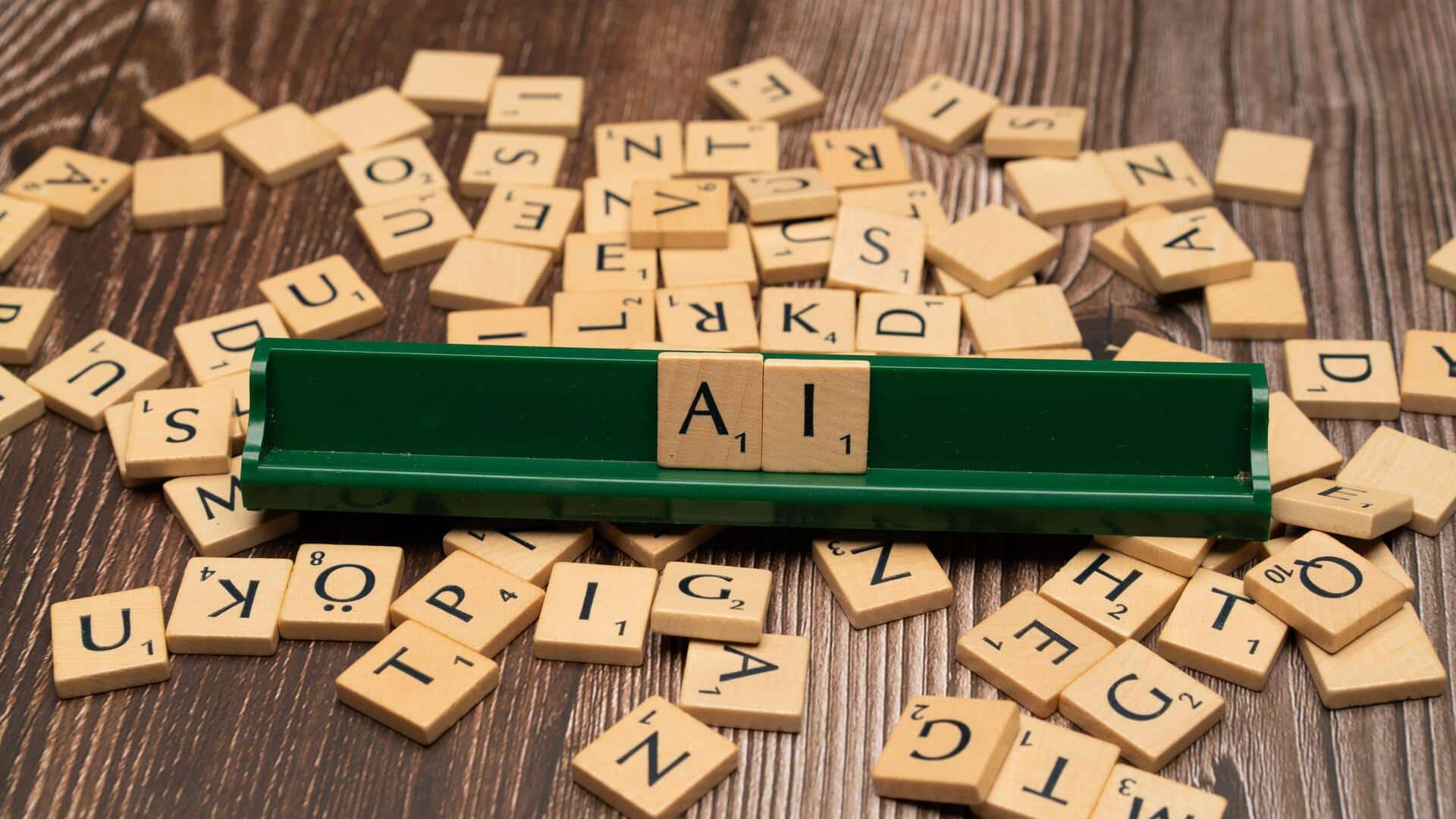
How AI helps translators save time and improve accuracy
What's the story
AI tools are revolutionizing the translation industry by improving both speed and accuracy. They automate initial drafts, extract terminology, and help with human review processes. The best way to go is by combining AI's ability to handle a lot with human expertise to refine tone and critical details. This hybrid workflow ensures translations are not only fast but also nuanced and reliable, meeting high standards expected by clients.
#1
Automating first-pass drafts
AI tools are great at creating first-pass drafts on the fly, giving translators the ability to focus on polishing the content, rather than writing it from scratch.
With this first step automated, they can work on multiple projects at the same time, without sacrificing quality.
This is especially useful in large-scale projects where time is a major concern.
#2
Extracting domain-specific terminology
Tools like YesChat's AI Term Extractor are a game-changer when it comes to consistency, as they can pull out domain-specific terminology from texts efficiently.
With this feature, you can ensure that all your translations are uniform, whether in one project or a field of work.
Consistent terminology is key to keeping things clear, professional, and accurate, which ultimately satisfies clients' high expectations in the translation industry.
#3
Supporting human review processes
While AI handles volume well, human review is important to ensure accuracy for sensitive materials.
Translators polish these AI-generated drafts by incorporating cultural nuances and stylistic elements that machines may miss.
The coming together of both man and machine delivers translations that are not just accurate but also culturally fitting.
#4
Enhancing collaboration with Smartcat
What sets Smartcat apart is its ability to combine AI translation capabilities with features that make it easier for translators to collaborate on localization projects.
Its integration options make it easier to manage website content, bringing all the pieces together, and making it easier for teams to collaborate across platforms and languages.
#5
Leveraging large language models for research
Large language models such as ChatGPT have proven to be a great support system for translators, whether it is for terminology research, summarization, drafting, or consistency checks.
These models offer valuable insights into language use patterns, enabling translators to create more accurate translations, all while spending less time on manual research tasks.