How to design your own dress? Ask these AI tools
What's the story
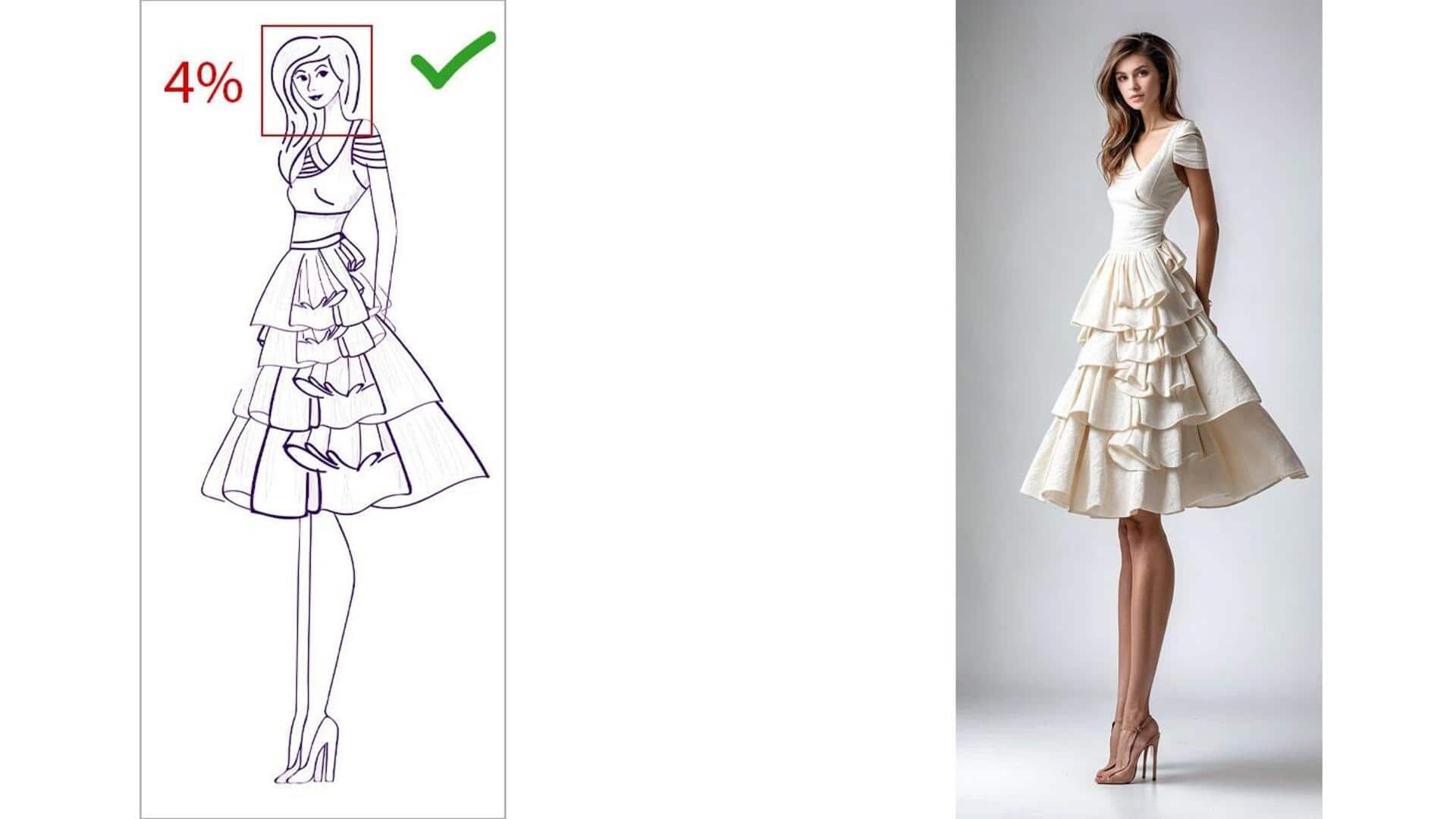
Artificial intelligence is transforming garment design by speeding up ideation, prototyping, and iteration processes. This enables designers to prioritize innovation while trimming timelines from weeks to days. Tools such as NewArc.ai, The New Black, and Style3D create sketches, patterns, and 3D visuals from text prompts or rough drawings. These tools boost creativity via trend analysis and provide infinite variations.
#1
NewArc.ai: A comprehensive design engine
NewArc.ai is a versatile AI design engine for fashion brands that transforms sketches into photorealistic images. It facilitates virtual try-ons and generates custom patterns in minutes.
This way, the tool shortens design cycles by up to 70%, curbs sampling costs by 30%, and frees designers from mundane tasks.
By simply uploading a hand-drawn sketch, designers can get production-ready visuals on digital models without physical samples.
#2
The New Black: Rapid ideation tool
Where The New Black really shines is in rapid ideation. Converting text descriptions or sketches into polished clothing designs for lookbooks and concepts, it saves a whole lot of time.
Designers can just type in ideas like "structured jacket with asymmetrical hems," and the AI will provide high-quality visuals with on-trend elements.
This way, they can quickly prototype and refine concepts without much manual work.
#3
Style3D: Accurate garment simulation
By making use of fabric physics, Style3D offers highly accurate garment simulation, thereby reducing the need for physical iterations by 40%.
The tool also supports sketch-to-pattern workflows, letting designers create hundreds of unique patterns based on current trends or specific parameters.
This way, Style3D helps spark fresh collections and minimize waste. It allows designers to explore new ideas efficiently and sustainably in fashion.
Tip 1
Other notable AI options in fashion design
Other notable options are Look.ai for fast fashion visuals, Patterned.ai for generating motifs, and Refabric for integrated pattern-making and 3D mockups.
Small factories tell us they see 50% faster design times with these tools for mockups and suggestions.
By automating pattern grading, color schemes, and virtual fitting, these tools boost artistry while allowing independent designers to compete with bigger brands through agile workflows.