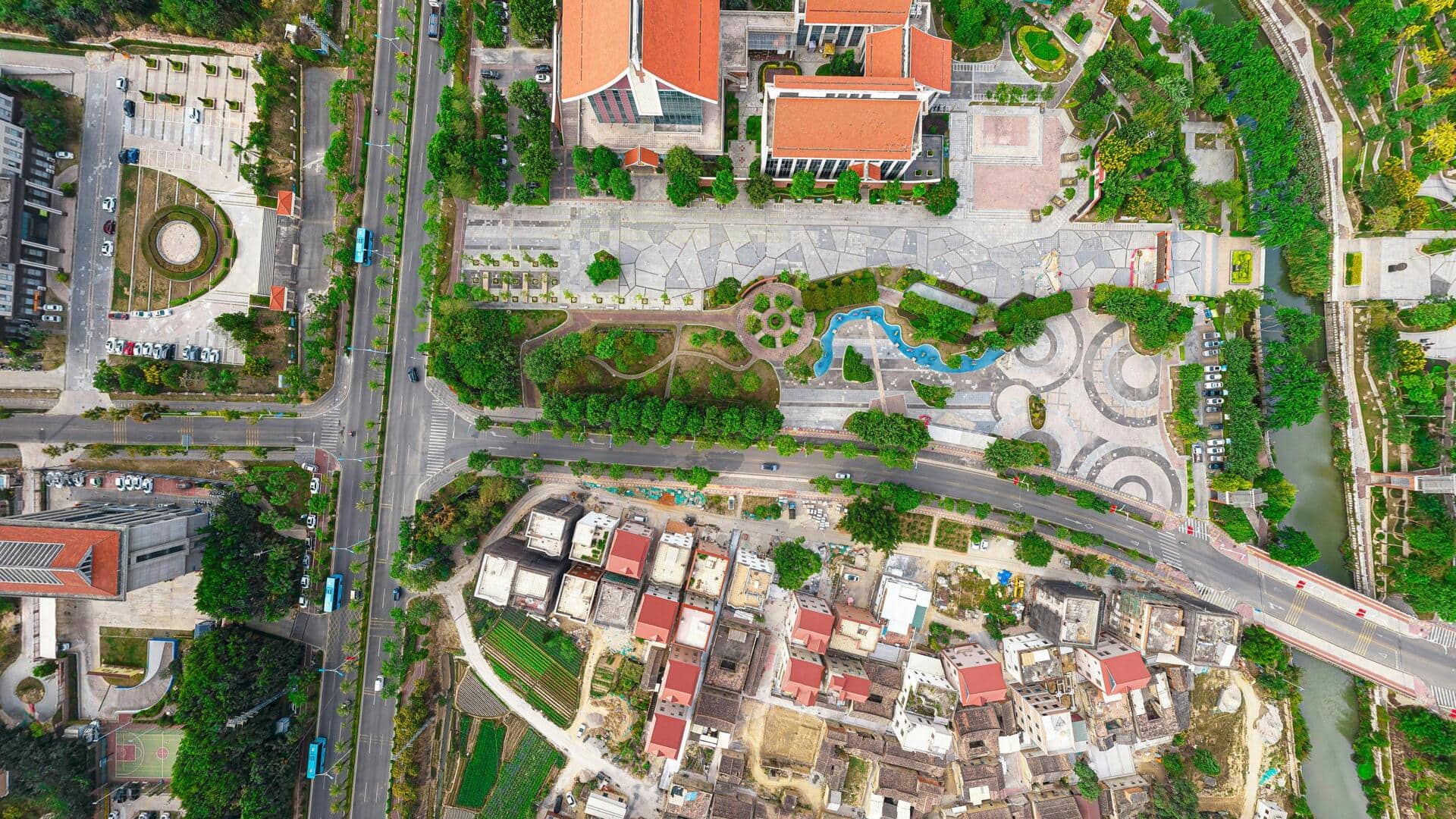
How AI is helping cities become more sustainable
What's the story
As sustainable cities pose an increasing challenge, urban planners are increasingly looking toward artificial intelligence to solve them. AI tools make environmental engagement easier by simplifying data analysis, encouraging community participation, and improving sustainability. They give planners the ability to predict environmental impacts, engage communities through visualization, and optimize resource management.
#1
Predicting environmental impacts with AI
AI tools like GeoAI and CityEngine let urban planners foresee environmental effects ahead of the project.
By analyzing satellite imagery and climate data, these tools help flag risks like urban heat islands or flood-prone zones at the very beginning of the planning process.
This foresight helps planners make informed design decisions that avoid environmental blunders and improve sustainability.
#2
Enhancing community participation
Generative AI tools such as UrbanistAI make real-time visualization of urban design ideas easy, turning community members into active participants of planning processes.
By enabling residents to visualize proposed changes in real time, these tools foster engaging dialogues between planners and communities regarding environmental priorities.
This way, residents can see how sustainability decisions affect their neighborhoods.
#3
Data-driven engagement strategies
Natural language processing platforms mine huge amounts of social media comments and survey responses to analyze what communities actually care about regarding environmental issues.
Tools like GoVocal can help understand how public sentiment trends around policies, making sure that interventions are based on actual community priorities, not mere assumptions.
Further, AI-powered chatbots provide 24/7 answers to project or initiative-related queries.
#4
Optimizing resources for sustainability
Smart waste management systems leverage AI to optimize routes efficiently, cutting down on emissions from collection vehicles.
Similarly, demand forecasting predicts electricity and water requirements before shortages arise, allowing for preemptive integration of renewable energy sources and conservation techniques.
These technologies transform resource management from reactive measures to proactive stewardship.