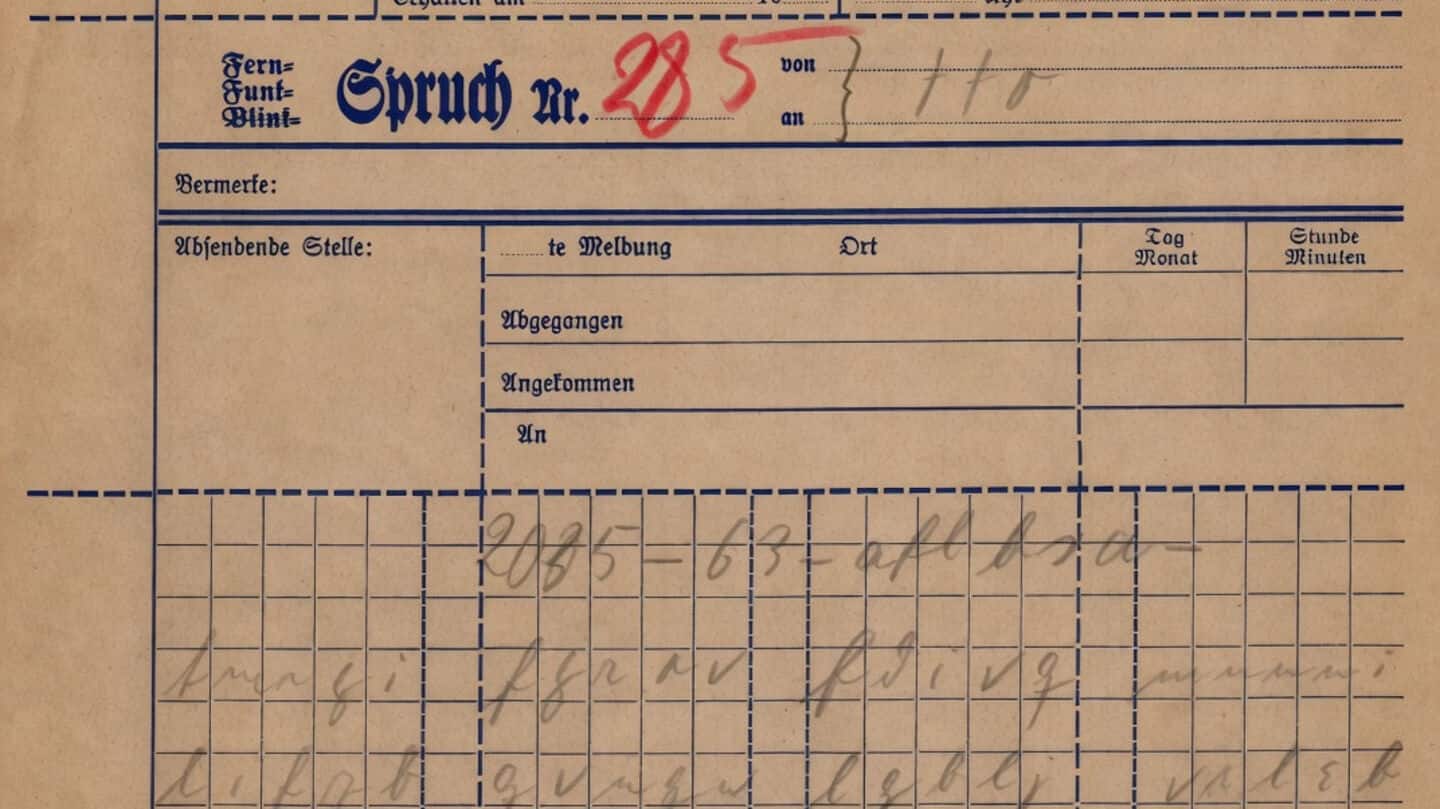
Astra, Opus crack 2 Enigma messages left unsolved for decades
What's the story
Two artificial intelligence (AI) models, OpenAI's GPT-6 Astra and Anthropic's Claude Opus 5, have successfully cracked long-unsolved messages encoded by the infamous Enigma machines used by Nazi Germany during World War II. This achievement was made possible by developer Carter Leffen and cryptanalyst Jack Willis, who employed Astra and Claude Opus 5, respectively. The breakthrough highlights the potential of advanced AI technology in solving complex historical puzzles.
Context
Why does this story matter?
Computer pioneer Alan Turing is famous for the Turing Test, which explores whether machines can be distinguished from humans through conversation.
But during World War II, his most significant challenge was cracking Nazi Germany's Enigma code.
Turing and his team developed the Bombe, an early computing machine that helped Britain decode Enigma messages. However, some messages remained unsolved due to transcription errors.
Now, Leffen and Willis say they have cracked two such messages using LLMs from OpenAI and Anthropic.
AI prowess
Astra's breakthrough
Leffen, a developer, simply asked Astra to look for an unbroken message in a database of Enigma messages and decode it.
The model did just that, after conducting its own archival research and building a simulator of the Enigma machine.
It eventually decoded a message that had stumped researchers since 2005.
Leffen even used Astra to create an interactive website explaining the entire problem.
AI collaboration
Claude Opus 5's contribution
On September 21, Willis used Claude Opus 5 to decode a different unsolved message.
Unlike Leffen's approach with Astra, Willis provided more guidance to Claude.
The model was able to use the known signature of a particular officer's name as a clue to crack the code.
This shows how human-AI collaboration can also yield results in deciphering complex codes.
Remaining puzzles
Implications of AI breakthroughs
There are only seven unbroken Enigma messages left, along with one message where the plaintext is known but the code remains unbroken.
The successful decoding of these long-unsolved messages by Astra and Claude Opus 5 demonstrates the potential of AI models in solving complex cryptographic puzzles.
It also opens up new avenues for further research and exploration in this field.