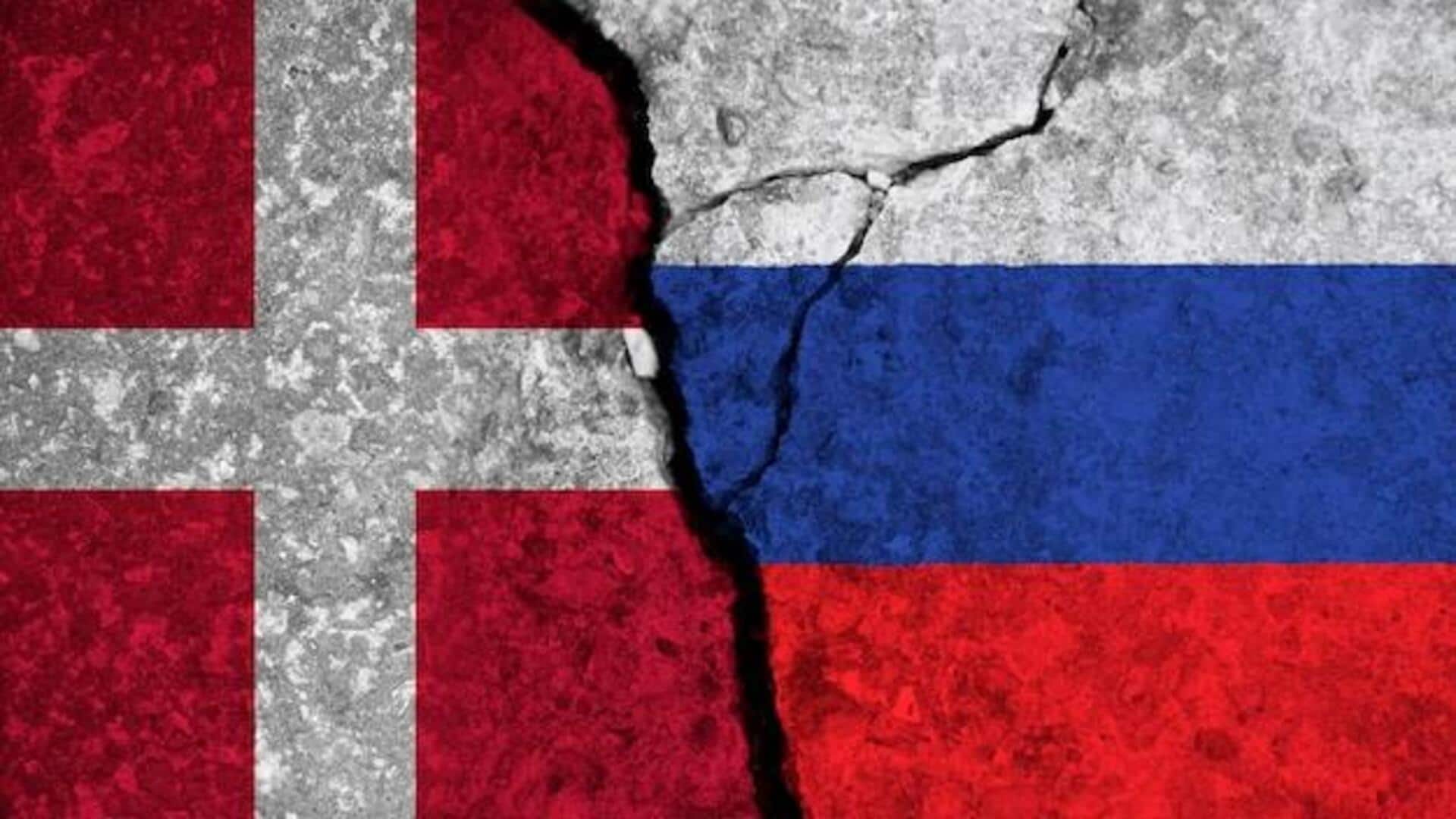
Denmark accuses Russia of carrying out destructive cyberattacks
What's the story
Denmark has accused Russia of carrying out two major cyberattacks, calling them "destructive and disruptive." The Danish Defense Intelligence Service (DDIS) said there is "very clear evidence" that these attacks are part of a hybrid war. The first attack targeted a Danish water utility, while the second was a series of distributed denial-of-service (DDoS) attacks on Danish websites ahead of municipal and regional council elections in November.
Attack details
Pro-Russian groups linked to cyberattacks
The DDIS has attributed the first attack to a pro-Russian group called Z-Pentest, while the second was carried out by NoName057(16), which has ties to the Russian state.
The DDIS said these groups are tools in Russia's hybrid war against the West.
"The aim is to create insecurity in the targeted countries and to punish those that support Ukraine," it added.
Election interference
Danish elections targeted by Russian cyber operations
The DDIS also noted that the Danish elections were likely used as a platform to gain public attention, a tactic seen in other European elections.
Thomas Ahrenkiel, director of the DDIS, said they are "very certain that these are pro-Russian groups that have connections to the Russian state."
Denmark's defense minister Troels Lund Poulsen condemned the attacks as "completely unacceptable," saying he was taking them "very seriously."
Diplomatic action
Denmark's response to cyberattacks and future plans
In response to the cyberattacks, Denmark's foreign office plans to summon the Russian ambassador for a meeting.
"It is completely unacceptable that hybrid attacks are carried out in Denmark by the Russian side," Poulsen said.
Despite limited damage from these attacks, Torsten Schack Pedersen, Minister for Resilience and Preparedness, stressed that they highlight vulnerabilities in Denmark's defense against such threats from Russia.
Cybersecurity concerns
Cybersecurity readiness questioned after cyberattacks
Pedersen also expressed doubts about Denmark's preparedness to handle such attacks from Russia, saying, "I think you have to be incredibly naive if you think we are at the top of cybersecurity."
The country had previously described drone incursions on its airports and military sites in September as a "hybrid attack."
These incidents exposed weaknesses in its defense capabilities and led to plans for a European "drone wall."