Shocker: This bird in US evolved during the COVID-19 pandemic
What's the story
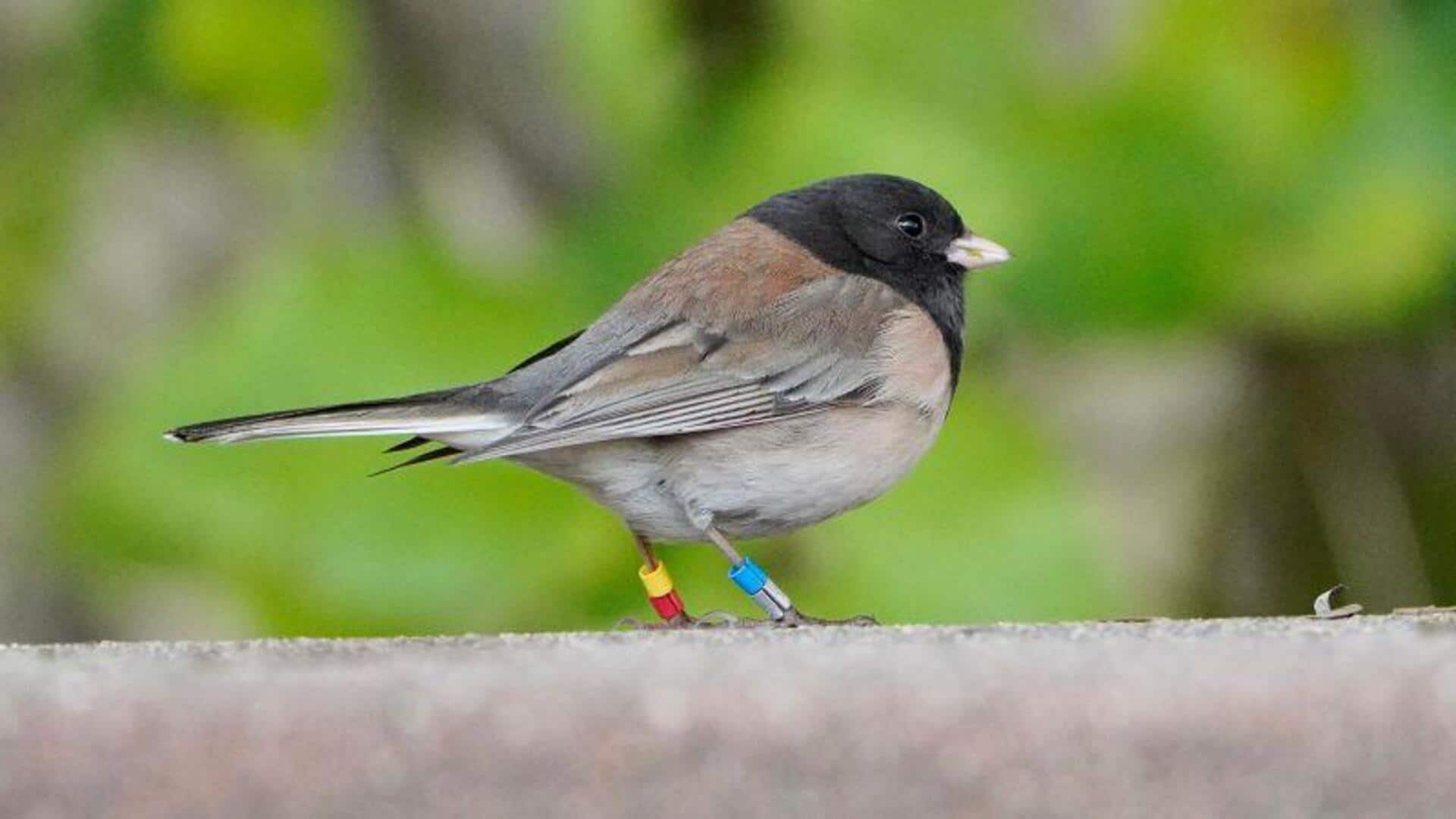
A recent study has found that the dark-eyed junco songbird underwent rapid evolution during the COVID-19 pandemic. The species started residing in urban environments like University of California, Los Angeles (UCLA) campus, due to climate change. Earlier, the birds had physical traits such as shorter and stubbier beaks for consuming human food scraps. However, during the pandemic, the beaks of newly hatched birds became longer.
Evolutionary shifts
Beak size changes linked to pandemic restrictions
The researchers at UCLA observed that juncos born in 2021-2022 had longer beaks, similar to their mountain-dwelling counterparts.
However, as pandemic restrictions eased and students returned to campus, these traits changed again.
By 2023-2024, the beaks of new birds were shortened once more.
This rapid evolutionary change surprised the researchers who had expected such a shift would take much longer.
Interconnection
Human impact on wildlife evolution
The study highlights how human activities can influence wildlife evolution.
The researchers, Pamela Yeh and Eleanor Diamant, stressed that humans and nature are interconnected parts of the ecosystem.
Yeh, a professor of ecology and evolutionary biology at UCLA who has studied juncos for three decades, said this research shows rapid evolution could be happening right under our noses if we looked closely enough.
Evolutionary patterns
Rapid evolution observed in other bird species
The phenomenon of rapid evolution isn't limited to juncos. Other studies have also documented similar changes in birds like great tit birds and hummingbirds.
These studies noted that these species evolved longer beaks in response to their feeding habits at bird feeders.
This further emphasizes the adaptability of avian species to changing environmental conditions and human influences.
Future research
Genetic analysis to confirm beak shape changes
The researchers are now working on genetic analysis of the birds' blood to confirm if the beak shape changes were due to genetic alterations.
This study highlights a subtle human-induced factor, college campus operations, that can lead to adaptive evolution in wildlife.
The long-term datasets used in this research were crucial in detecting these rapid changes in physical traits like beak shape.