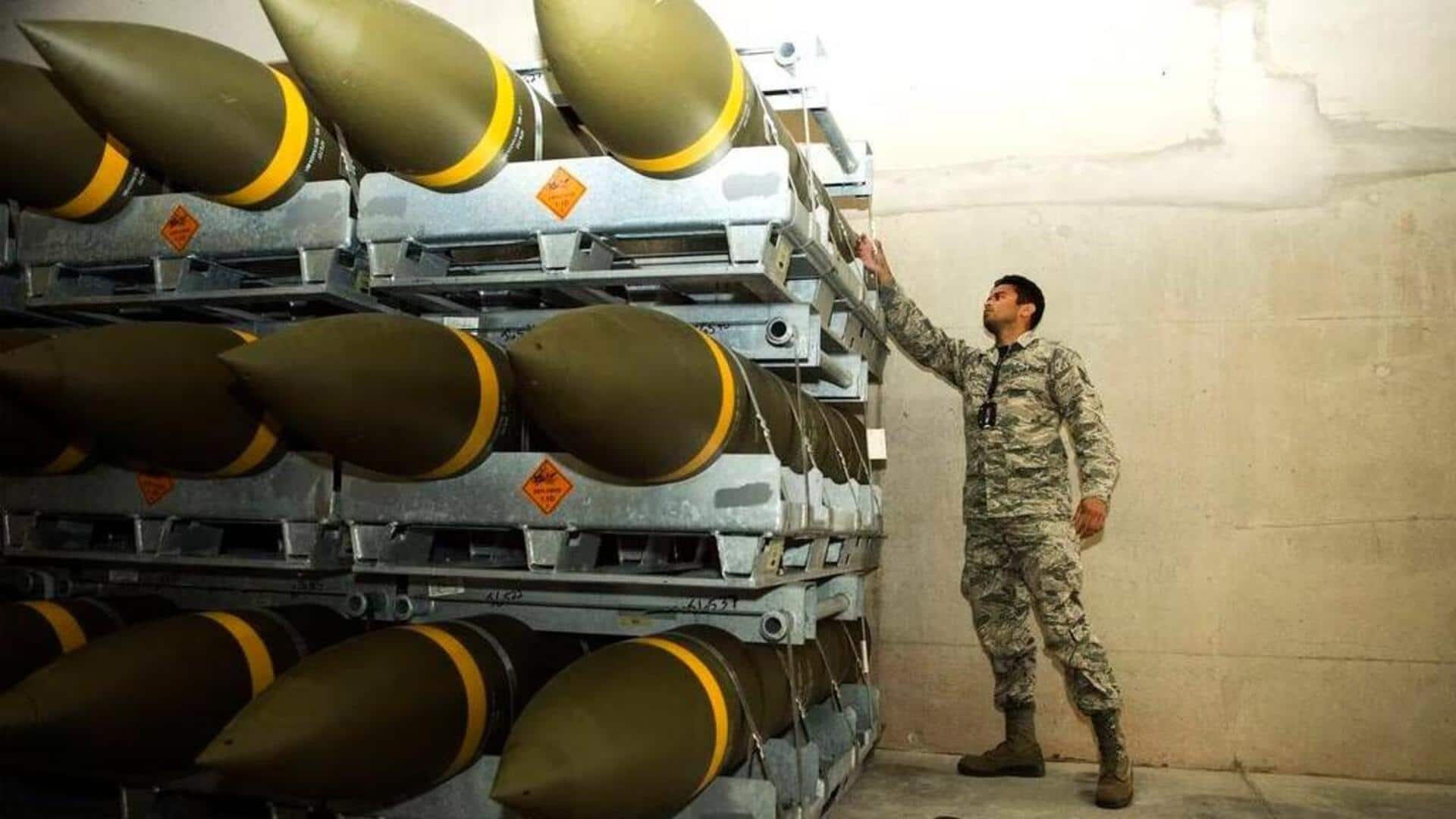
Robots join India Army's firefighting force at ammunition depots
What's the story
The Indian Army is all set to revolutionize its firefighting capabilities with the induction of 18 indigenously developed Fire Fighting Robots (FF BOTs). The ₹62 crore deal was signed on January 13 by the Army's Directorate of Capability Development and Ahmedabad-based start-up Swadeshi Empresa Pvt Ltd. The robots will be deployed at ammunition depots and other high-risk locations, such as armament depots and fuel storage sites.
Tech specs
FF bots: A technological leap in firefighting
The FF BOTs are unmanned ground vehicles that can operate in extreme conditions such as intense heat, toxic smoke, explosions, and structural collapse.
They will be deployed at armament and ammunition depots, fuel storage sites, and other sensitive facilities across various cantonments.
The induction process is expected to start from the first week of April.
Operational capabilities
Advanced features of the FF bots
The FF BOTs come with optical and thermal cameras that provide live feeds to operators.
This way, they can detect hotspots and hidden flames even in low-visibility or smoke-filled areas.
This technology enables a quicker initial response and assessment while keeping personnel at a safe distance from potential hazards.
International adoption
Global trend of robotic systems in firefighting
The Indian Army's procurement of FF BOTs is part of a larger global trend toward using robotic systems for firefighting, especially in industrial plants, oil refineries, nuclear facilities, and military sites.
These areas are prone to rapid fire escalation and pose a significant threat to life and critical infrastructure.
The FF BOT was originally developed under the Ministry of Defence's Innovations for Defence Excellence (iDEX) initiative for the Indian Navy.
Safety enhancement
FF bots to support human firefighters
The Indian Army has become the first service to acquire the FF BOTs, using provisions that allow one branch to procure iDEX products already tested and cleared by another.
The cross-service approach avoids duplicating development efforts and speeds up the adoption of proven indigenous technologies.
The contract includes a two-year warranty, five years of comprehensive maintenance, and on-site support for long-term integration into emergency response plans.