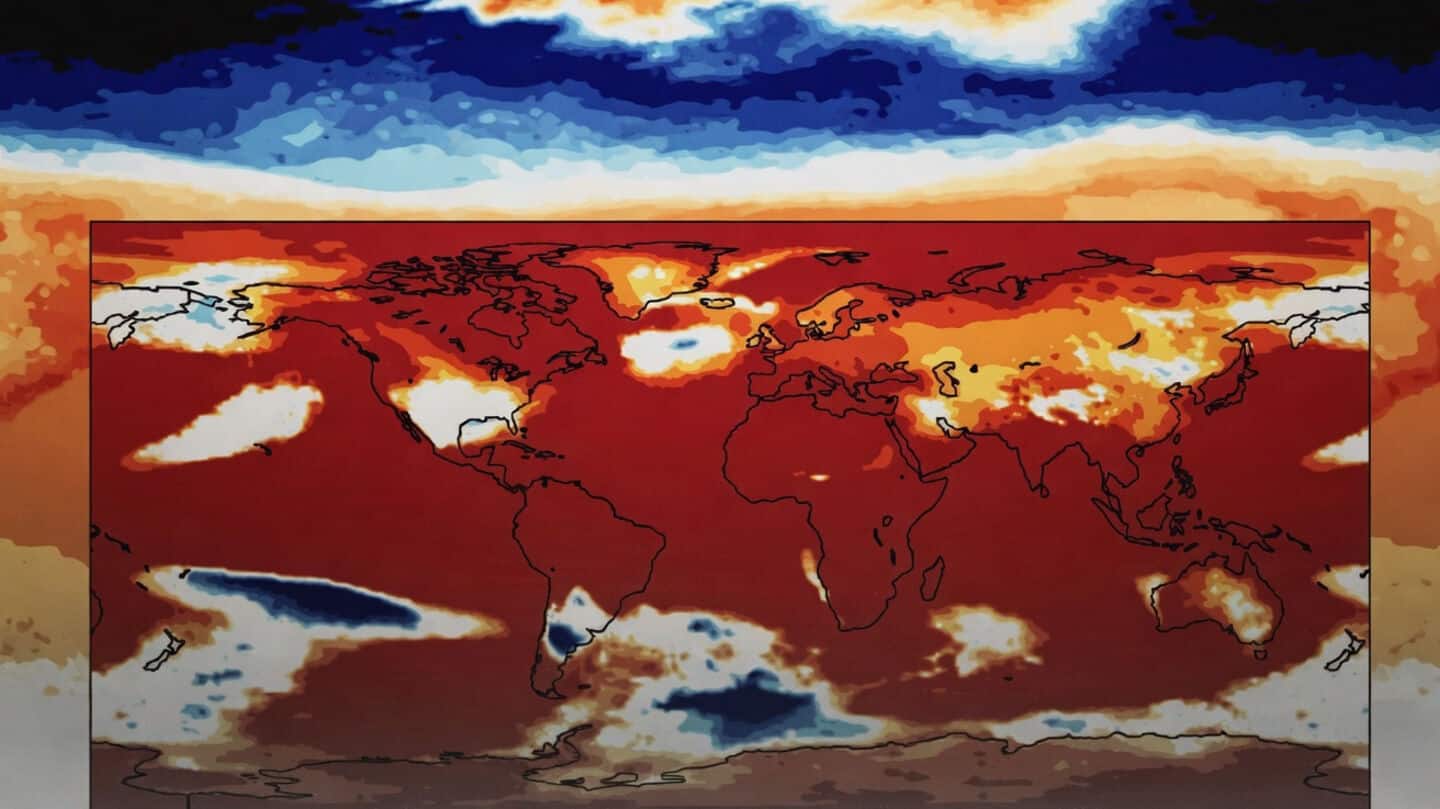
'Earth almost entirely in red' as Super El Niño intensifies
What's the story
Scientists have warned that the ongoing "Super El Nino" phenomenon is continuing to intensify, with the World Meteorological Organization (WMO) expecting it to peak in December and remain strong into spring 2027. This event is now pushing into unprecedented territory, with large areas of the planet expected to experience unusually warm conditions due to the Pacific Ocean releasing massive amounts of stored heat.
Global effects
'Earth almost entirely in the red'
The WMO predicts a near-100% chance that El Nino will last through February 2027.
US meteorologist Ryan Maue described the outlook in a post on X, writing: "New maps show Earth almost entirely in the red."
"El Niño continues at 'maximum power' into the winter with planetary heating dialled up everywhere except the United States."
WMO said the event could rank among the strongest observed since at least 1950.
WMO
Weather expert called it 'super-duper El Nino'
WMO Secretary-General Celeste Saulo said, "El Nino is firmly established and strengthening rapidly."
She explained that El Niño does not create new heat but rather releases heat that has collected beneath the ocean surface.
"The ocean it's drawing from is the warmest we've ever measured," Professor Saulo said. "There is simply more heat available to release."
Weather expert Leon Simons described the weather phenomenon as a "super-duper El Nino."
Record-breaking heat
Record-breaking temperatures and potential global impacts
The Nino 3.4 index has risen from 1.6°C above normal in June to 2.5°C above normal in August, indicating rapid strengthening of the event.
Climate scientist Zeke Hausfather noted that this year's El Niño has already broken historical temperature records, with anomalies now at 3.4°C above normal, higher than any previous event on record.
The combination of a strong El Nino and warm oceans could lead to heat extremes, floods, and droughts around the world for months to come.