Government clearance delay halts ISRO's 2 major satellite launches
What's the story
India's space program has hit an unexpected snag, with two key satellites, NVS-03 and GISAT-1A, awaiting government approval for launch. The Indian Space Research Organization (ISRO) has completed most pre-launch preparations for these missions at the Satish Dhawan Space Center (SDSC) in Sriharikota. However, the launches are on hold due to lack of clearance from the government.
Launch delay
GSLV Mk-II rocket in standby mode
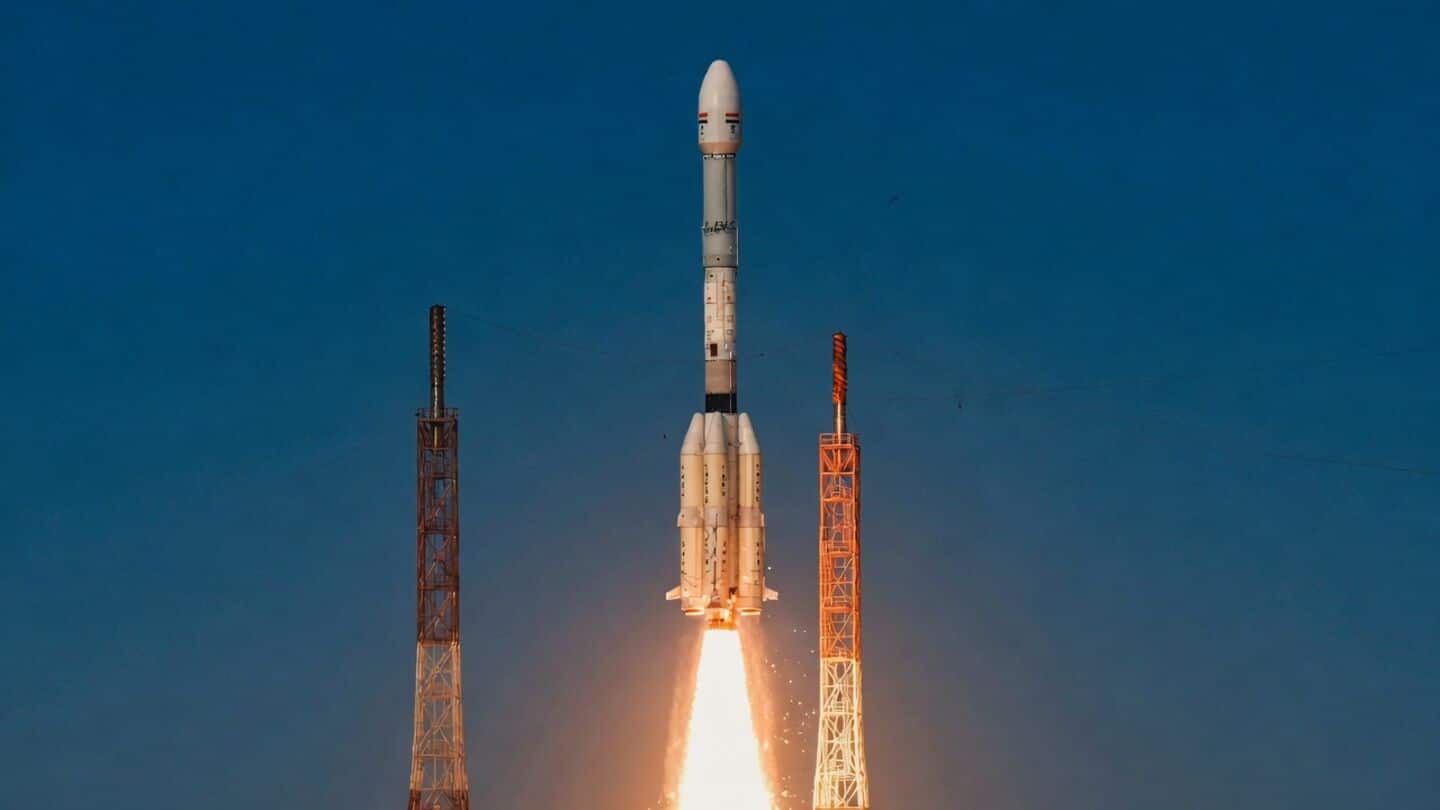
An GSLV Mk-II rocket, assigned to one of the missions, is also waiting at the launch site.
The propellant filling had begun but was halted after launch clearance did not arrive, leaving the vehicle in standby mode.
This delay comes as a precautionary measure following two failed Polar Satellite Launch Vehicle (PSLV) missions in 2025 and 2026.
Review impact
Broader launch freeze raises concerns
The government is currently reviewing the situation, which has resulted in a halt on new launches.
This has raised concerns within the Department of Space, as issues identified during the PSLV investigations are specific to its third stage and don't directly affect other launch vehicles like GSLV Mk-II or LVM-3.
Some officials argue that this broader launch freeze lacks technical justification.
Mission importance
Strategic significance of NVS-03 and GISAT-1A satellites
The delay in launching these satellites is particularly significant as they have strategic roles.
NVS-03 is expected to revive the now-defunct NavIC navigation constellation, while GISAT-1A will provide near real-time imaging for disaster management, agriculture, forestry, environmental monitoring, and national security.
The original GISAT-1 mission was lost during launch in August 2021 due to a failure of the cryogenic upper stage of the GSLV-F10 rocket.
Past issues
Corrective measures implemented after NVS-02 anomaly
ISRO had previously released partial findings into the NVS-02 mission anomaly in January 2025.
The agency concluded that the spacecraft failed to reach its intended orbit due to a drive signal not reaching the pyro valve during orbit-raising maneuvers.
Corrective measures were implemented and validated on the successful CMS-03 mission launched aboard LVM-3 in November 2025.