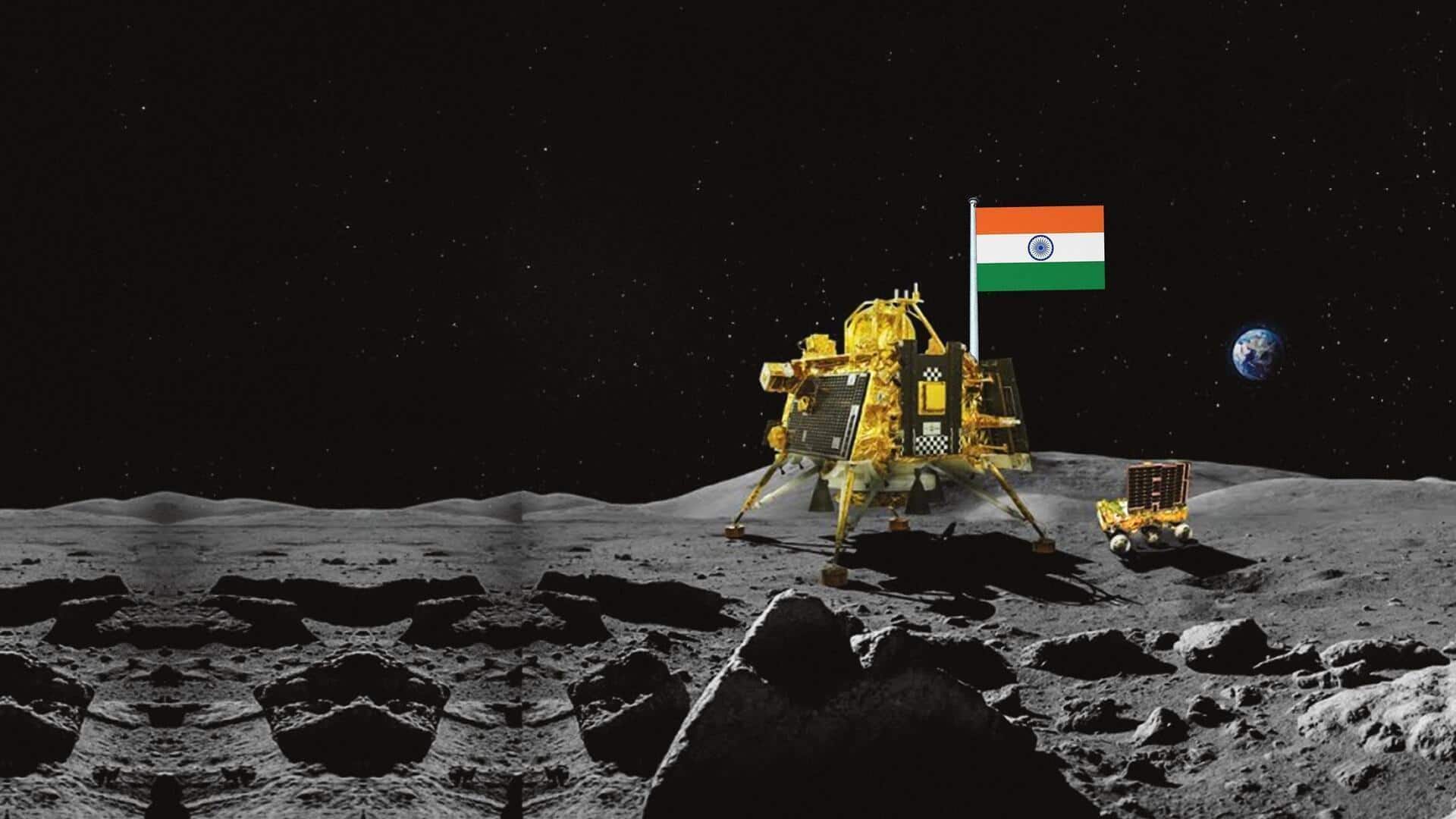
ISRO's Chandrayaan-4 mission to bring back Moon samples
What's the story
India's next lunar mission, Chandrayaan-4, will attempt to return samples of Moon soil and rocks to Earth. The ambitious project is a major step in India's space journey and comes after the historic success of Chandrayaan-3. The new mission is a full sample-return operation, something that only a handful of countries have accomplished before.
Mission details
Mission will have 3 parts
The Chandrayaan-4 mission will include landing, ascent, and return modules. Each stage has to work perfectly in sequence for the mission's success.
Any small failure could risk the entire operation.
The spacecraft is expected to launch from India's Sriharikota space center but an exact date has not been announced yet.
Lunar exploration
Mission to land near lunar south pole
The landing site for Chandrayaan-4 is likely to be near the lunar south pole, an area of great scientific interest.
It could hold frozen water and ancient materials that may provide clues about the Moon's early history.
ISRO's Special Projects Director P Veeramuthuvel said the mission aims to "further understand the moon within situ sample collection" using indigenous technology.
Sample retrieval
What happens after landing?
The Chandrayaan-4 mission will softly land on the lunar surface with a robotic system for soil and rock sample collection.
These samples will be stored in special containers before an ascent vehicle lifts them off the Moon.
The vehicle will dock with a return module in orbit, which will then journey back to Earth, surviving intense heat during re-entry.
Future prospects
India's growing reputation in space exploration
The Chandrayaan-4 mission is a key part of ISRO's long-term space vision, which also includes plans for a space station.
The success of this sample-return mission could boost global partnerships and attract international scientific collaborations.
It would further strengthen India's position among elite global space powers and contribute to the country's growing reputation as a leader in lunar exploration.