ISRO's EOS-05 completes first orbit-raising manoeuvre, advancing toward geosynchronous orbit
What's the story
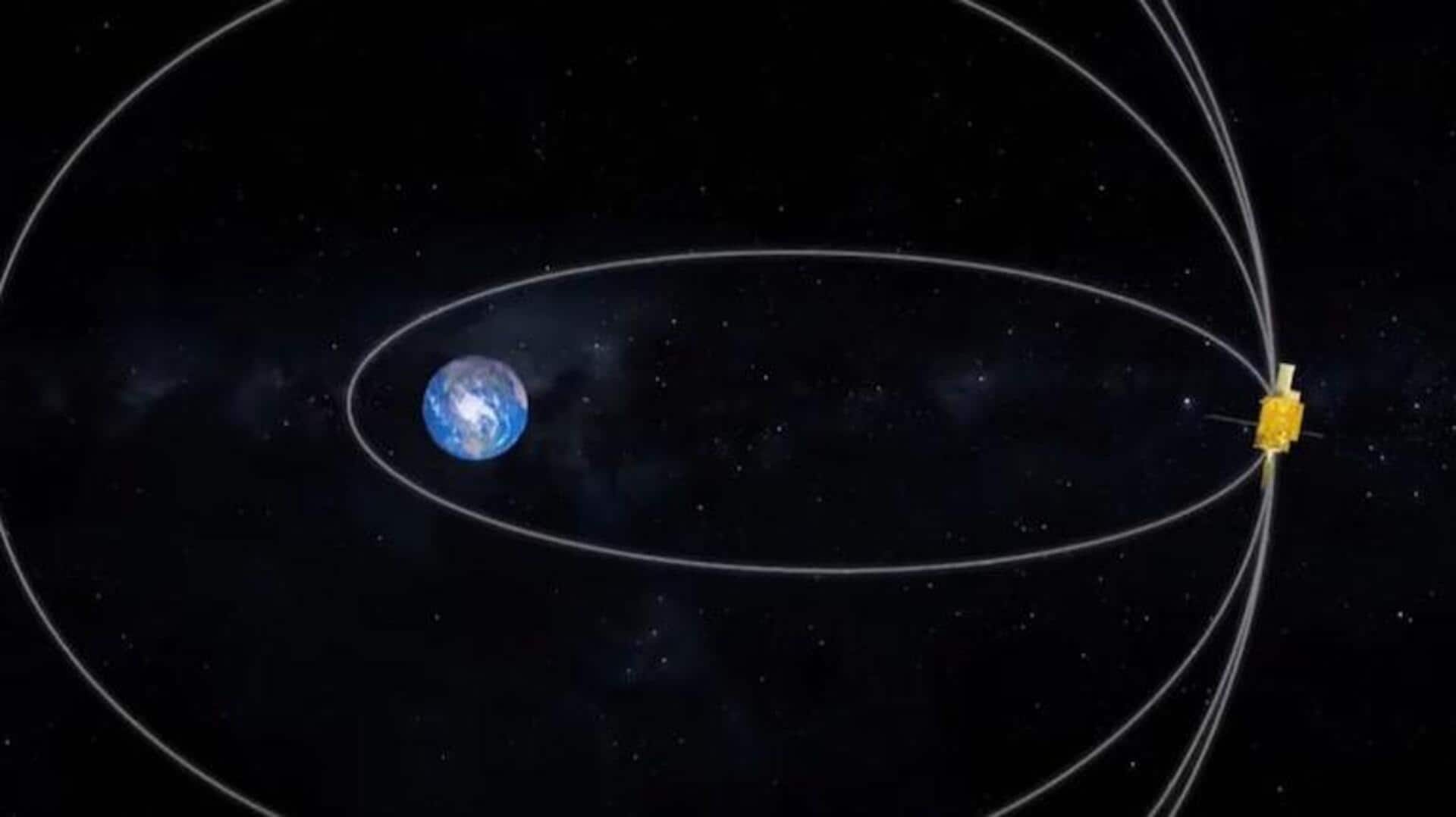
The Indian Space Research Organization (ISRO) has announced that its Earth Observation Satellite (EOS-05) has successfully completed a major orbit maneuver. The move comes as part of the satellite's journey toward Earth's Geosynchronous Orbit (GEO). The maneuver was executed by the Liquid Apogee Motor (LAM) engine of EOS-05, which burned for some 1.5 hours on Saturday.
Orbit adjustment
EOS-05's orbit adjusted to an apogee of 20,000km
The recent maneuver has adjusted EOS-05's orbit to an apogee of 20,000km and perigee of 31,129km.
Apogee is the point in space where a satellite is closest to the planet, while perigee is where it comes farthest.
ISRO plans more orbit maneuvers in the coming days to place EOS-05 in its final position at GEO, some 36,000km above Earth.
Strategic importance
India's 1st imaging satellite at GEO for strategic surveillance
Once in GEO, EOS-05 will become India's first imaging satellite at this altitude. This is a major step forward for the country's strategic surveillance capabilities.
The satellite will be able to monitor critical assets such as remote borders and conflict zones, while also aiding in weather forecasting, cyclone tracking, disaster management, agriculture monitoring, and environmental surveillance.
Unique capability
Continuous, real-time viewing capability at GEO
Unlike other imaging satellites that operate at lower altitudes, EOS-05 will match Earth's rotation.
This will allow it to provide continuous, real-time viewing of the same region instead of multiple snapshots taken by lower-orbiting satellites.
This unique capability makes EOS-05 a valuable asset for various applications, including agriculture monitoring and environmental surveillance.