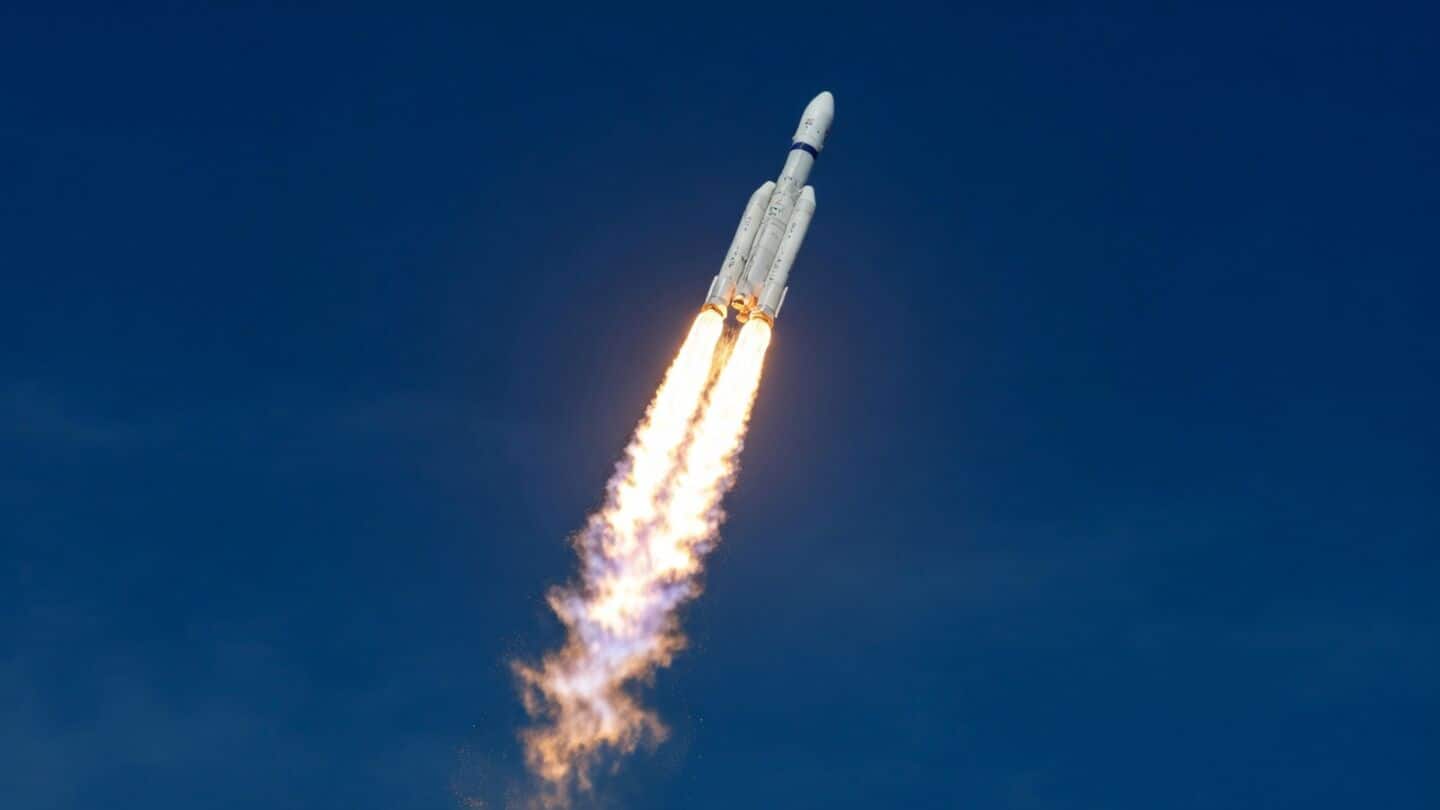
ISRO to stop making rockets, satellites in the future
What's the story
India's space program is undergoing a major transformation as the Indian Space Research Organisation (ISRO) prepares to hand over the manufacturing of launch vehicles and routine satellites to private companies. This transition was revealed by IN-SPACe Chairman Dr. Pawan Goenka during his address at Business Today's India @ 100 Economy Summit. The move will enable ISRO to concentrate on research, advanced technologies, scientific missions, and infrastructure development that may be beyond the capabilities of private firms.
Transition details
Transitioning to private sector
Dr. Goenka clarified that ISRO will no longer manufacture launch vehicles, a task that will now be taken over by the private sector or public sector undertakings (PSUs).
The transition has already begun with the Small Satellite Launch Vehicle (SSLV), whose technology and production rights were handed over to Hindustan Aeronautics Limited after a bidding process.
Future plans
Major rockets also likely to be privatized
The next phase of this transition could involve India's two major rockets: the Polar Satellite Launch Vehicle (PSLV) and the Launch Vehicle Mark-3 (LVM3).
Dr. Goenka said these vehicles are also likely to be privatized.
Unlike the SSLV transfer, public sector companies won't be allowed to participate in this process, leaving it entirely up to private industry.
R&D focus
Focus on R&D and advanced technologies
ISRO's role is set to change from a manufacturer of everything from rockets to satellites to more of an R&D organization.
The agency will focus on scientific missions, developing new technologies, specialized satellites, and advanced infrastructure.
Once these technologies are mature enough, they can be transferred to private companies for commercial operations.
"We have already transferred 120 technologies from ISRO to the private sector," Dr. Goenka said at the summit.
Upcoming changes
Launch center operations to be handed over to private sector
The government is also looking to hand over the operations of a new launch center to the private sector.
Dr Goenka said the operator could be selected in four or five months.
This restructuring is part of India's larger goal to grow its space economy from $8 billion today to $44 billion by 2033.
Growth drivers
Dr. Goenka identifies engines driving growth
Goenka identified three key engines to drive this growth: government demand, increased adoption of space technologies by industries beyond the traditional space sector, and expansion into international markets.
He stressed that the government must act as an anchor customer.
The Department of Defence has already ordered 31 satellites from private companies, with ISRO likely to build another 21 under the same program.