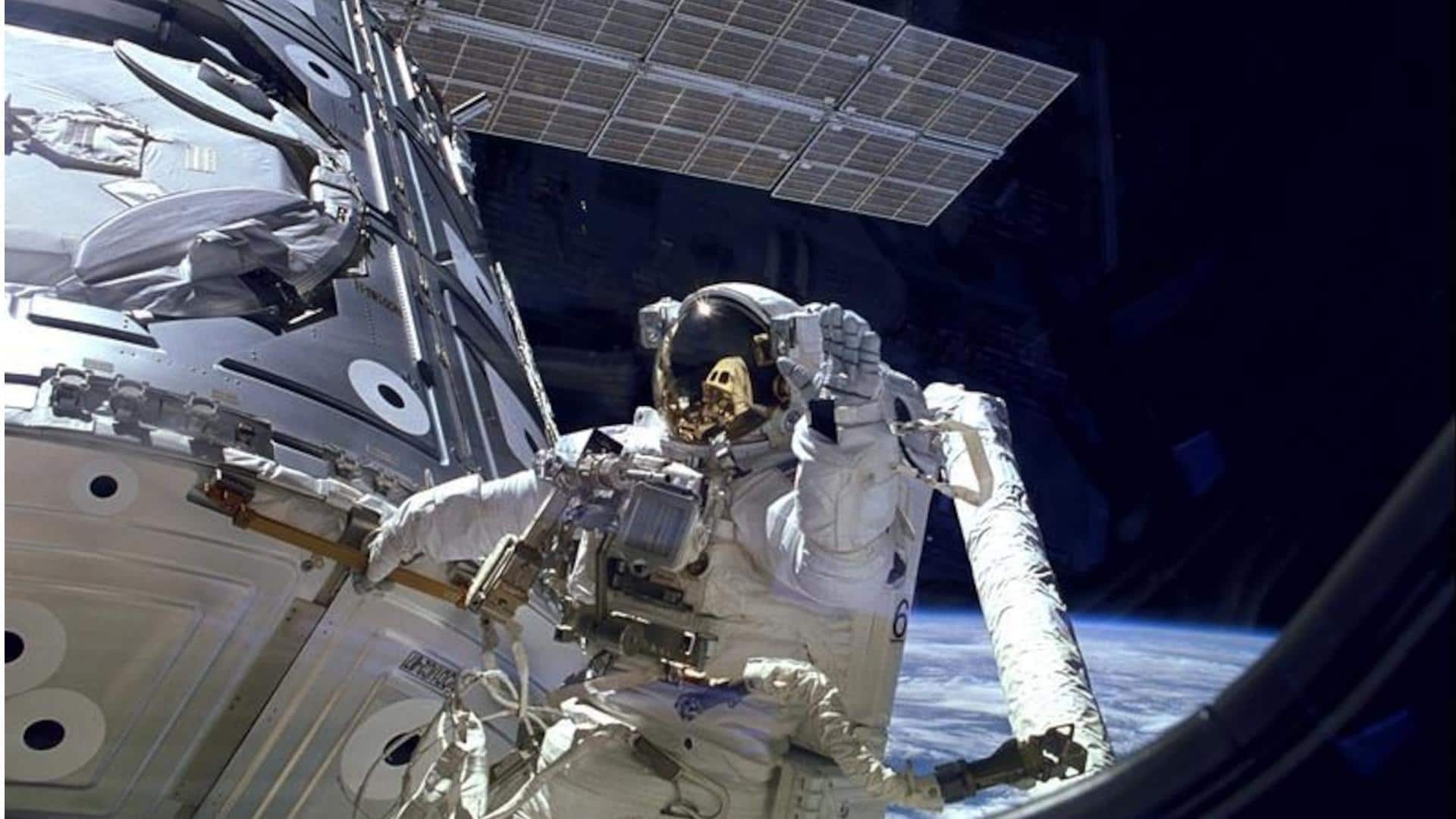
Female astronauts could soon use menstrual cups in space
What's the story
In a major breakthrough, scientists have successfully tested menstrual cups in spaceflight conditions. The AstroCup mission, led by Ligia F Coelho from Cornell University, launched four commercially available menstrual cups aboard a rocket. Two of these cups were sent into space while the other two remained on Earth. The successful test marks a big milestone toward sustainable menstrual health options for female astronauts.
Durability test
Menstrual cups withstand extreme space conditions
The menstrual cups sent to space withstood extreme acceleration forces, temperature changes, and pressure variations.
They showed no signs of wear or tear and maintained their structural integrity throughout the mission.
The cups also demonstrated leak-proof performance, with no leakage of test liquids (water and glycerol) detected during the flight.
This is a major step forward in proving that reusable menstrual health solutions can be viable even in challenging space environments.
Sustainability focus
A sustainable solution for space missions
Menstrual cups provide a reusable and sustainable solution for managing menstruation in space, cutting down on waste and the necessity for disposable products.
The successful test of these cups in spaceflight conditions is a major step toward providing female astronauts with more choices, when it comes to managing their menstrual health during long-duration missions.
It also opens up possibilities for future research into other sustainable menstrual health options.
Autonomy discussion
A conversation about autonomy
Coelho stressed the need for a serious conversation about autonomy for health in space.
She said, "I get passionate about the reasons why menstrual devices are still not in space."
The successful test of menstrual cups also provides female astronauts with an alternative to hormonal suppression of menstruation on missions lasting up to six months.