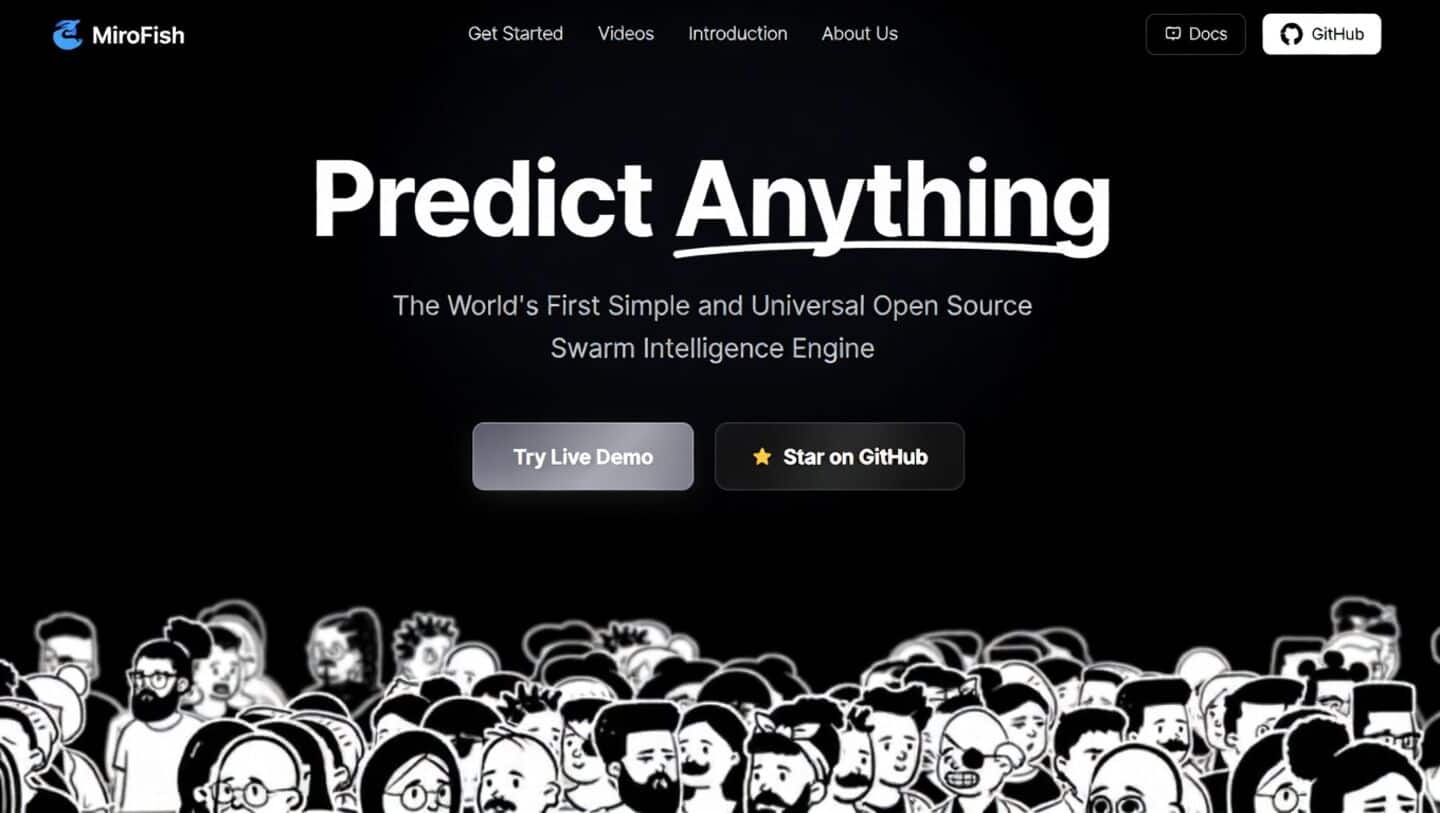
This AI simulates human opinion, markets using thousands of agents
What's the story
A new open-source artificial intelligence (AI) project, MiroFish, is making waves in the tech community. The innovative platform has taken GitHub by storm, racking up thousands of stars from developers around the world. Reportedly the brainchild of a young Chinese programmer and reportedly backed by Shanda Group founder Chen Tianqiao, MiroFish is being hailed as a universal swarm-intelligence engine for large-scale simulations.
Simulation strategy
How MiroFish works
Unlike traditional predictive models, MiroFish creates a simulated digital space filled with thousands of independent AI agents.
These agents interact with one another in parallel, creating a complex web of interactions.
The system builds its simulations using real-world data from news articles, financial reports, policy papers or social media conversations.
This data is transformed into a structured knowledge graph that helps the system understand relationships between people, institutions and events before creating an environment for digital agents to act in.
Agent behavior
Supporters say it models social behavior better than traditional methods
In the simulated environment created by MiroFish, each AI agent gets its own behavioral profile, memory and decision-making logic.
As the simulation goes on, these agents communicate with one another, react to information and influence each other's decisions.
This interaction produces patterns that mimic collective social behavior.
Supporters of the project say this approach tries to model how groups of people respond to events rather than relying purely on statistical forecasts.
System features
Technical aspects of the platform
MiroFish runs on a multi-agent architecture with a Python-based backend that manages the simulation and a Vue.js-based visual interface for users to see how the agents interact.
The system also uses GraphRAG, a retrieval technique that organizes information into connected entities and relations instead of treating documents as separate text blocks.
This lets the simulated agents reason about complex networks like influence patterns, economic ties, and social groups.
Memory management
It can be run locally or through container systems
MiroFish uses the Zep platform to maintain long-term memory, letting agents store and retrieve experiences across different simulation rounds. This feature helps behaviors evolve over time.
According to technical documentation, the engine can be run locally or through container systems like Docker. It also supports integration with various large language models compatible with the OpenAI API framework.
Use cases
It can create interactive analytical reports for users
MiroFish can create interactive analytical reports based on the behavior of agents in the simulation.
This lets users explore different scenarios by changing parameters and seeing how the virtual environment reacts.
The technology could be used for a range of purposes, including analyzing market sentiment, modeling public opinion, testing policy responses or exploring narrative outcomes in creative contexts.
However, researchers behind MiroFish stress that it should be used for scenario exploration rather than precise forecasting.