NASA delays crewed Moon mission launch to April: Know why
What's the story
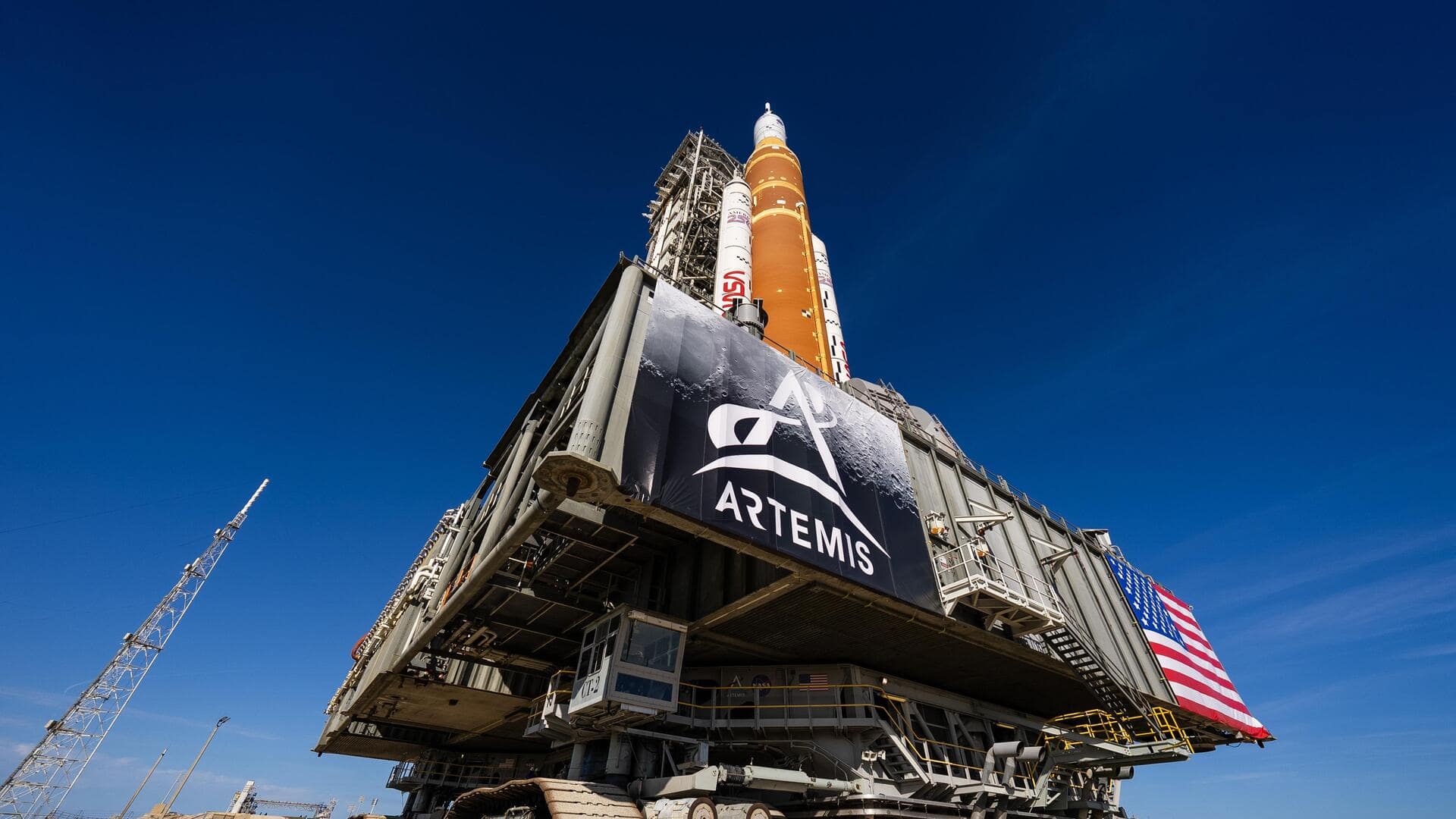
NASA has delayed the launch of its crewed lunar flyby mission, Artemis II. The new launch window is now set for April, instead of the previously scheduled date of March 6. The delay comes after a problem with the Space Launch System (SLS) rocket was discovered during a routine operation on February 20.
Technical glitch
Interruption in helium flow of rocket's propulsion system
The problem with the SLS rocket was an interruption in the helium flow of its interim cryogenic propulsion stage. This system is vital for purging engines and pressurizing fuel tanks.
Although it worked correctly during two dress rehearsals earlier this month, the failure during a routine operation has now pushed back the launch date.
Repair process
Engineers will fix the problem from Vehicle Assembly Building
Due to the nature of the problem, NASA engineers will have to fix it from the Vehicle Assembly Building (VAB).
This means that there's no way to proceed with the March launch window and the rocket is on its way back to the hangar.
A NASA official acknowledged that people might be disappointed by this development but emphasized that such setbacks are part of space exploration history.
Mission history
Artemis II mission has already faced several hurdles
The Artemis II mission has faced several hurdles so far. Its first launch window was between February 6 and 11, but small hydrogen leaks during refueling and minor technical glitches were detected in the wet dress rehearsal (WDR).
NASA deemed the risk too high for astronaut safety, leading to a postponement of the launch.
However, a second dress rehearsal on February 19 was successful with no leaks detected while loading liquid propellant.
Mission details
Orion capsule will go farther than any other manned spacecraft
When it finally launches, the Orion capsule will go farther than any other manned spacecraft in its 10-day mission. It will exceed the Apollo 13 record of 400,171km on day six.
The return will culminate with Orion's splashdown in the Pacific Ocean off San Diego, California.
Although there won't be a lunar landing this time around (that'll be Artemis III's job), the second launch is critical as it will show NASA's technical prowess to return to the Moon.