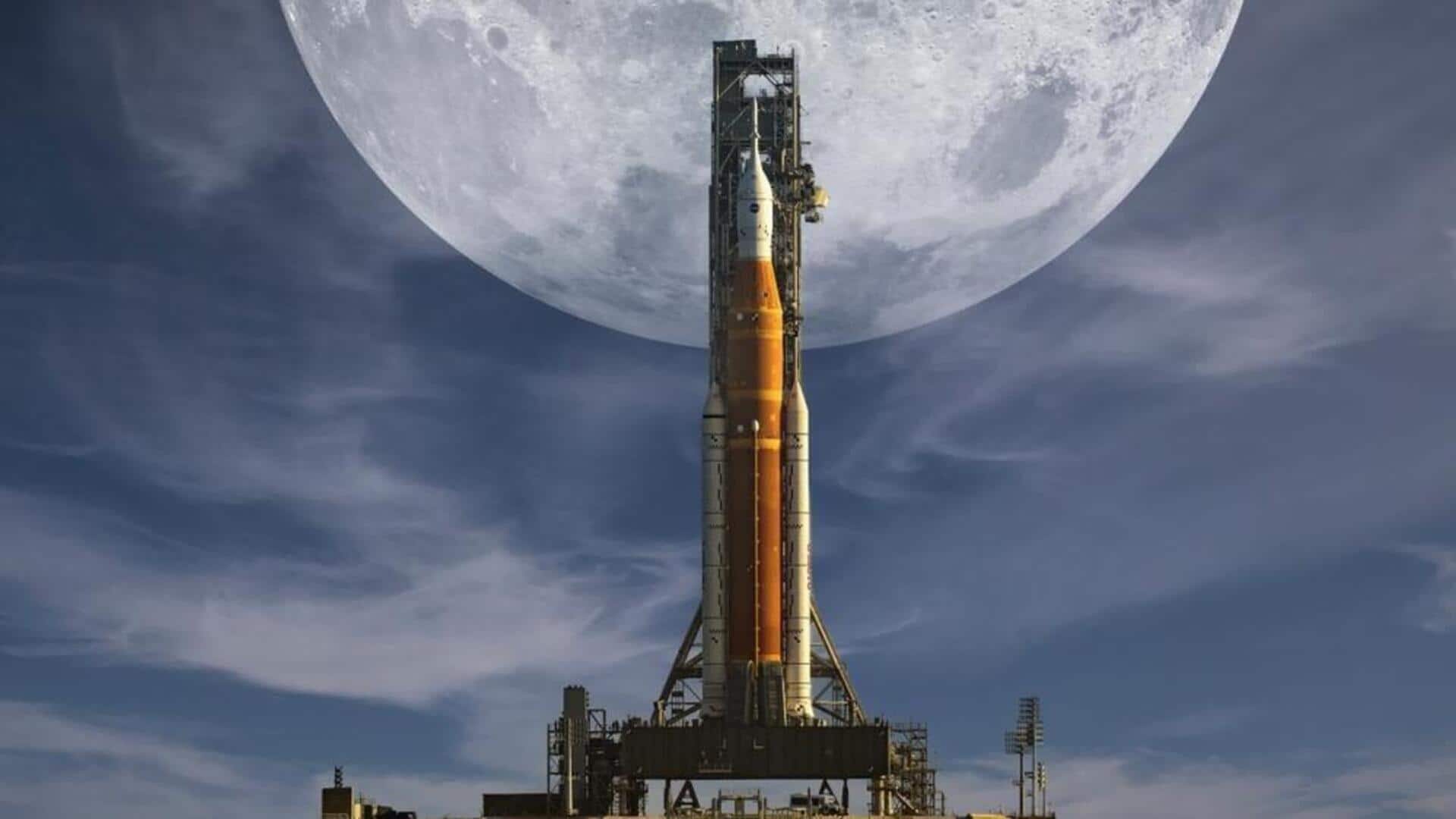
NASA explains why Artemis II crew will face 40-minute blackout
What's the story
NASA's Artemis II mission, scheduled for April 1, will see a temporary communication blackout between the Orion spacecraft and Mission Control. This is due to the spacecraft's lunar flyby, during which it will pass behind the Moon's far side. The lunar body will physically block radio signals from reaching Earth-based antennas, cutting off communication for some 41 minutes.
Mission design
Is the communication blackout an emergency?
The communication blackout during the Artemis II mission is not an emergency, but a planned part of the journey.
NASA has designed this phase into their mission plan, knowing that there will be times when they won't be able to communicate with the crew.
During this time, Orion's onboard computers will continue to handle navigation and flight systems automatically.
Mission details
What is the Artemis II mission?
The Artemis II mission is not a landing on the Moon, but a lunar flyby and systems test.
The crew will first check life support and propulsion systems in orbit.
Then, their Orion capsule will take a free-return path around the Moon, ensuring that if anything goes wrong during this phase of the mission, they can safely return to Earth.
Re-entry test
The return journey to Earth
After the lunar flyby, Orion will conduct deep-space evaluations before a high-speed re-entry at nearly 40,250km/h. The spacecraft is targeting a Pacific Ocean splashdown.
This part of the mission is crucial as it will test Orion's heat shield for future Moon missions.
The crewed Artemis II mission is a major step toward returning humans to the lunar surface after decades.