Artemis II: When will astronauts reach the Moon and return
What's the story
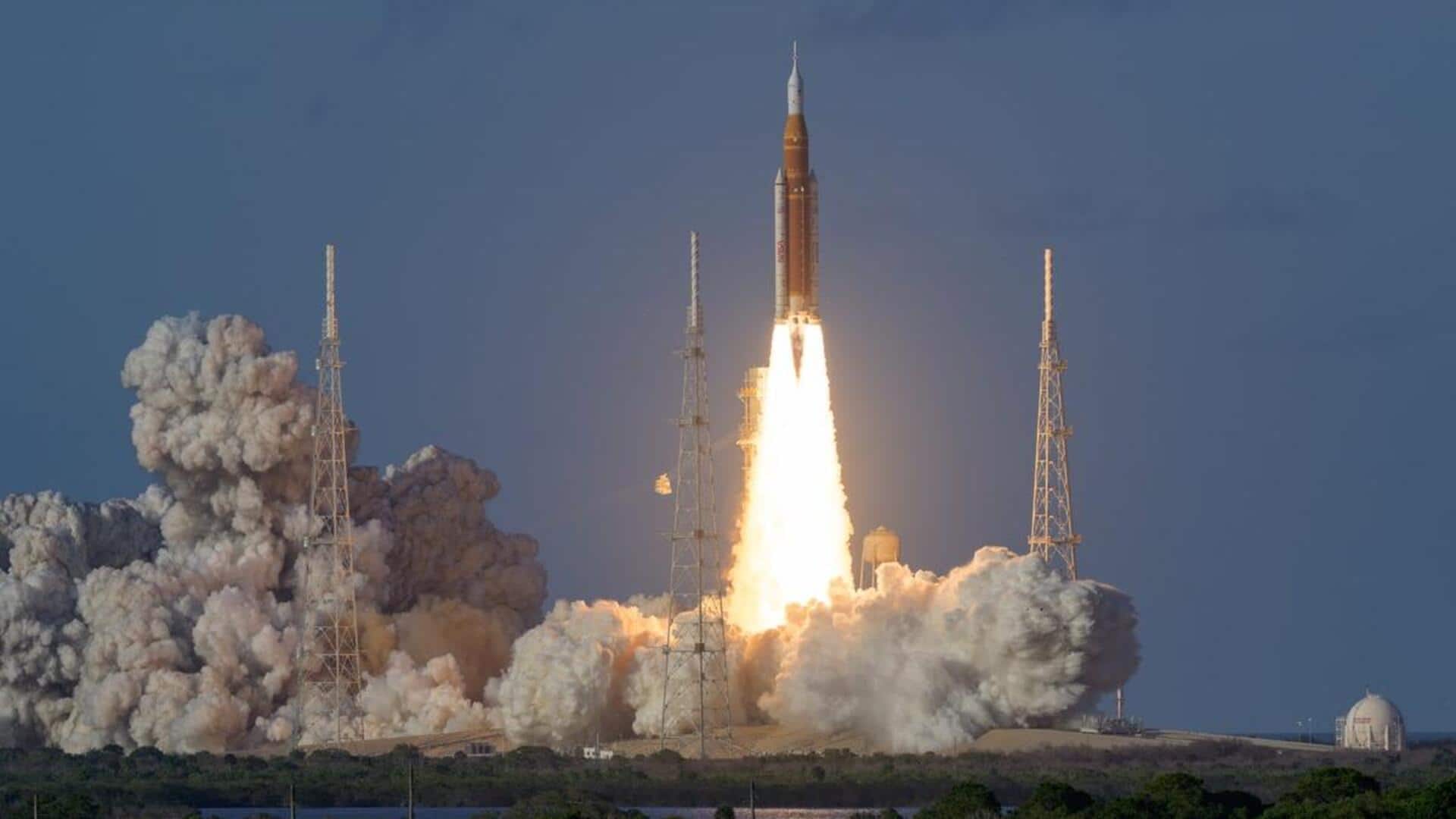
NASA's Artemis II mission, the first crewed lunar flight in over half a century, is on a carefully plotted course. The Orion spacecraft, atop the SLS rocket, launched successfully on April 1 (local time). It is scheduled to reach the lunar surface on day six of the mission (i.e., April 6). However this one won't land but will perform a flyby of the lunar surface.
Mission details
Taking Orion farther than any crewed spacecraft
The Artemis II mission will take Orion about 4,00,000km from Earth, farther than any other crewed spacecraft has traveled.
This record-breaking journey is slightly more than the Apollo 13 mission.
After the flyby, a free-return trajectory will be used to bring Orion back home.
The Moon's gravity will guide the spacecraft back toward Earth, ensuring a safe return even if propulsion systems fail.
Flyby specifics
Crew will have only 3 hours to observe lunar surface
On its closest approach, Orion will be about 6,600km above the lunar surface. From this distance, the Moon will look like a basketball held at arm's length.
The crew will have only three hours during this close pass to complete their survey of the Moon's surface.
NASA has provided them with a long list of observations they are expected to make during this time.
Homeward bound
Return journey and significance of Artemis II mission
The return journey of the Artemis II mission is expected to take about four days. Orion will make a high-speed reentry and splash down in the Pacific Ocean on April 10.
This mission marks a significant milestone as it is the first time humans are traveling this far from Earth since 1972.
Though still a test flight, Artemis II lays the foundation for future missions to land astronauts on the Moon again and explore deep space further.