Artemis II: What are 'organ chips' NASA sent to space?
What's the story
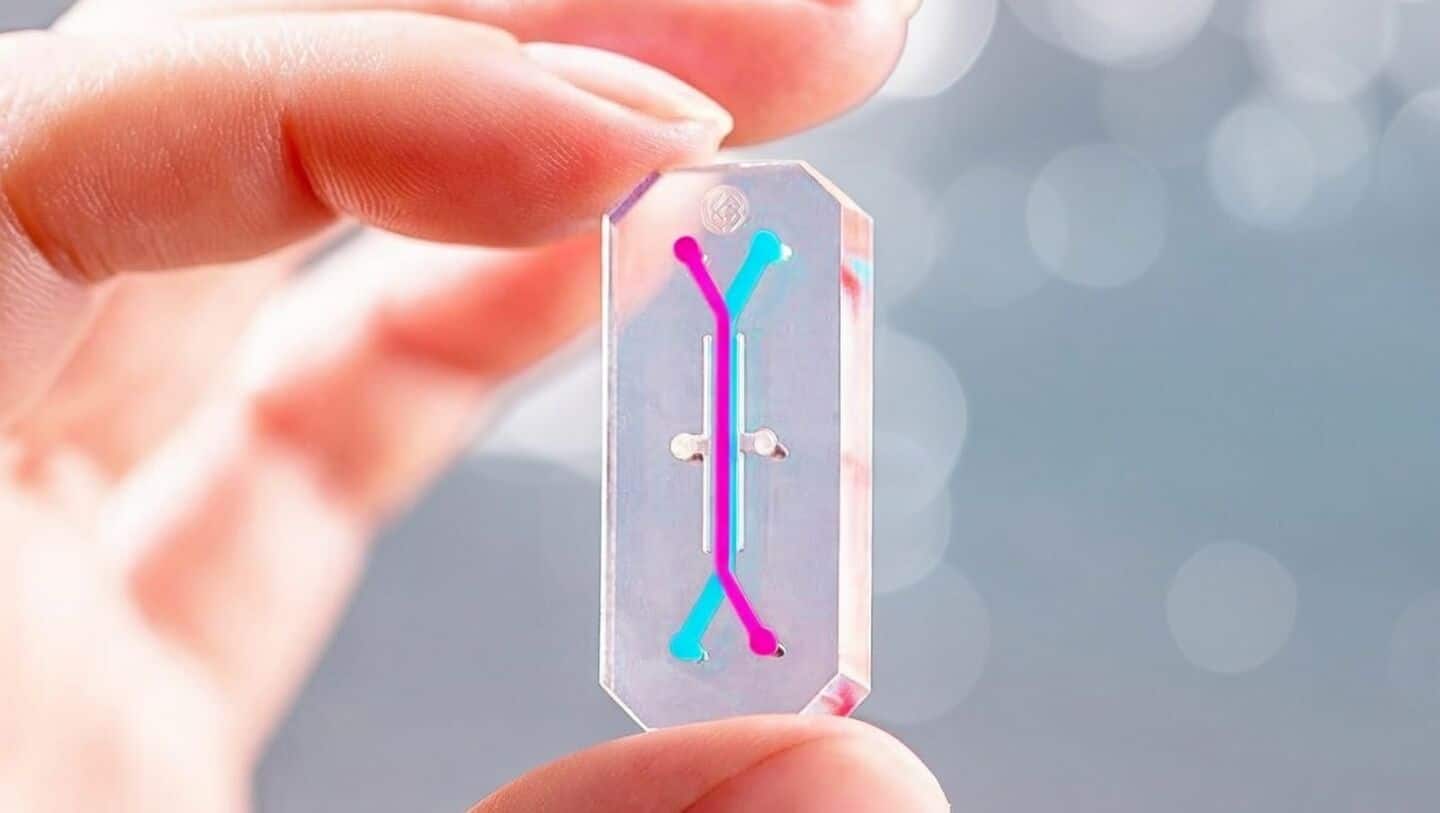
NASA's Artemis II mission wasn't just about sending astronauts around the Moon. The spacecraft also carried tiny, USB-sized devices called "organ chips." These innovative tools are made of living human cells arranged to mimic real organs in the body. The unique aspect of this experiment is that these cells were harvested from the astronauts themselves, making it an unusual study.
Research tool
Impact of deep space on the human body
The organ chips are a key part of NASA's long-standing quest to understand how deep space affects the human body.
Unlike the International Space Station (ISS), which is still within Earth's magnetic field, Artemis II goes much farther out.
This exposes astronauts to more radiation and longer periods in microgravity, both of which can have an impact on bones, blood cells, and even immunity.
Experimental advantage
Mini-laboratories in space
The organ chips serve as mini-laboratories in space. As the spacecraft moves through deep space, scientists can observe how the cells react to radiation, weightlessness, and other conditions.
This includes examining if they weaken or repair themselves differently under these stresses.
The data collected from this experiment is crucial for long-duration missions to the Moon or Mars.
Risk reduction
A new way to study human health in space
The use of organ chips also offers a practical solution to collect human data in space.
Instead of waiting for years or risking astronauts' health, scientists can conduct controlled experiments with these chips.
This method is faster, safer, and more detailed than traditional ways of studying the effects of space travel on the human body.