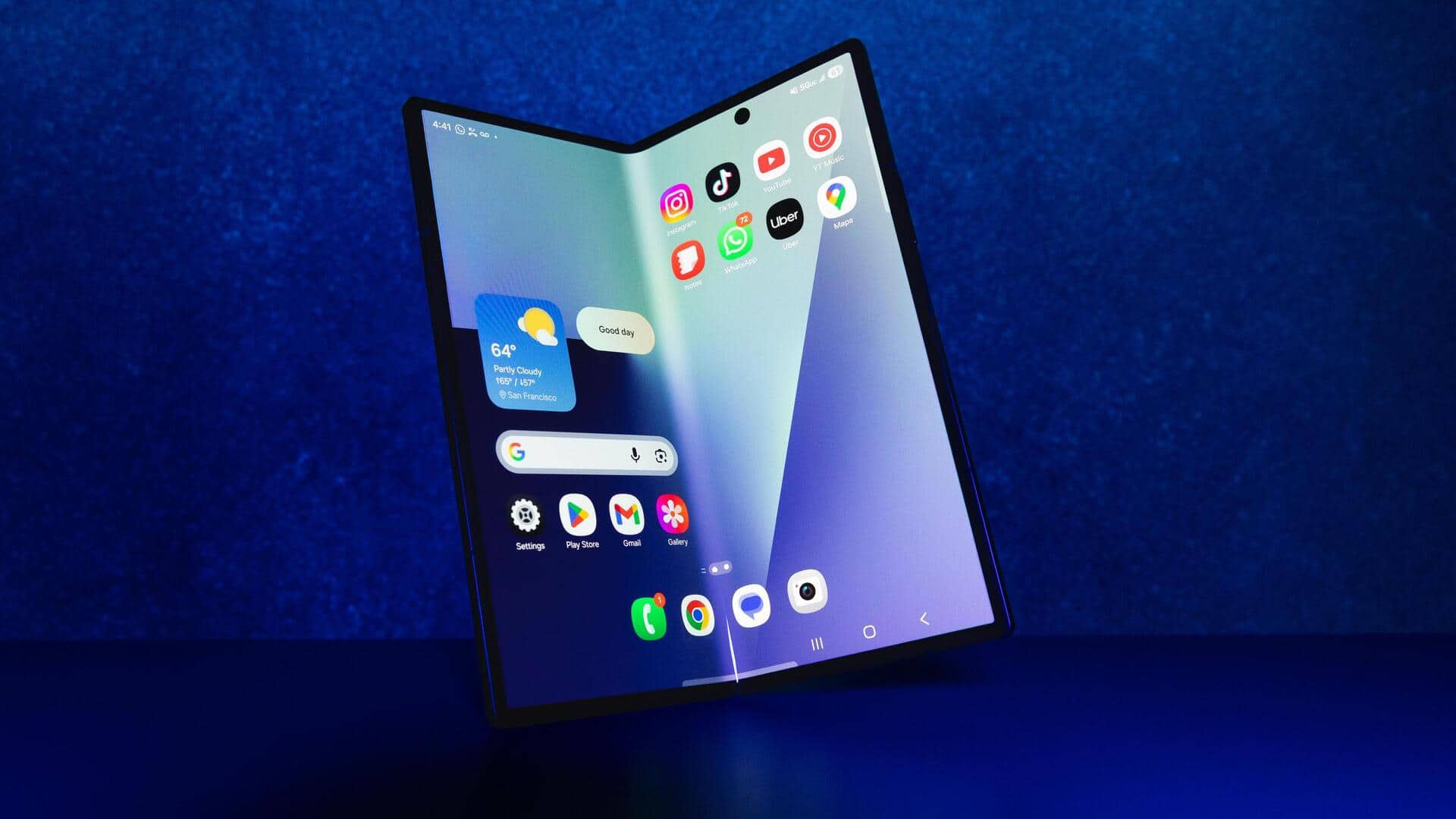
Why Samsung won't sell RAM to its own smartphone division
What's the story
Samsung Semiconductor has rejected an original order for RAM chips from its smartphone division, Samsung Electronics, This is due to prioritizing more profitable data center clients amid a global supply shortage of computer memory, particularly from the rising demand from AI data centers. This situation highlights how valuable these components have become in today's tech-driven world.
Supply dynamics
Samsung's subsidiaries and the memory supply chain
Samsung's business empire is made up of many companies and subsidiaries, including Samsung Electronics and Samsung Semiconductor Global.
The former makes Galaxy phones, tablets, laptops, watches etc., while the latter produces memory chips for global distribution.
The global market includes both Samsung's own subsidiaries as well as rival companies like Dell and Lenovo who also use these chips in their products.
Market shift
Samsung Semiconductor prioritizes data center suppliers
As the demand for RAM hardware surges due to new AI data centers, memory manufacturers such as Samsung, SK Hynix, and Micron are prioritizing these suppliers.
This is because companies running these centers are willing to pay a premium for their hardware.
The shift in focus has led Samsung Semiconductor to reject an order from its own smartphone division for DRAM chips.
Pricing hurdles
Samsung Electronics faces 'chipflation' challenges
The smartphone manufacturing arm of Samsung, Samsung Electronics, had hoped to secure pricing and supply for another year. However, due to "chipflation," it now has to negotiate quarterly.
A long-term supply deal was rejected by its corporate sibling. Instead, a short-term agreement at higher prices was reached.
This development is likely to impact the prices of Samsung phones and other mobile hardware in the future.
Cost implications
Rising RAM costs impact electronics prices
The rising cost of RAM chips is likely to affect the prices of finished electronics, including Samsung phones.
Raspberry Pi, a company known for affordable mod-friendly electronics, has already increased its prices due to high memory costs.
Lenovo, the world's largest PC manufacturer, is also stockpiling memory supplies as a buffer against these market fluctuations.
Market outlook
Forecast for component prices and supply constraints
TeamGroup, a memory supplier, predicts that component prices have tripled recently, leading to finished modules seeing price hikes as high as 100% in a month.
Unless there is some catastrophic market crash, these prices are likely to keep rising into next year.
Supply constraints could also persist well into 2027 or beyond.