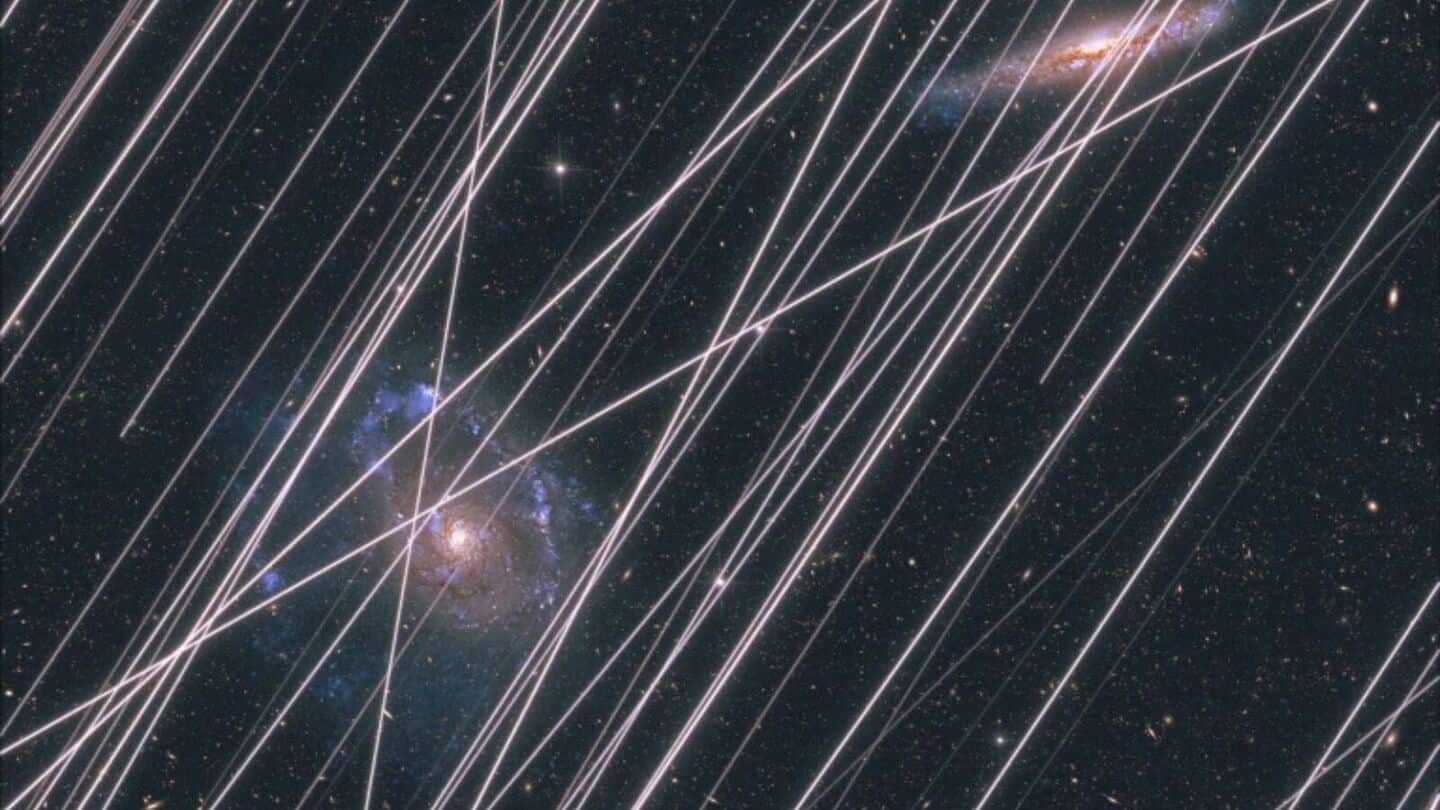
Satellite pollution may spoil 95% space telescope images: NASA study
A NASA-led study finds the growing number of satellites in low-Earth orbit could ruin over 95% of images from some space telescopes within 10 years.
The main issue? Sunlight bouncing off all those satellites, making it harder for scientists to get clear pictures of space.
Major telescopes at risk
The study looked at both current and upcoming telescopes like Hubble, SPHEREx, and ARRAKIHS.
While at least one in every three of Hubble's images might be affected by satellite streaks, newer telescopes like SPHEREx and ARRAKIHS could see up to 96% of their photos spoiled.
Even China's Xuntian telescope is expected to have trouble.
More satellites, more problems
Satellites are multiplying fast—from over 10,000 now—and could hit thousands more by 2040.
Lead researcher Alejandro Borlaff points out that these bright trails might permanently block rare cosmic events from ever being seen.
Can we fix this?
Groups like the American Astronomical Society are warning of risks and facilitating collaboration on satellite launches and brightness.
Companies such as SpaceX are testing darker coatings and visors for their satellites, but real solutions will likely need international cooperation to keep our view of space clear.