IIT-Bombay's new technology can turn dry leaves into cooking fuel
What's the story
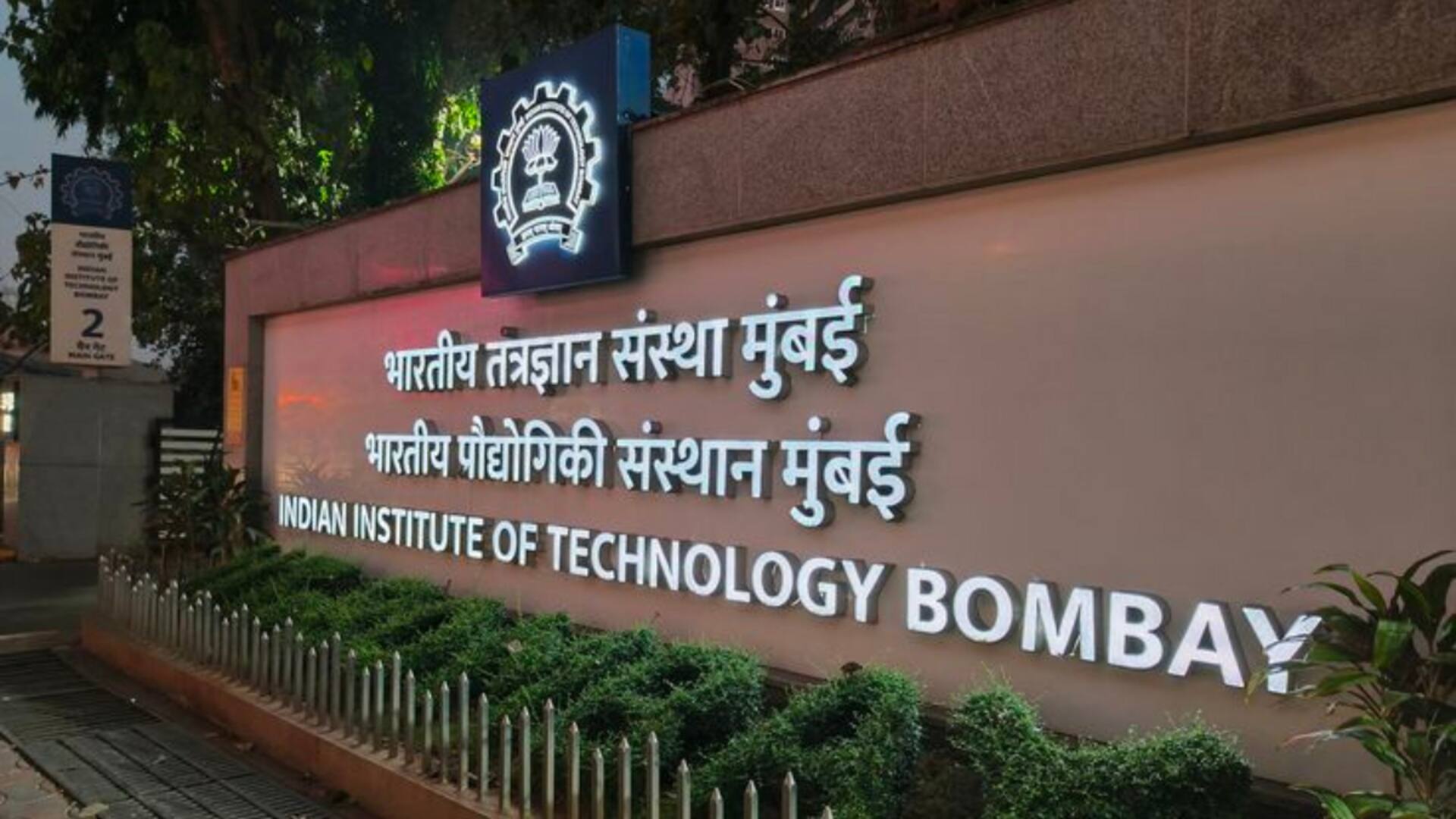
In a major breakthrough, scientists at the Indian Institute of Technology (IIT) Bombay have developed a patented biomass gasification system. The innovative technology can convert dry leaves and garden waste into usable cooking fuel. The project, which started in 2014 under the leadership of Professor Sanjay M. Mahajani, aims to turn everyday campus litter into a reliable and clean-burning energy source.
Process
How does the gasifier work?
The biomass gasification system works by first collecting, shredding, and pelletizing dry leaves.
These pellets are then heated in a low-oxygen chamber where they undergo pyrolysis and gasification.
This process releases a fuel-rich gas mixture that burns cleanly to produce a steady flame for cooking.
The design also tackles challenges like clinker formation, which is common with high-ash Indian biomass.
Efficiency metrics
Waste-to-energy science at work
The IIT Bombay team has reported that their gasifier produces fuel with a calorific value of around 3.67 MJ/kg, achieving thermal efficiency of about 60% in real-world use.
This breakthrough demonstrates waste-to-energy science at work, and highlights the potential of thermochemical processes to convert urban biological waste into clean, decentralized energy.
Alternative fuel
A sustainable alternative to LPG
While not a full replacement for LPG, the biomass gasification system offers a sustainable alternative for cooking fuel.
By converting dry leaves into combustible gas, the system could reduce dependence on imported LPG.
This could also help bring down rising fuel costs, especially in large hostels, institutions, and community kitchens.
Usage expansion
From fallen leaves to a live kitchen flame
Currently, the technology is being used at IIT Bombay canteens, replacing 30-40% of LPG consumption.
The scientists believe it can be scaled up to universities, industrial townships, community kitchens, and rural areas.
This shows India's readiness to experiment with innovative energy alternatives.
From fallen leaves to a live kitchen flame, IIT Bombay is now paving the way for a sustainable energy future.