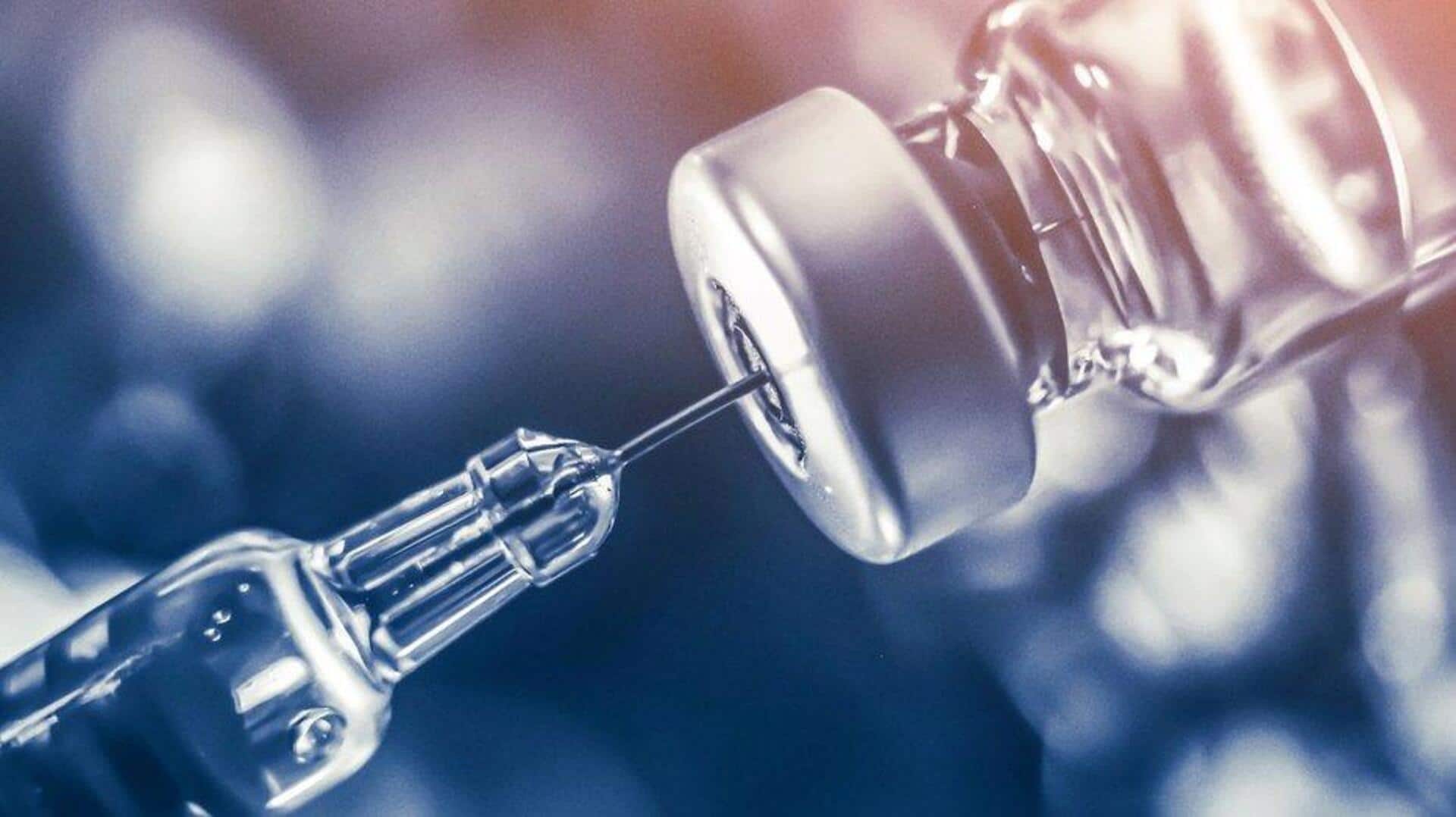
Vaccine wastage might become a thing of the past soon
What's the story
UK scientists have successfully tested "fridge-free" vaccines on patients, a major breakthrough in the field of immunization. The trial involved 60 volunteers and was conducted by Stablepharma. The team converted a liquid tetanus-diphtheria vaccine into its "fridge-free" version by keeping it as a dry powder at room temperature for one year before mixing it with water and injecting it.
Storage issues
New method could help in remote areas
Vaccines usually need strict temperature control from the moment they are made to when they are injected into a patient's arm.
This is called the "cold chain," and it is especially difficult in remote areas or war zones where fridges are scarce and electricity unreliable.
The new "fridge-free" method was tested by UK's National Institute for Health and Care Research (NIHR) to overcome these challenges.
Natural solution
How does the new technology work?
The new technology takes inspiration from resurrection plants that appear dead during drought but come back to life when it rains.
These plants produce a sugar called trehalose, which stabilizes their cells during dry conditions.
The trial used this sugar to dry out the tetanus-diphtheria vaccine and protect its vital components, giving "equivalent" immune responses "to the conventional vaccine" while being "safe and well tolerated."
Next steps
Larger trial to start soon
A larger trial with 160 people is set to begin in the coming months. This will be the final stage of research as the original vaccine is already approved and licensed.
The studies are being conducted to meet WHO's goal of a vaccine that survives at 30 degree Celsius and 75% relative humidity.
However, separate data shows their vaccine components also survive temperature cycling between -20 degree Celsius and +40 degree Celsius, making it viable after transport in different conditions.
Waste reduction
Half of all vaccines globally are wasted
The WHO estimates that half of all vaccines globally are wasted and disposed of, mainly due to cold chain failures.
This new technology could help tackle this problem by making vaccines more stable during transport.
However, there are still several areas that need further investigation, as Professor Tuck Seng Wong said.