University of Michigan team finds TOI-5882 likely swallowed a planet
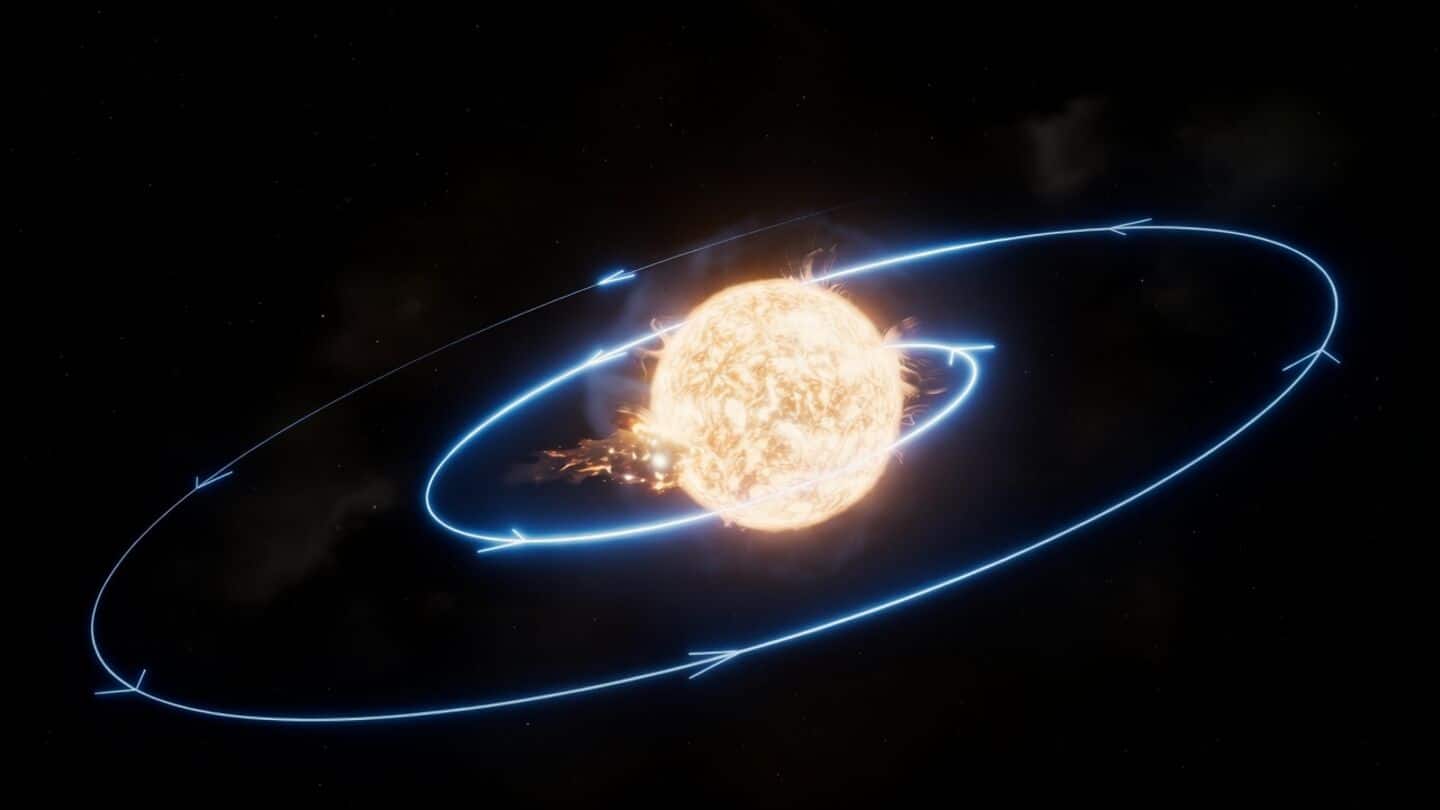
Astronomers just spotted a sunlike star, TOI-5882, 1,300 light-years away, that actually swallowed one of its own planets.
The clue? Unusually high levels of lithium in the star's atmosphere, a sign usually linked to planets, not stars.
Brooke Kotten of the University of Michigan and her team of 14 scientists from the United States and Chile made the discovery using spectroscopy.
Lithium points to ingested Neptune-size planet
TOI-5882's lithium levels are higher than almost all similar stars studied, suggesting it really did eat a planet between a few times Earth's mass and the size of Neptune.
Scientists think a massive brown dwarf nearby may have knocked the planet into the star.
What's wild is this happened while TOI-5882 was still stable, not during its later red giant phase when stars usually gobble up planets.
This gives us a rare peek at how planetary destruction can play out and maybe even hints at what could happen to our own solar system billions of years from now.