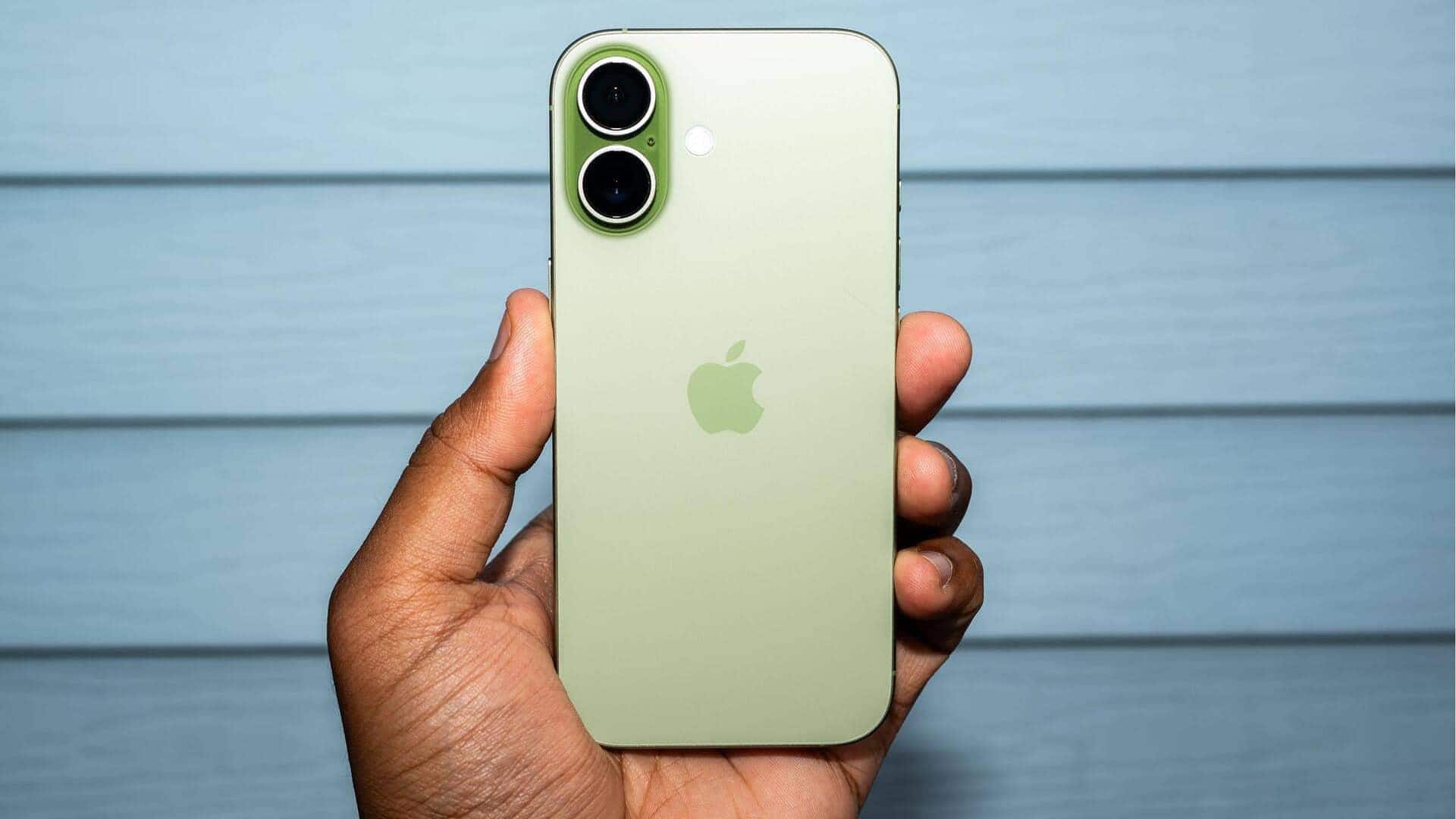
Why Apple won't launch iPhone 18 this year
What's the story
Apple is said to be breaking its annual iPhone launch cycle, with no standard iPhone 18 model expected this year. The news comes despite the massive success of the iPhone 17 in 2025. If true, it would be the first time Apple has skipped an entire calendar year without introducing a new version of its flagship non-Pro iPhone.
Launch strategy
Apple's new strategy for iPhone launches
For over a decade, Apple has been launching its mainline iPhone lineup in the fall, with all core models arriving at once in September.
However, this year could see a change as reports suggest Apple may split its upcoming iPhone releases into two separate launch windows.
The company is said to be focusing on high-end models in the fall and delaying lower-cost or standard models until 2027.
Delayed debut
iPhone 18's delayed launch and expanded lineup
Reports indicate that Apple won't be launching the iPhone 18 in 2026.
Instead, the company is expected to unveil the iPhone 18 Pro, iPhone 18 Pro Max, and a foldable iPhone during its usual fall window.
The standard iPhone 18 will be held back until spring of 2027 when it will launch alongside other models like the rumored iPhone Air 2.
Lineup expansion
Apple's expanding iPhone lineup and staggered releases
The rumored change in Apple's launch strategy is linked to its growing iPhone lineup.
With the introduction of the iPhone 16e and iPhone Air in 2025, and the expected arrival of a foldable iPhone this year, there could be at least eight different models on sale by end-2026.
A staggered release schedule would help Apple differentiate its models further, extend their sales window without internal competition, and space out launches throughout the year.
Supply chain advantages
Supply chain benefits of staggered iPhone launches
Supply chain analysts have also pointed to manufacturing and logistics benefits as a reason for the rumored change in Apple's launch strategy.
By spacing out launches, Apple could avoid production bottlenecks, better manage component supply for advanced technologies, and smooth revenue recognition across fiscal quarters.
This would prevent concentrating iPhone sales in a single period and ensure smoother operations throughout the year.