Why India has banned use of power banks on flights
What's the story
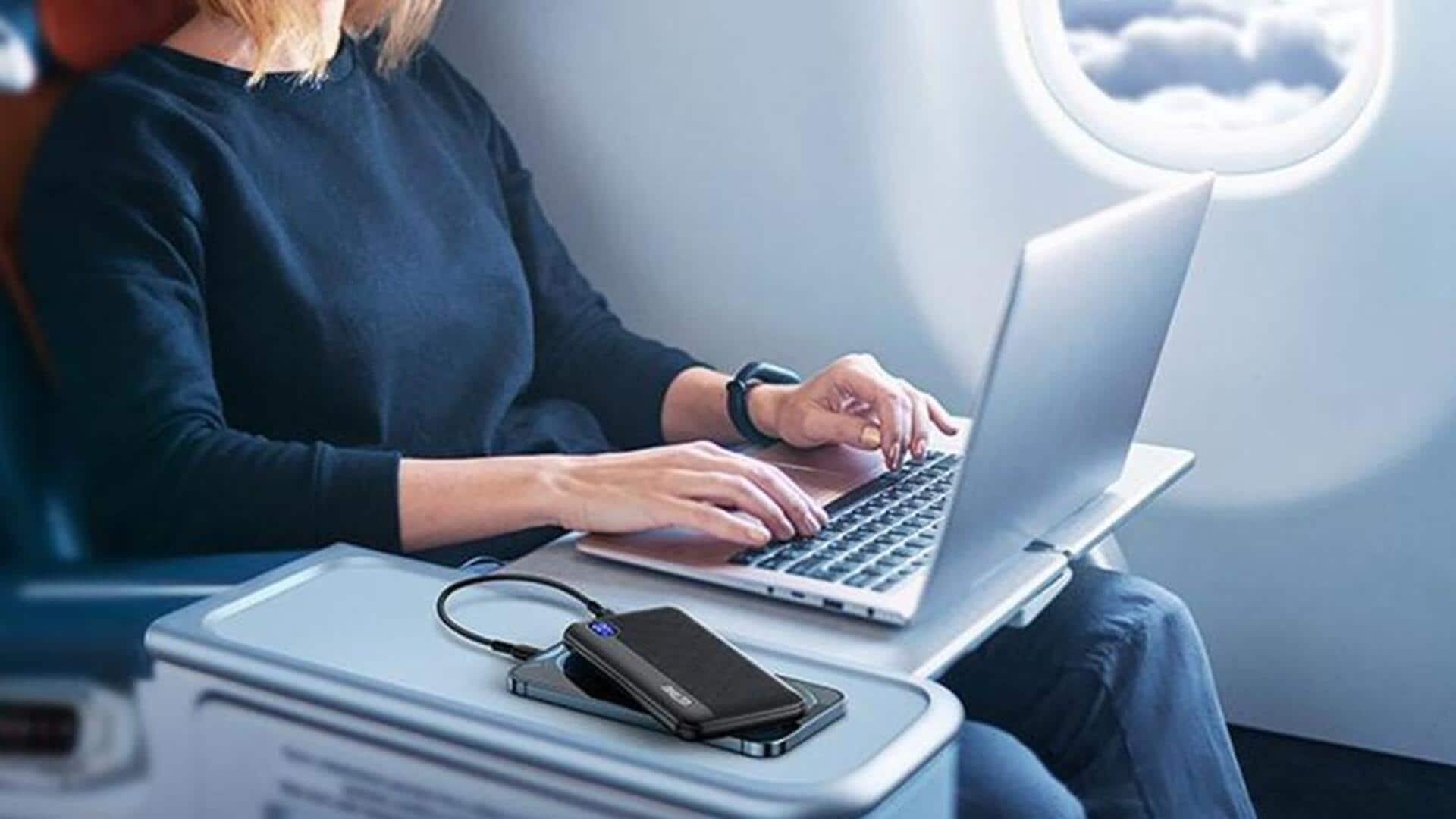
India's aviation regulator, the Directorate General of Civil Aviation (DGCA), has banned the use of power banks for charging on flights. The new rule prohibits charging power banks in-flight or using them with in-seat power systems. The decision comes after a series of incidents worldwide involving lithium batteries overheating or catching fire.
Safety measures
DGCA's advisory on power banks
In November, the DGCA issued a 'Dangerous Goods Advisory Circular,' banning the use of power banks for charging phones or other devices on flights.
The advisory said that power banks and spare batteries should only be carried in hand luggage and not kept in overhead compartments.
Passengers are also prohibited from charging their power banks by plugging them into in-seat power supply systems.
Compliance requirements
Airlines and airport operators to follow DGCA's directives
The DGCA has directed airlines to report all lithium battery-related incidents to the aviation watchdog. It has also asked them to review their existing safety risk assessments for such batteries.
Passengers are advised to "immediately inform cabin crew if any device emits heat, smoke or an unusual odor."
Airlines must promptly report all safety issues and occurrences related to lithium battery incidents.
Safety instructions
DGCA's directives for airport operators
The DGCA has directed airport operators to display clear safety instructions and videos on risks linked to fire caused by lithium batteries at terminal entrances, check-in counters, security checkpoints, and boarding gates.
The regulator stressed that the widespread usage of lithium batteries in various rechargeable devices has led to an increase in their carriage by air.
Risk assessment
DGCA's concerns over lithium batteries
The DGCA circular further noted that power banks and similar devices containing lithium batteries can act as ignition sources and potentially initiate onboard fires.
It also highlighted that lithium batteries placed in overhead stowage bins or within carry-on baggage may be obscured, difficult to access, or not readily monitored by passengers or crew members.
This could result in delayed detection of smoke or fire and response actions, increasing the potential hazard to flight safety.
Training enhancement
DGCA emphasizes need for better crew training
The DGCA has also stressed on the need for better crew training to help them detect early warning signs such as overheating, smoke or flames from electronic devices.
They should also be made aware of the correct firefighting equipment as well as understand the risks of smoke inhalation.
The regulator has directed airlines to ensure adequate firefighting equipment and protective gear, which are readily accessible on board.