Pakistan to host 2028 WT20 WC: What about India's matches?
What's the story
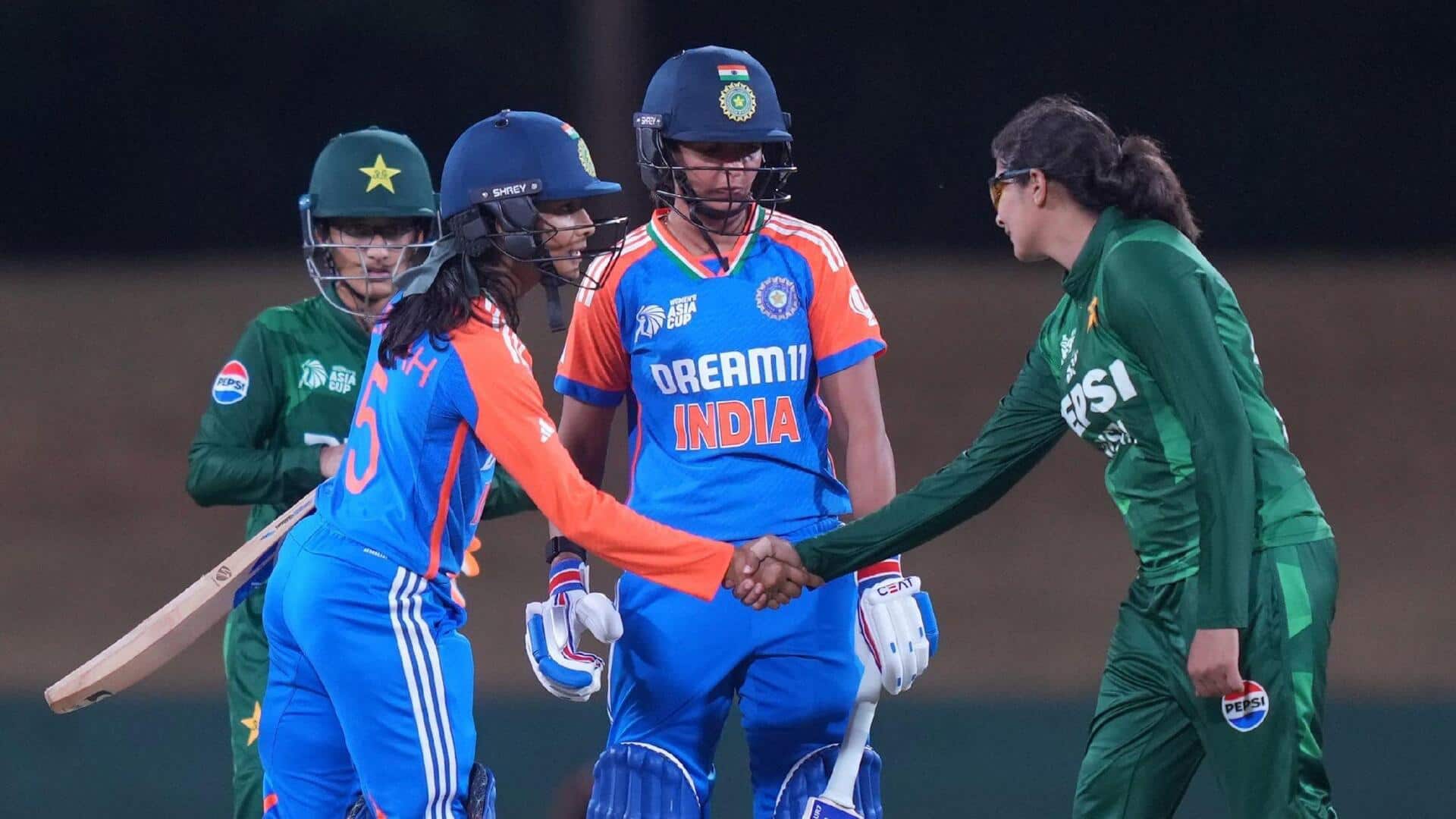
The International Cricket Council (ICC) has announced that India's matches in the 2028 Women's T20 World Cup will be played at a neutral venue. The tournament, which Pakistan will host, is set to follow a hybrid hosting model. This decision was taken during the recent ICC Board meetings in Ahmedabad. Notably, India and Pakistan have been playing each other at neutral venues due to the cross-border tensions.
Historical context
ICC's long-standing practice
The ICC's decision to host India's matches at a neutral venue is not new. This practice has been adopted for previous ICC tournaments, owing to strained relations between India and Pakistan that have prevented bilateral cricket for over a decade. The move is part of the governing body's efforts to maintain participation from both nations in major multi-nation events while avoiding cross-border travel issues.
Tournament structure
Format and qualification for the tournament
As per the ICC, the 2028 Women's T20 World Cup will have 12 teams, with 10 qualifying automatically. These include the top eight from the 2026 Women's T20 World Cup, host nation Pakistan (if not already qualified), and the next highest-ranked teams in the ICC Women's T20I Rankings as of July 6, 2026. The remaining two spots will be filled through a Global Qualifier tournament, with regional qualification allocations to be finalized in future ICC meetings.
Growth strategy
ICC's commitment to women's cricket
The ICC's decision to host the Women's T20 World Cup in Pakistan is a major boost for the country's cricketing stature. It also highlights the governing body's commitment to promoting women's cricket globally. Over the last decade, the ICC has expanded women's competitions, increased team participation, and created more qualification pathways for emerging nations.