US strike that killed 157 Iranians 'stemmed from AI overreliance'
What's the story
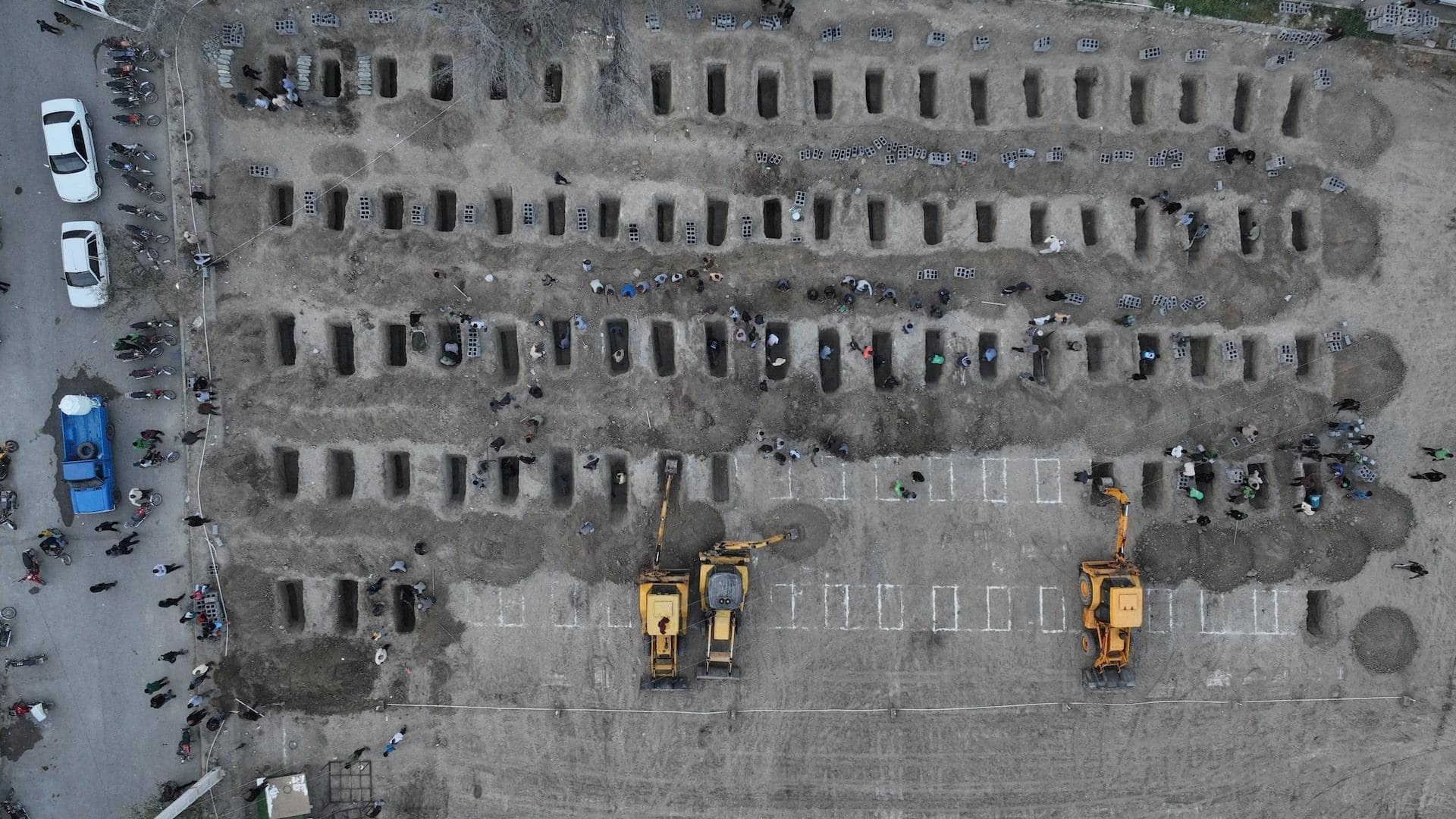
A US strike on a school in Iran's Minab city at the start of the war killed 157 people, including 123 children. Now, a Bloomberg investigation has found that the attack was the result of a series of failures involving outdated intelligence, old satellite imagery, and an overreliance on artificial intelligence (AI). The February 28 strike targeted Shajarah Tayyebeh Primary School on the first day of a US-Israeli military campaign against Iran.
Investigation findings
'Cascade of preventable failures'
The Bloomberg report, based on interviews with over two dozen US officials, described a "cascade of preventable failures."
According to the report and other previous reports, the school was once part of an Islamic Revolutionary Guard Corps (IRGC) military compound.
Commercial satellite imagery from 2017 showed walls and separate entrances distinguishing the school from the military facility.
Images from 2018 also revealed brightly painted walls, a football field, and markings consistent with children's activities.
Targeting process
Overreliance on AI
However, this crucial information was recorded in a system that was not connected to the primary military intelligence database used for targeting, keeping the main database outdated.
The report also looked into the role of the Pentagon's Maven Smart System, an AI-enabled platform by Palantir Technologies.
The system processes over 150 different data inputs to help military personnel analyze intelligence and identify potential targets.
AI
Palantir denied that its software was responsible
But some personnel at US Central Command apparently had too much confidence in the system, expecting it to detect inconsistencies or outdated information in the intelligence being supplied into it, the report said.
Palantir denied that its software was responsible for the strike.
A Palantir spokesperson told Bloomberg that the business was not responsible for the underlying data or for detecting intelligence flaws and that there was no proof that their software was to blame.
Rapid assault
Rapid pace of strikes
Since Trump's return to the White House, a Bloomberg investigation revealed that the US Defense Department has depended significantly on Maven, making it a cornerstone of the US military apparatus.
Per reports, several former senior US military personnel are now apparently working for Maven's parent company, with their role being to keep the software functioning inside secure military environments.
The report also noted that the Trump administration's demand for a major aerial assault left little time to finalize targets.
Civilian targeting
UN finds strike likely violated international law
Over 1,000 Iranian targets were hit within the first 24 hours of the war.
This rapid pace, coupled with outdated intelligence and changes in civilian-protection staffing, contributed to what investigators were examining as a breakdown in the targeting process.
The United Nations mission on Iran said there were reasonable grounds to believe the US was behind two military strikes on a school and sports facility in Iran, and that these constituted war crimes.