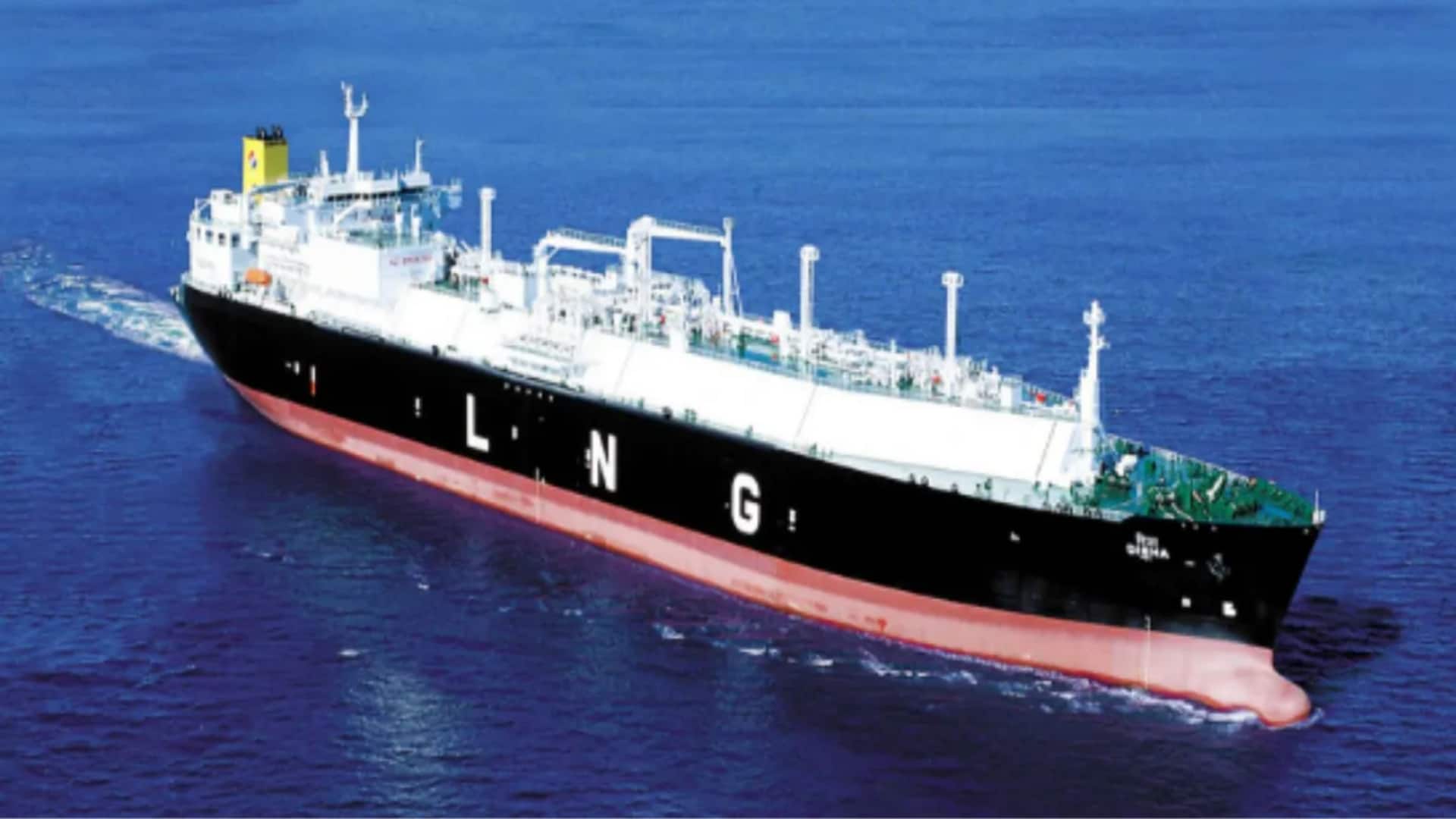
Passage of LNG carrier through Hormuz raises hope for India
What's the story
The successful transit of the Indian liquefied natural gas (LNG) carrier Disha through the Strait of Hormuz has raised hopes for 34 vessels waiting to sail toward India. The development comes shortly after the United States and Iran announced a peace agreement, easing concerns over maritime security. Disha is operated by the state-owned Shipping Corporation of India (SCI) and is carrying Qatari LNG cargo to Dahej, Gujarat.
Shipping prospects
Disha's passage brings optimism for India's shipping operations
The successful passage of Disha through the strategic waterway is being seen as a good omen for the 34 vessels awaiting clearance.
These include ships carrying essential commodities such as fertilizers and energy supplies to India.
Officials are hopeful that this development will restore confidence in shipping operations through the Strait of Hormuz, a crucial route for India's imports from West Asia.
Cargo impact
Fertilizer shipments stuck in Strait of Hormuz
According to a Times of India report, Shipping Ministry Director Opesh Kumar Sharma said that Disha had successfully transited the Strait of Hormuz carrying 62,370 tons of LNG cargo.
Among the 34 vessels, 16 key ships remain stuck in the strait.
Eight of them are carrying urea, four diammonium phosphate (DAP), three sulfur, and one ammonia.
The movement of these cargoes is crucial for maintaining domestic fertilizer supplies and bolstering agricultural inputs ahead of future demand requirements.
Energy concerns
Energy concerns may persist for India
Despite the positive development, officials warned that a resumption of shipping traffic may not immediately resolve India's energy concerns.
The recent US-Iran conflict has caused significant damage to critical energy infrastructure in the Gulf region.
India has a long-term gas supply agreement linked to QatarEnergy's Ras Laffan facility, making disruptions there particularly important for the country's energy security.
Infrastructure damage
Restoration of energy infrastructure in Gulf region underway
The conflict damaged two LNG processing trains at the state-owned Ras Laffan complex, reducing its production capacity by approximately 17%.
In the United Arab Emirates, the Habshan Gas Plant was also damaged. While about 60% of its capacity has been restored, recovery is expected to reach 80% by the end of 2026, and full structural restoration is targeted by 2027.
Energy reliance
India's reliance on energy imports from West Asia
India is heavily dependent on energy imports from West Asia. Before the conflict, it imported over 80% of its crude oil requirements, with nearly half sourced from the region.
More than 60% of India's LNG imports and a significant share of LPG supplies also passed through the Strait of Hormuz.