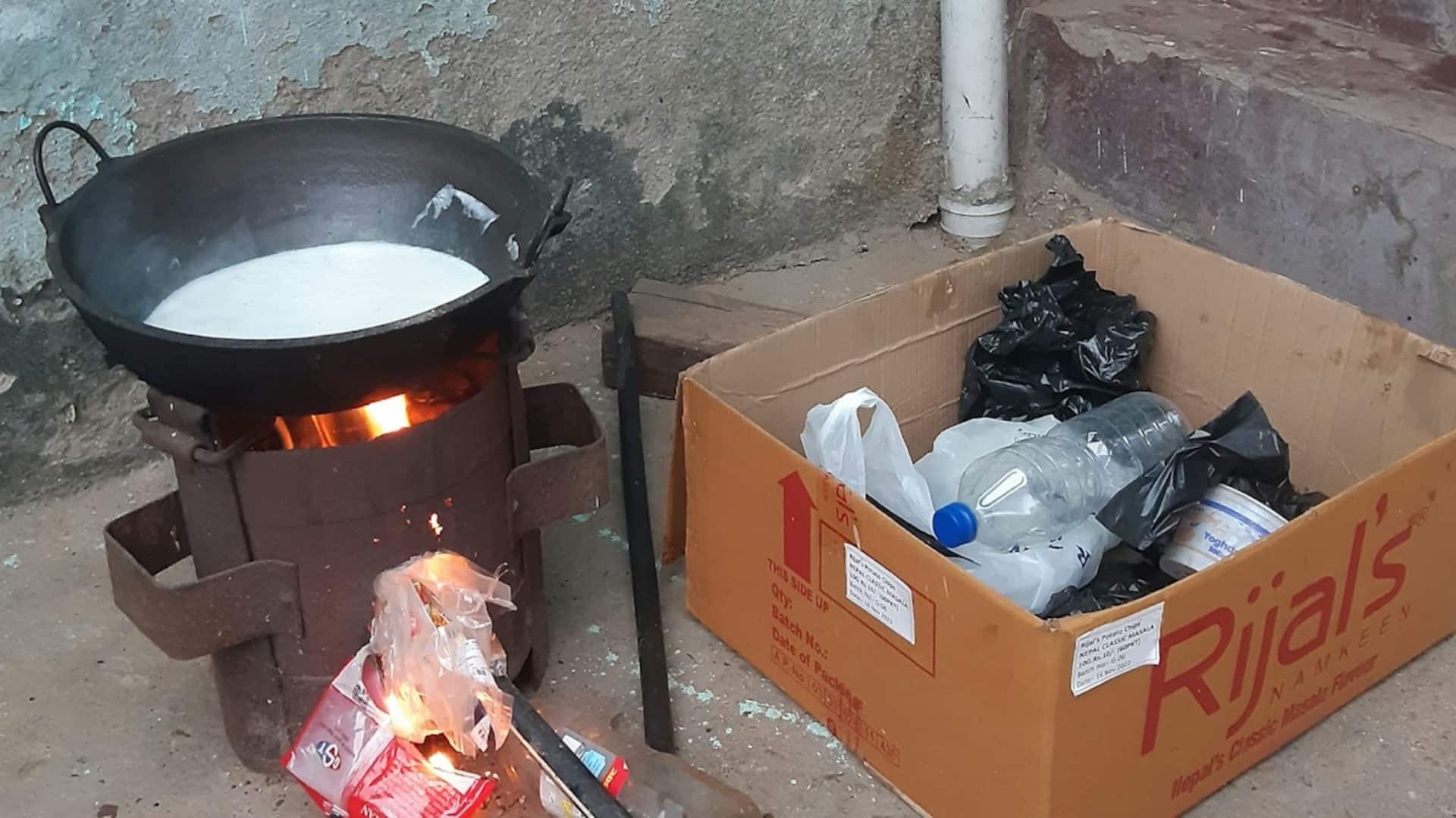
Widespread plastic waste burning creating hidden health crisis: Study
What's the story
A study conducted across 26 countries has revealed that the practice of burning plastic waste in households for heating and cooking is more widespread than previously thought. The research, published in Nature Communications, surveyed over 1,018 people in low- and middle-income countries, also known as the Global South. One-third of respondents were aware of this practice, while 16% admitted to doing it themselves.
Health hazards
Study highlights health and environmental risks of burning plastic
The study was conducted across Asia, Africa, Latin America, and Oceania.
It found that burning plastic "does not result solely from energy poverty, but also represents a vital informal solution in many settings to cope with...a high rate of mismanaged plastic."
The research highlighted health risks, such as toxic emissions inhaled in confined spaces and food contamination from burning plastics.
Waste management
Researchers call for improved waste management and education
The study's authors called for improved waste management programs and access to clean cooking fuels through subsidies.
They also suggested educational campaigns on the dangers of burning plastic and technology to reduce emissions from such practices.
Professor Peta Ashworth from Curtin University said this issue stems from "a confluence of issues," including vulnerability to afford clean cooking fuel and growing plastic pollution.
Rising pollution
Urgent action needed as global plastic waste surges
Dr Bishal Bharadwaj, the study's lead author and research associate at the University of Calgary, said the work provided broad global evidence on households burning plastic, including data that was previously lacking in accuracy.
Ashworth said, "As rapid urbanization continues to outpace the expansion of essential services in many regions, the urgency of implementing these measures will only intensify."
Meanwhile, the Organization for Economic Cooperation and Development (OECD) projects that global plastic waste will nearly triple by 2060.