How a Trump-Netanyahu call sealed Supreme Leader Ayatollah Khamenei's fate
What's the story
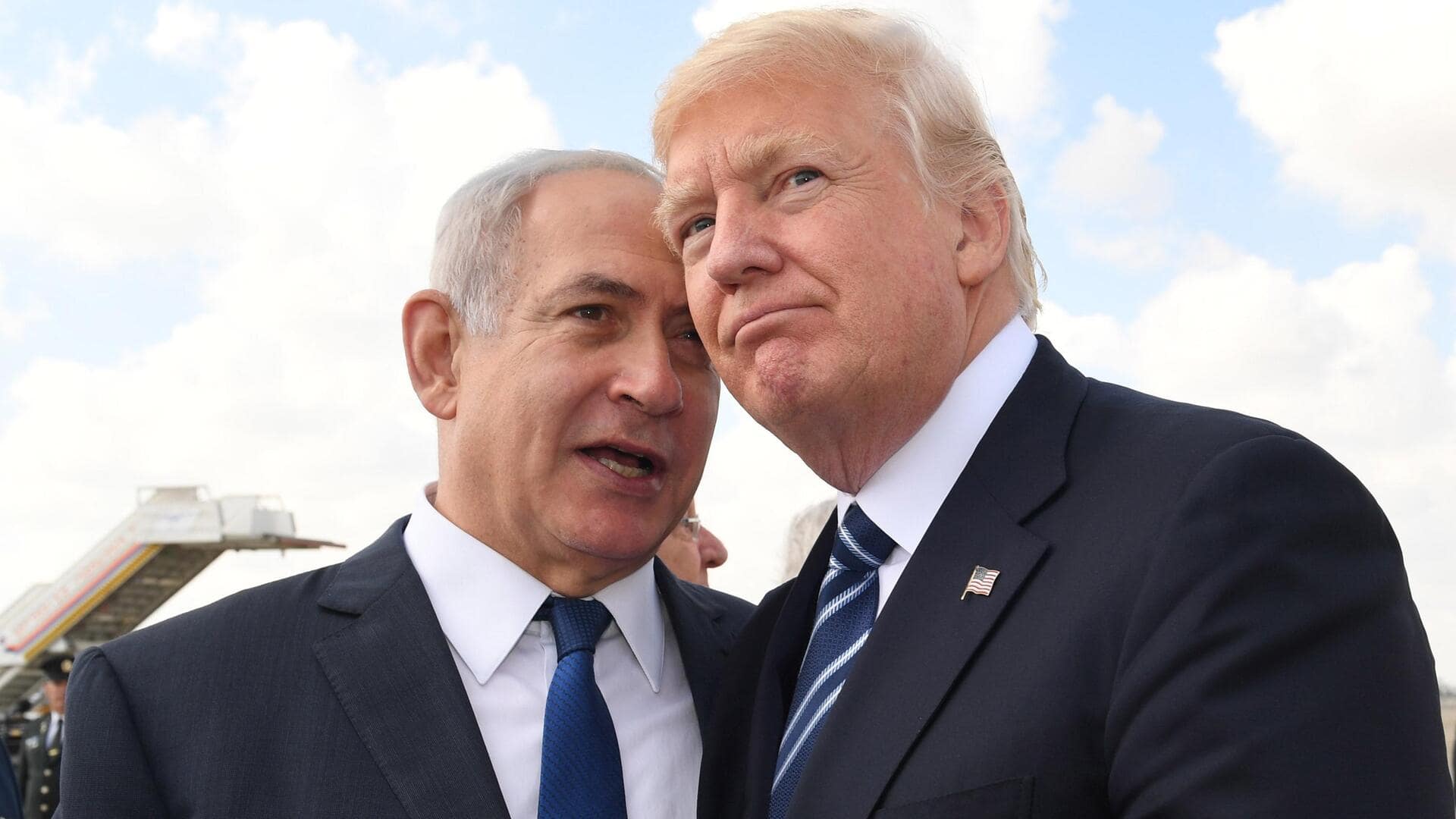
A recent report has revealed that United States President Donald Trump and Israeli Prime Minister Benjamin Netanyahu discussed a possible military operation against Iran. The phone call happened less than two days before the attack on Iranian Supreme Leader Ayatollah Ali Khamenei. Both leaders had intelligence reports suggesting a meeting of Khamenei and his key lieutenants at his Tehran compound, making them vulnerable to a "decapitation strike," an attack against a country's top leaders often used by Israelis.
Persuasive pitch
Netanyahu calls Iranian plots against Trump 'historic opportunity'
During the call, Netanyahu argued that this was a historic opportunity to eliminate Khamenei and avenge past Iranian plots against Trump.
He cited an alleged murder-for-hire plot by Iran in 2024 as a motive.
The US had been preparing for military action weeks before the call, with a buildup of forces in the Middle East.
This preparation led many in Trump's administration to believe an attack was imminent.
Military operation
Operation Epic Fury aimed to destroy Iranian regime
The first bombs hit Iran on February 28, killing Khamenei.
White House spokeswoman Anna Kelly said the operation aimed to destroy the Iranian regime's ballistic missile and production capacity, annihilate the Iranian regime's Navy, and end its ability to arm proxies.
Despite Trump's claims that he alone decided on the strike, a Reuters report suggests Netanyahu's arguments were persuasive.
Defense Secretary Pete Hegseth hinted that revenge was a motive behind "Operation Epic Fury."
Failed negotiations
Trump initially opposed military action against Iran
In 2024, Trump had campaigned for diplomacy with Iran but began considering military action after failed negotiations over Iran's nuclear program.
The US and Israel had previously attacked Iranian nuclear facilities in June, killing several leaders.
Netanyahu had initially planned to act alone against Iran, but later sought Trump's approval for another attack.
During a December visit to Mar-a-Lago, Netanyahu expressed dissatisfaction with the previous operation's outcome and discussed potential diplomatic talks with Trump.
Escalating conflict
US attack on Iran leads to devastating consequences
After the US attack, Iran retaliated against US targets and allies, resulting in over 2,300 civilian deaths and 13 American service members killed. The strikes also caused a historic spike in oil prices.
Trump hoped that killing Khamenei could lead to regime change in Tehran, but this was not supported by CIA assessments.
After Khamenei's death, his son Mojtaba was named the new supreme leader of Iran.