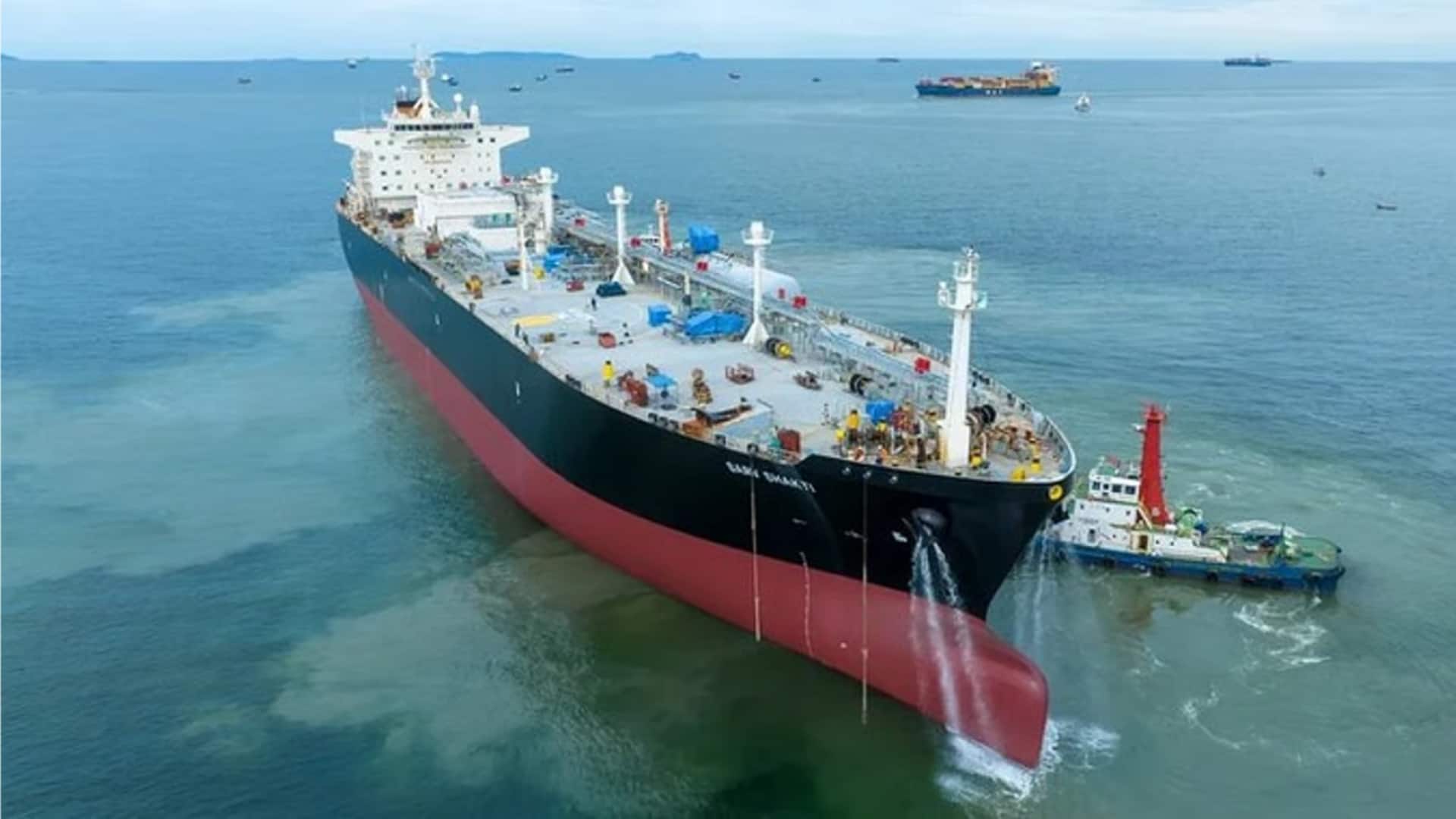
India-linked LPG tanker crosses US-blockaded Strait of Hormuz
What's the story
An India-linked tanker, the Sarv Shakti, has successfully crossed the Strait of Hormuz. The tanker was carrying around 45,000 tons of liquefied petroleum gas (LPG) and is headed to India, according to Bloomberg. This is the first such crossing since a United States-imposed blockade on vessels linked to Iran. The ship sailed past Iran's Larak and Qeshm islands before entering the Gulf of Oman on Saturday.
Cargo purchase
IOC listed as the buyer of the LPG cargo
The state-run Indian Oil Corporation (IOC) was listed as the buyer of the LPG cargo on board the Sarv Shakti, according to a shipping document.
The IOC has not yet commented on this development.
This crossing is significant as it comes amid efforts by India to bridge supply gaps left by Middle Eastern producers due to ongoing geopolitical tensions.
Supply security
India working to secure its LPG supplies
India, the world's third-largest oil importer and second-largest LPG consumer, has been working hard to secure its LPG supplies since the US and Israeli strikes on Iran began in late February.
The country has prioritized berthing and discharging for LPG carriers at its ports.
Despite these efforts, traffic through Hormuz has nearly come to a halt due to the blockade.
Production boost
India has ramped up domestic LPG production
To cope with supply shortages, India has ramped up its domestic LPG production by 60% to 54,000 tons.
The country's consumption has also decreased by 10,000 tons to 80,000 tons daily.
Oil Minister Hardeep Puri announced these figures on Friday.
Despite these measures, acute shortages of cooking fuel have led to panic among consumers in India.
Voyage information
Full transit through Hormuz usually takes 10-14 hours
The Sarv Shakti had entered the Persian Gulf in early February and received its LPG cargo through a ship-to-ship transfer off Dubai. However, the exact origin of this cargo remains unidentified.
A full transit through Hormuz usually takes about 10 to 14 hours, but electronic interference in the region can misrepresent a ship's position.
Some vessels may also go dark during transits to conceal their tracks.