
Iran: Protests boil over over currency's plunge to record low
What's the story
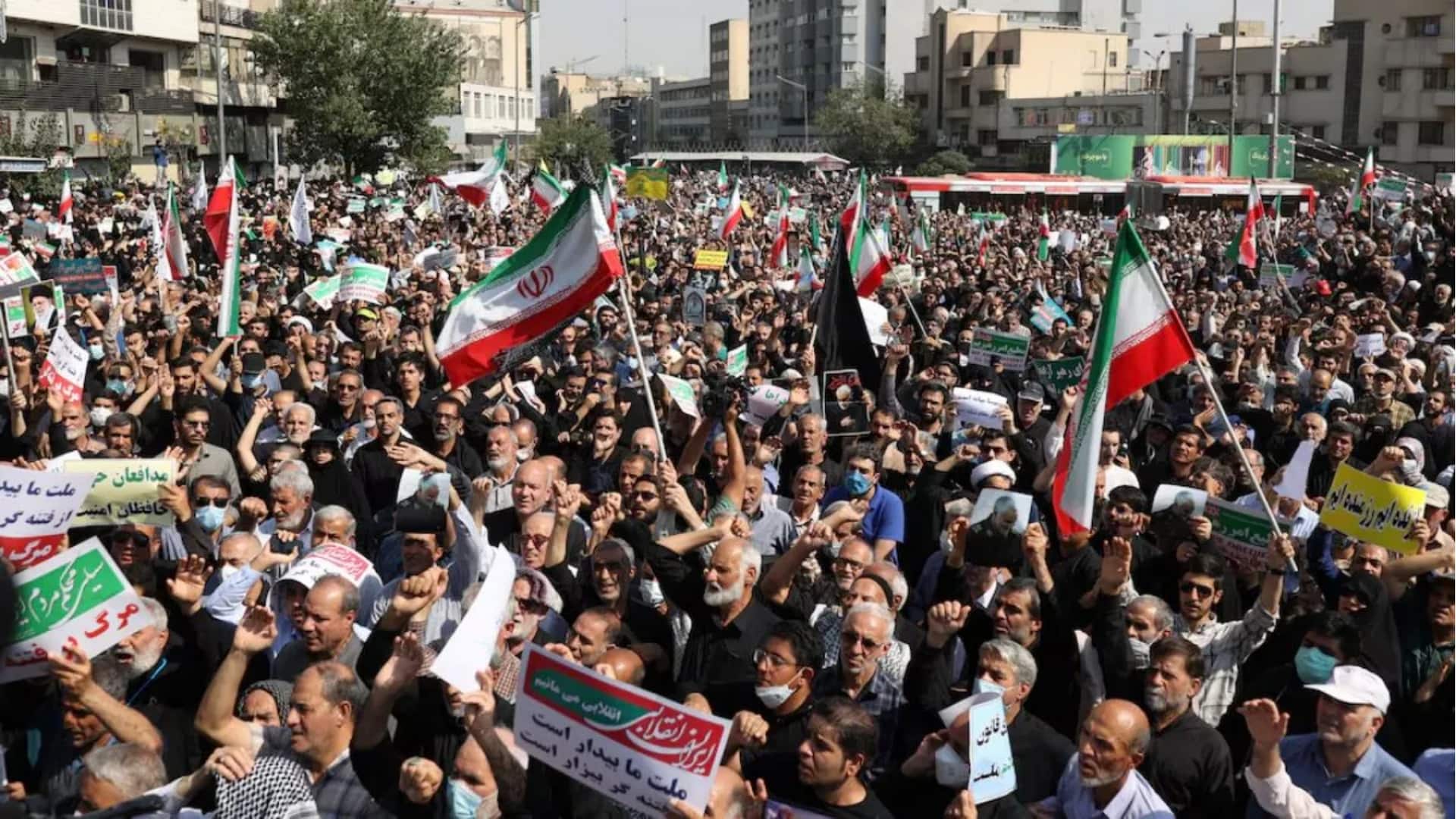
Iran has witnessed its largest protests in three years as the country's currency, the rial, plunged to a record low against the US dollar. The unrest was further fueled by the resignation of Mohammad Reza Farzin, head of Iran's Central Bank. The protests began on Monday with traders and shopkeepers rallying in Tehran's Saadi Street and Shush neighborhood near the Grand Bazaar, CNN reported.
Nationwide unrest
Protests spread nationwide amid economic turmoil
The protests have since spread to other major cities such as Isfahan, Shiraz, and Mashhad. In some areas of Tehran, police resorted to firing tear gas to disperse protesters. The demonstrations are reminiscent of the 2022 unrest triggered by Mahsa Amini's death in police custody. Witnesses said traders closed their shops and called on others to join them in a strike against the government's economic policies.
Economic impact
Currency crash intensifies inflationary pressure
The rial had fallen to 1.42 million rials per dollar on Sunday before slightly recovering to 1.38 million on Monday. When Farzin took office in 2022, the currency was trading at around 430,000 rials per dollar. The currency crash has intensified inflationary pressure across Iran's economy, with annual inflation rising to 42.2% in December from November levels. Food prices skyrocketed by a staggering 72% year-on-year, while health and medical costs increased by 50%.
Economic fears
Fears of hyperinflation and tax increases
Economists fear these trends could lead to hyperinflation, especially after recent gasoline price changes increased transport and living costs. Further anxiety has been fueled by reports that the government plans to raise taxes in the new Iranian year starting March 21. The protests are a stark reminder of how economic stress can act as a catalyst for broader political discontent in Iran.
External pressures
Sanctions and geopolitical tensions exacerbate economic decline
Iran's economic decline has also been exacerbated by external pressures. The rial traded at around 32,000 rials per dollar in 2015 when a nuclear deal lifted international sanctions on Iran. However, the deal collapsed after former US President Donald Trump withdrew from it in 2018. In September, the United Nations reimposed nuclear-related sanctions on Iran through a "snapback" mechanism, freezing Iranian assets abroad and halting arms transactions with Tehran.