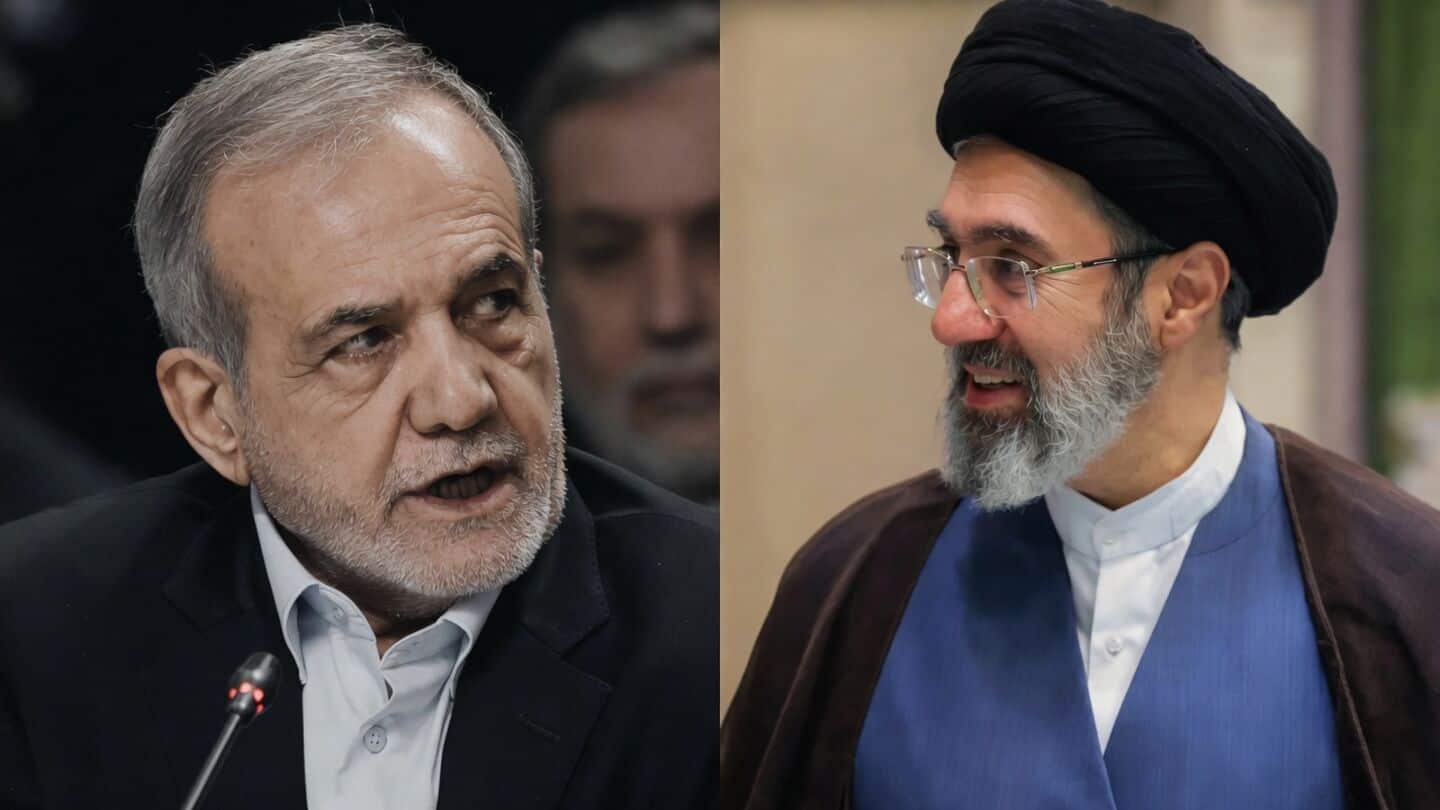
Iran's president claims communication with Mojtaba Khamenei becoming 'very difficult'
What's the story
Iranian President Masoud Pezeshkian has claimed that establishing communication with the country's Supreme Leader, Mojtaba Khamenei, has become "very difficult at the moment." The 56-year-old cleric was injured in a US-Israeli attack that triggered the Middle East war and has not been seen in public since taking over from his father, former Supreme Leader Ayatollah Ali Khamenei.
Public absence
Speculation surrounds Khamenei's absence
Mojtaba has communicated through written statements, but his public absence amid the ongoing conflict with the United States has sparked speculation about his relations with other top officials.
He also skipped his father's funeral ceremonies last month.
Despite this, Pezeshkian insists that Mojtaba remains a key player in Iran's response to the conflict.
"It is very difficult to communicate with him...but in any case, his presence is....great source of strength for us so that we can continue," Pezeshkian said.
Defense stance
Pezeshkian defends leader amid reports of ultimatum
Pezeshkian also claimed that he had productive meetings with him and was met with "kindness and very sound logic."
"Unfortunately, the current situation allows some malicious people to describe him differently and to present a different image of him," he said.
The president's remarks come amid reports that Mojtaba has given a "final ultimatum" to him and backed Islamic Revolutionary Guard Corps (IRGC) Commander Ahmad Vahidi on key decisions regarding negotiations and conflict.
Policy impact
Israel report highlights strained relations between Pezeshkian and Khamenei
Israeli broadcaster Channel 14 reported that Mojtaba has taken away Pezeshkian's main political leverage by refusing to discourage another resignation attempt.
The report said that Pezeshkian had threatened resignation during policy disagreements and formally sought to resign in May, alleging his administration was sidelined from national security and foreign policy decisions.
Khamenei's position indicates full alignment with Iran's military establishment, leaving Pezeshkian little room to influence strategic policymaking, Channel 14 reported.