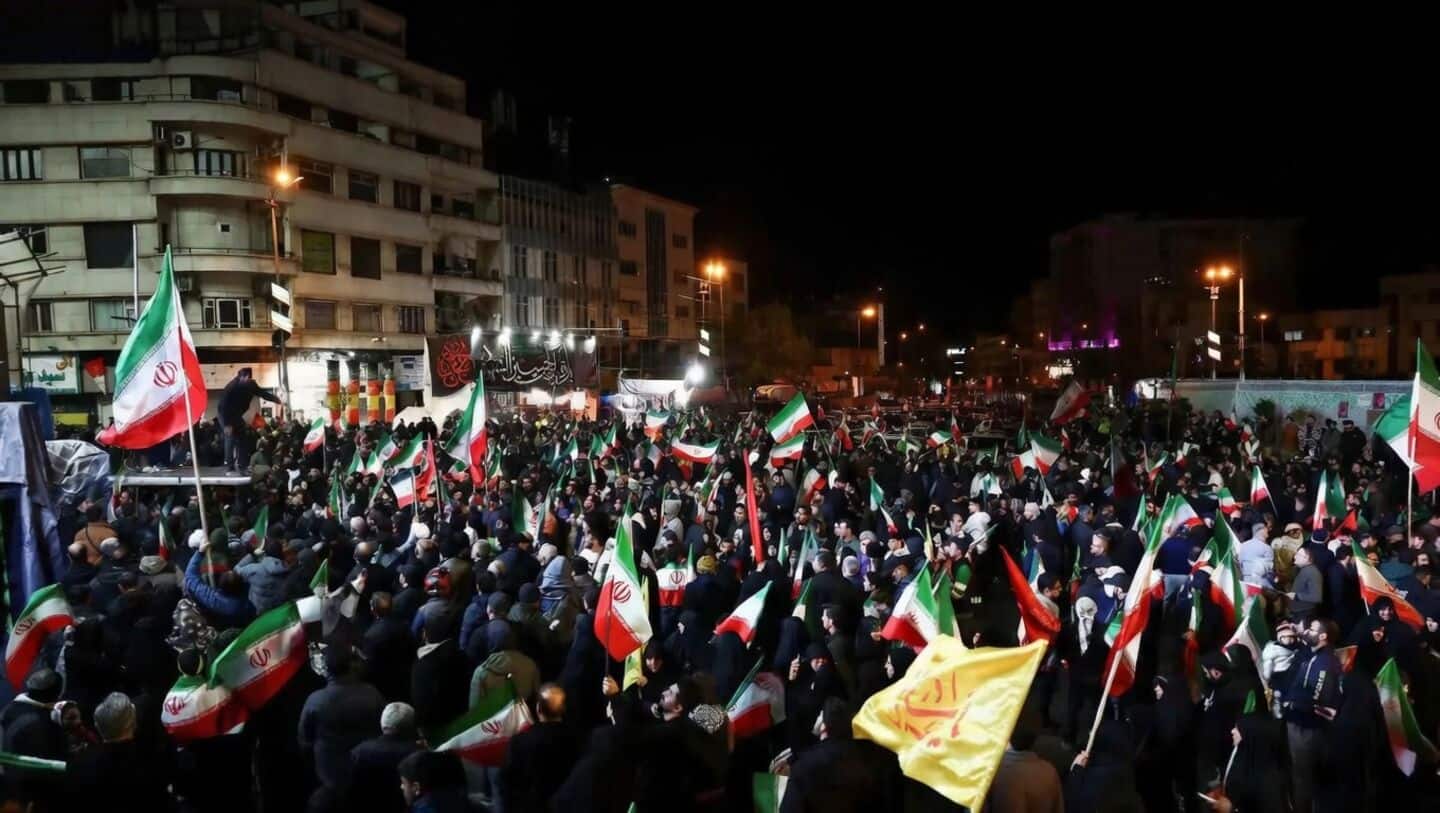
Inside the negotiations that led to US-Iran truce deal
What's the story
Iran's Supreme Leader Mojtaba Khamenei instructed his negotiators to move toward a deal, an Israeli official, a regional official and a third source with knowledge on the matter told Axios. The development came as US President Donald Trump issued an ultimatum threatening total annihilation. Axios reported that diplomatic momentum was building behind the scenes amid the threats with no clear indication of the outcome until a ceasefire was announced.
Military readiness
Preparations for massive bombing campaign on Iranian infrastructure
As the situation unfolded, US forces in the Middle East and Pentagon officials were preparing for a massive bombing campaign on Iranian infrastructure. A defense official described the atmosphere as wild, with uncertainty about Trump's next move. "We had no idea what was going to happen. It was wild," the official said. Regional allies were also bracing for unprecedented Iranian retaliation, while some civilians inside Iran fled their homes to avoid potential strikes.
Diplomatic tensions
Witkoff's criticism sparks chaotic amendments
By then, Iran had rejected the 15-point proposal the US sent, sending back its own 10-point proposal instead. On Monday morning, US envoy Steve Witkoff criticized the proposal, calling it a "disaster." This led to a chaotic day of amendments with Pakistani mediators passing new drafts between Witkoff and Iranian Foreign Minister Abbas Araghchi. Egyptian and Turkish foreign ministers also tried to help bridge gaps in negotiations. By Monday night, an updated proposal for a two-week ceasefire received US approval.
Leader's role
Khamenei's clandestine involvement and China's advice to Iran
Khamenei's involvement was reportedly clandestine and laborious due to an active assassination threat from Israel. He communicated through runners passing notes, with sources calling his decision to allow negotiators to cut a deal a "breakthrough." "Without his green light, there wouldn't have been a deal," a source said. Araghchi also played a central role in handling negotiations and pushing commanders from the IRGC to accept a deal. China also advised Iran to seek an off-ramp from escalating tensions.
Agreement reached
Pakistani PM publishes 2-week ceasefire terms on X
By Tuesday noon ET, there was a general understanding of a two-week ceasefire. Pakistani Prime Minister Shehbaz Sharif published the terms on X and called for acceptance from both sides. Per Axios, Trump received calls and texts from allies urging him to reject it but surprised many by accepting the ceasefire offer. Shortly after Trump's acceptance, US forces were ordered to stand down, with Iran agreeing to adhere to the ceasefire terms.
Ongoing negotiations
Uncertain future of the ceasefire and US demands from Iran
Trump said he had received Iran's 10-point proposal, which was a "workable basis on which to negotiate." However, the future of the ceasefire remains uncertain, with questions about how much shipping Iran will allow to resume and Netanyahu's adherence to the agreement. A senior Israeli official said Netanyahu was assured that the US would demand Iran give up its nuclear material and ballistic missile threat. JD Vance is likely to lead a US delegation at upcoming talks in Pakistan.