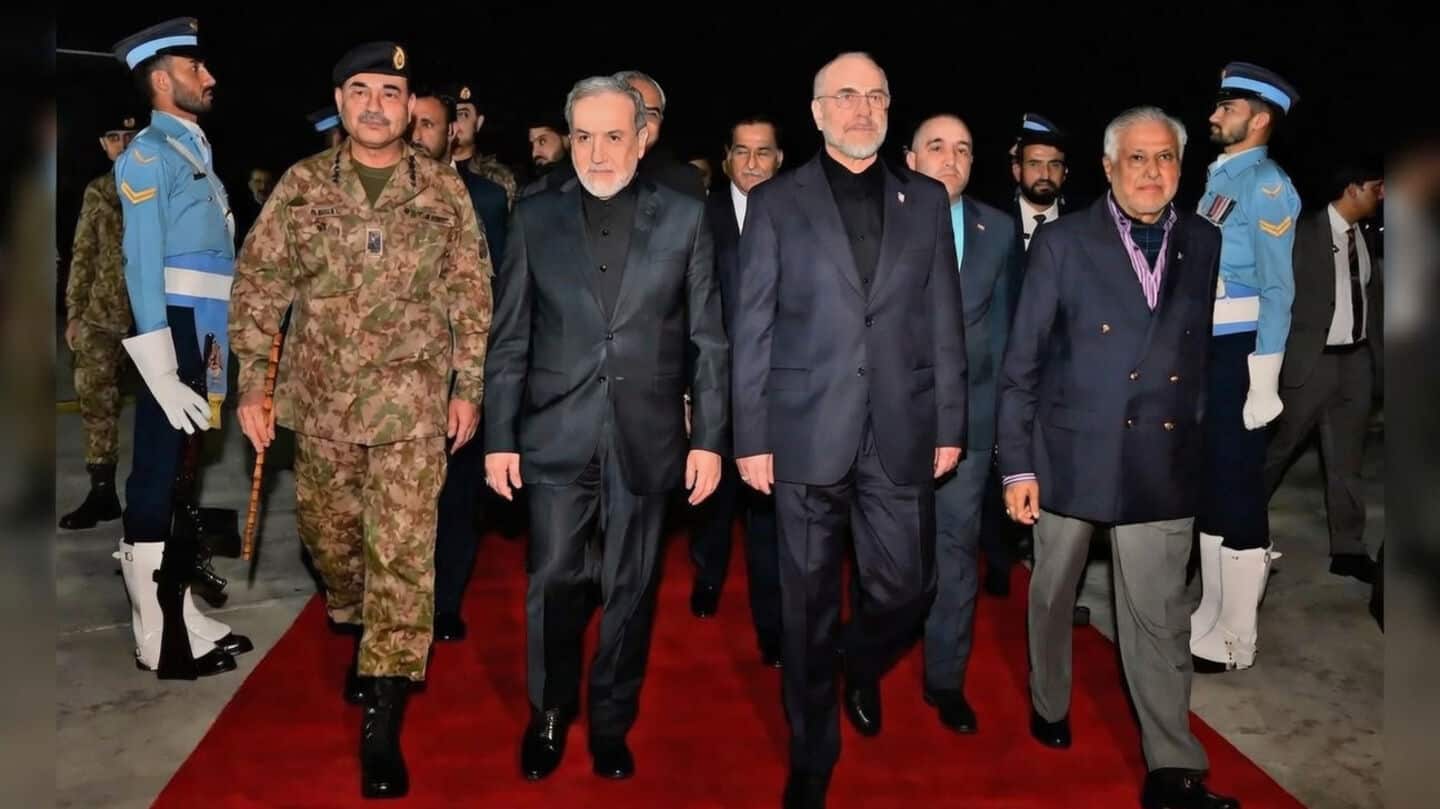
Iranian delegation claims they received attack threats during Pakistan visit
What's the story
The Iranian delegation has claimed that they received threats of an attack during their return journey from Islamabad, Pakistan, after unsuccessful peace talks with the US. The group included Foreign Minister Abbas Araghchi and Parliamentary Speaker Mohammad-Bagher Ghalibaf. Political analyst Mohammad Marandi, who also accompanied the Iranian delegation, said they switched planes mid-journey and traveled to Tehran by land due to heightened security concerns.
Security concerns
We received direct threats: Marandi
"We received direct threats while en route to Islamabad that our plane might be attacked," he told Al-Mayadeen.
He added that the group took precautionary steps on their return journey, including switching planes without public disclosure.
"As a result, on the way back to Tehran, the delegation secretly switched planes," he said.
The aircraft was later diverted to Mashhad for an unscheduled landing before members continued their journey to Tehran by train and bus.
US
'Always knew United States was deceitful'
Marandi told the Lebanese news outlet that Iran doesn't trust the United States, "and we are also being very busy preparing ourselves for the next round of war."
He said Iran "always knew the United States was deceitful," adding that its military is bolstering its capabilities "while we are at the negotiating table."
Diplomatic tensions
Backchannel efforts underway to revive negotiations
Despite the breakdown of talks, backchannel efforts are underway to revive negotiations.
Officials from Iran and Pakistan said both sides could return to Islamabad as early as this week.
A Pakistani official confirmed they received a "positive response" from Tehran for a second round of talks.
An Iranian embassy official in Islamabad said discussions could resume "later this week or earlier next week," but plans remain fluid.
The US has yet to confirm the plan.
Diplomatic history
First direct engagement between US and Iran
The failed negotiations were the first direct engagement between US and Iranian officials in over a decade. They were also the highest-level contact since Iran's 1979 Islamic Revolution.
The talks were held just days after a ceasefire announcement but failed to deliver a breakthrough.
Per reports, the main sticking point during the talks was over Iran's uranium enrichment.
While the US proposed a 20-year freeze on Iran's uranium enrichment, Tehran was only willing to commit for five years, WSJ claimed.