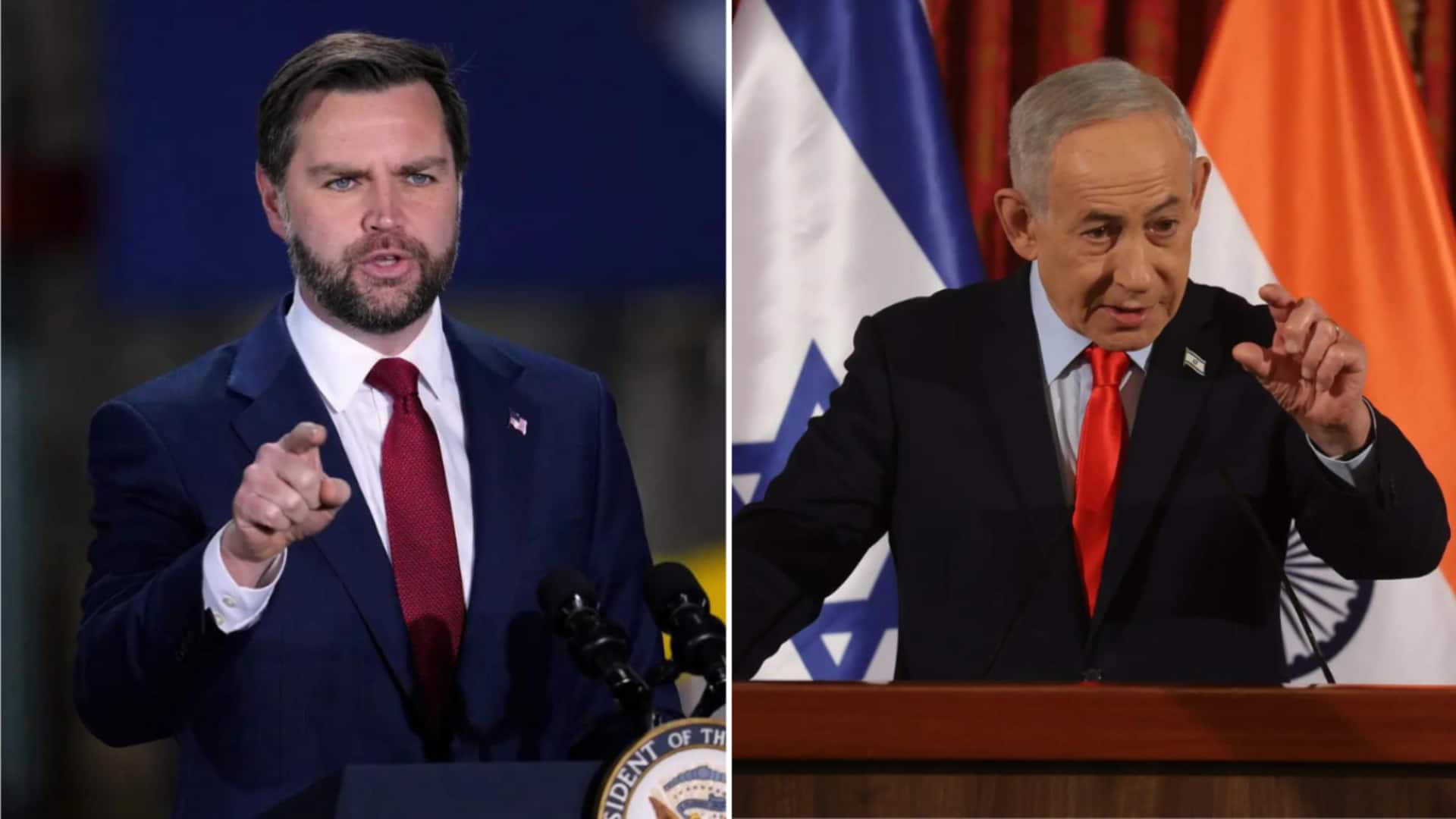
Netanyahu's call to Vance derailed Iran-US talks, Tehran alleges
What's the story
The United States and Iran failed to reach an agreement after nearly 21 hours of negotiations in Islamabad. The talks, mediated by Pakistan, were aimed at resolving tensions between the two nations. However, both sides blamed each other for the failure. US Vice President JD Vance, who led the American delegation, said Iran rejected Washington's "final and best offer." On the other hand, the Iranian side has blamed a phone call from Israeli Prime Minister Benjamin Netanyahu for "sabotage."
Disruption claim
'Netanyahu's call to Vance shifted focus to Israel's interests'
Iranian Foreign Minister Seyed Abbas Araghchi alleged that a phone call from Israeli PM to Vance during the talks diverted attention from US-Iran negotiations to Israel's interests.
He said, "Netanyahu's call to Vance during the meeting shifted the focus from US-Iran negotiations to Israel's interests."
Iranian President Masoud Pezeshkian praised Iran's negotiating team in his post, including parliamentary speaker Mohammad Baqer Ghalibaf, for their efforts during the Islamabad talks.
Twitter Post
Iranian President's post on US-Iran talks
اگر دولت آمریکا دست از تمامیتخواهی بردارد و به حقوق ملت ایران احترام بگذارد حتما راههایی برای دستیابی به توافق پیدا میشود.
— Masoud Pezeshkian (@drpezeshkian) April 12, 2026
به اعضای هیئت مذاکره کننده به ویژه برادر عزیزم آقای دکتر قالیباف خدا قوت میگویم.
Iran's stand
Pezeshkian echoes Araghchi
Pezeshkian echoed Araghchi's view, stating that a diplomatic breakthrough with Washington is still possible if the United States abandons what he referred to as "totalitarianism" and acknowledges Iran's rights.
He added that under those conditions, "ways to reach an agreement will certainly be found."
Meanwhile, US President Donald Trump blamed Iran's refusal to abandon its nuclear ambitions for the failed negotiations.
Nuclear dispute
Trump blames Iran for failed negotiations
Trump wrote on Truth Social, "The meeting with Iran began early in the morning, and lasted throughout the night — Close to 20 hours...I could go into great detail, and talk about much that has been gotten but, there is only one thing that matters —IRAN IS UNWILLING TO GIVE UP ITS NUCLEAR AMBITIONS!"
The talks reportedly collapsed over disagreements on Iran's nuclear program, control of the Strait of Hormuz, and frozen Iranian assets.
Economic impact
Ceasefire collapse raises concerns over oil prices
The failure of the talks raises doubts about the fragile two-week ceasefire that had halted escalating hostilities.
While neither side has officially ended the truce, the US has announced a maritime blockade of Iran starting 2:00pm GMT, Monday.
The uncertainty over oil shipping through the Strait of Hormuz has raised concerns about energy prices.
Before the ceasefire on April 9, Brent crude had risen above $119 per barrel, its highest since the early stages of the Strait of Hormuz crisis.
Market reaction
Financial markets likely to react strongly
Financial markets across Asia are likely to react strongly when trading opens on Monday, with fears of disruption in the Strait of Hormuz pushing oil prices higher.
According to The Times of India, analysts warn crude prices could spike due to supply concerns, while equity markets in energy-importing economies may see broad sell-offs.