Pakistan among biggest nuclear threats to US: Intel chief Gabbard
What's the story
United States Director of National Intelligence Tulsi Gabbard has identified Pakistan as one of the biggest nuclear threats to the US. In her testimony before the Senate Intelligence Committee, she highlighted that Pakistan, along with China, Russia, and North Korea, is developing advanced missile delivery systems with nuclear and conventional payloads "that put our homeland within range." She presented the 2026 Annual Threat Assessment, which predicts that by 2035 these nations will have over 16,000 missiles targeting America.
Missile developments
Pakistan's missile technology advancements
Specifically on Pakistan, she noted its progress in developing advanced missile technology that could potentially reach targets beyond South Asia, including the US.
In a broader threat assessment, Gabbard identified Al-Qaeda and ISIS as the most serious threats to US interests abroad, notably in Africa, the Middle East, and South Asia.
Strategic concerns
No formal nuclear weapons use policy
The report is concerning, as Pakistan's lack of a formal policy on nuclear weapons use gives it the flexibility to deploy them at any stage of a conflict.
This is in stark contrast to India's no-first-use policy.
Pakistan has not shied away from issuing nuclear threats in the past.
Last August, its Army Chief Asim Munir, openly said, "We are a nuclear nation. If we think we are going down, we'll take half the world down with us."
Missile arsenal
Pakistan's missile arsenal and potential threat to US
According to an Al Jazeera report, Islamabad has over 170 warheads in its arsenal.
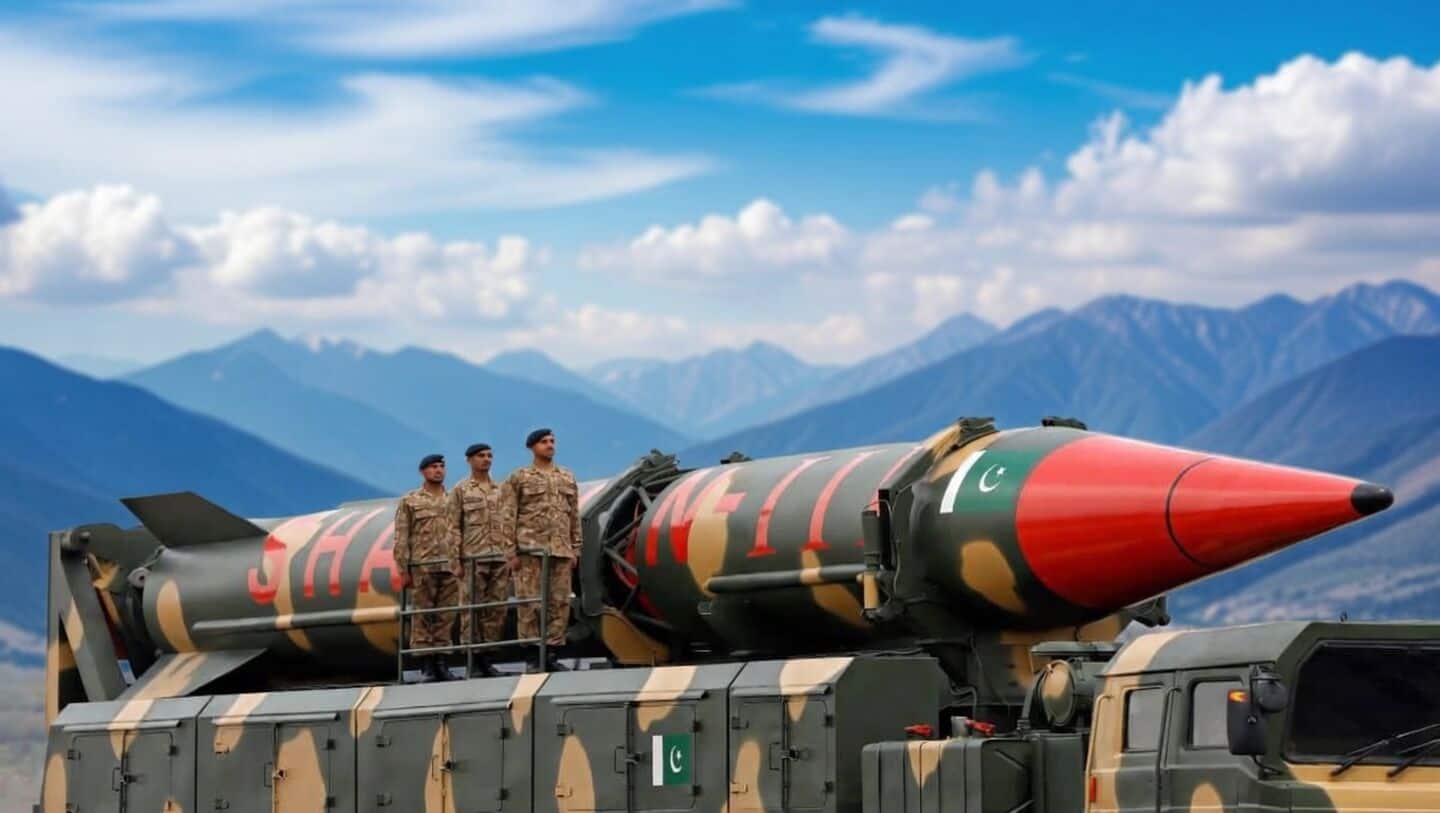
Its Shaheen-III missile has a range of 2,750km, which means it can reach all parts of India.
The Babur cruise missile and Fatah-II small-range ballistic missile add to this capability. According to TOI, Pakistan also possesses the nuclear-capable Abdali weapons system. This ballistic missile has a range of 450km.