Polar bear adopts orphaned cub, rare phenomenon observed in Canada
What's the story
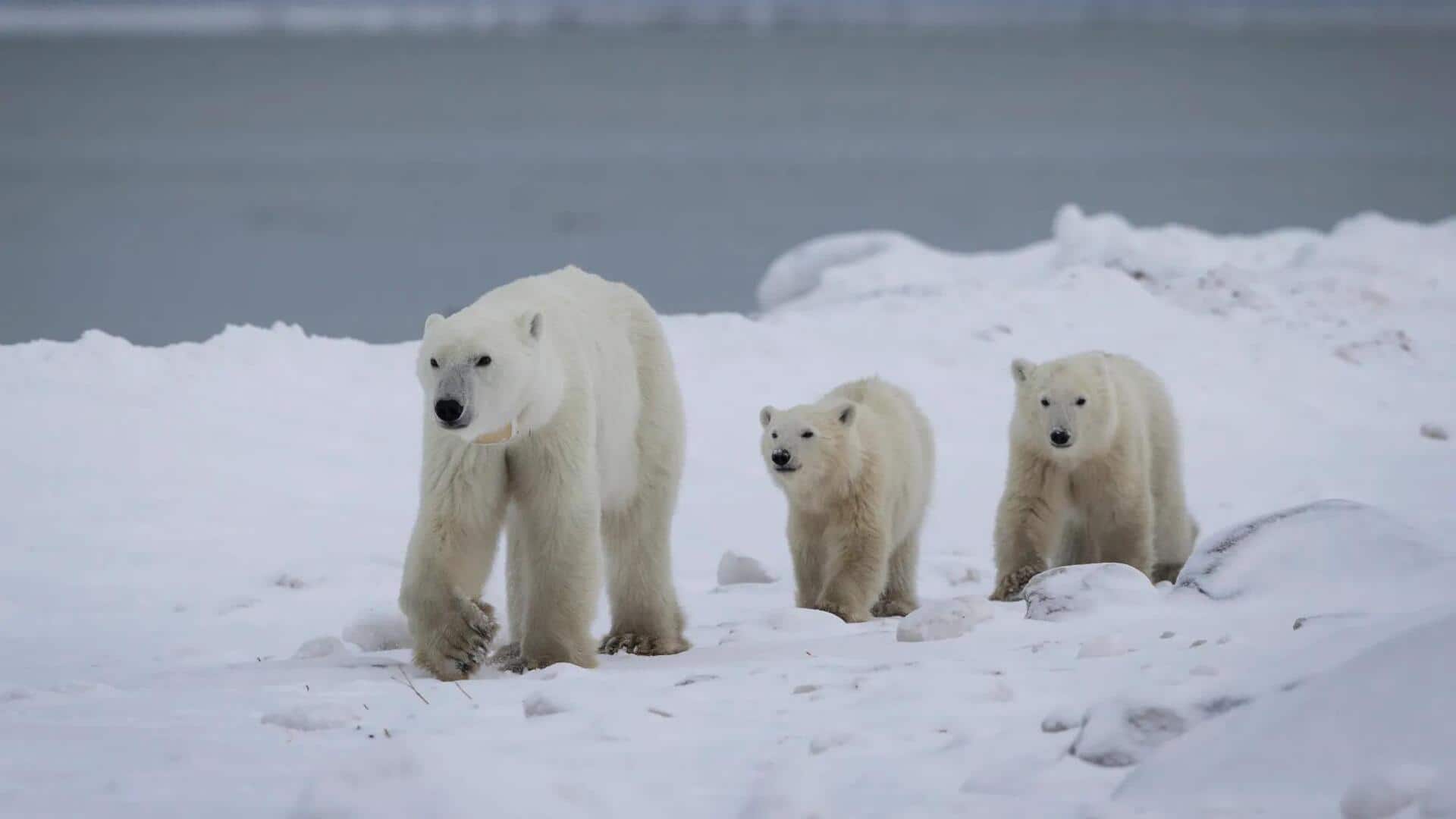
In a remarkable instance of "curious behavior," Canadian researchers have recorded a rare case of a female polar bear adopting an orphaned cub. The incident was first reported by Polar Bears International, a non-profit organization dedicated to the conservation of polar bears. The bear, identified as X33991, was initially found with one cub when scientists fitted her with a GPS collar in spring. However, last month she was seen with two similarly-aged cubs.
Expert insight
'These females just can't help themselves'
Evan Richardson, a research scientist with Environment and Climate Change Canada, explained that female polar bears are instinctively inclined to care for their offspring.
The Guardian quoted him saying, "We think if there's a little cub that's bawling on the coast and has lost its mother, these females just can't help themselves but to take them on and look after them."
Uncommon occurrence
Adoption is a rare phenomenon among polar bears
The adoption of an orphaned cub by a female polar bear is an extremely rare event.
Alysa McCall from Polar Bears International noted that this was only the 13th documented case of adoption among the 4,600 bears studied over 45 years.
"Polar bear adoptions are very rare and unusual and we don't know why they happen," she said.
Survival chances
The adopted cubs are expected to stay with their mother
The two adopted cubs, estimated to be 10 or 11 months old, are likely to remain with their new mother for another 1.5 years.
During this time, they will depend on her for hunting seals and learning survival skills in the Arctic environment.
Despite the harsh conditions that lead to high mortality rates among cubs (50% don't survive), having a mother significantly increases an orphaned cub's chances of survival.
Ongoing research
Researchers to study genetic samples of the cubs
Researchers are now planning to analyze genetic samples from the adopted cub to confirm if its biological mother is still alive.
In some past adoption cases, the biological mothers were found to be alive and a "switching of litters" had occurred instead of an orphaned cub being adopted.