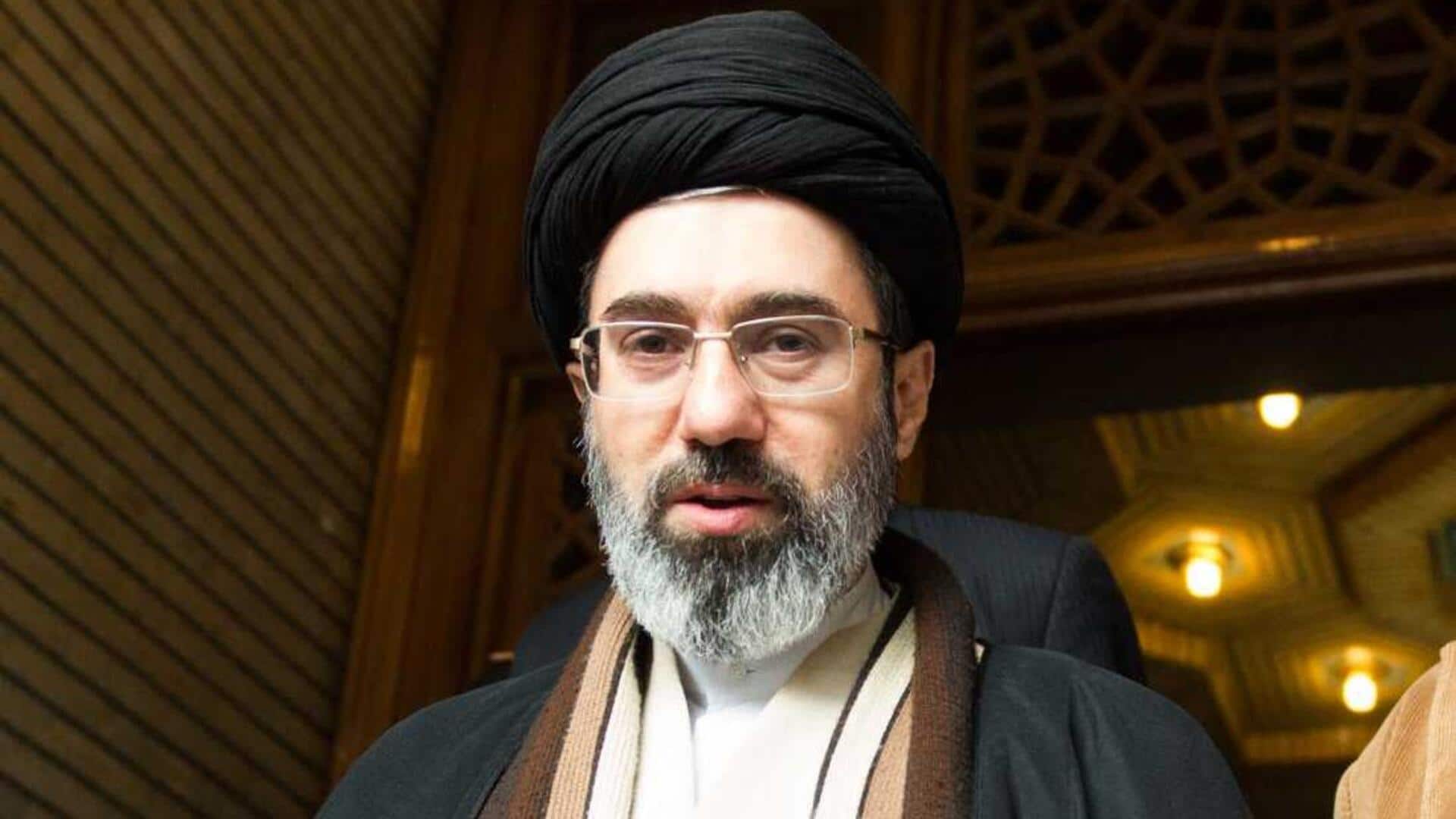
Hormuz Strait must remain closed: Iran supreme leader's first message
What's the story
In his first public statement since being appointed Iran's new supreme leader, Mojtaba Khamenei said the Strait of Hormuz shall remain closed as a "tool of pressure" against enemies. Read out by a state TV broadcaster, his message added that Iran would continue attacking its Middle East neighbors, warning that all US bases in the region must be shut down. This comes days after he succeeded his father, Ayatollah Ali Khamenei, who was killed in the US-Israeli strikes.
Retaliation and warnings
Khamenei vows to avenge blood of slain Iranians
Vowing to keep the Strait of Hormuz shut, Khamenei defied calls by US President Donald Trump, as well as the global markets, to open the key oil trade route.
"Certainly, the lever of blocking the Strait of Hormuz should still be used," he said. Khamenei has also vowed to "avenge the blood of Iranians" killed in US-Israeli attacks.
The supreme leader further advised Iran's neighboring countries to close all American bases, warning they would be attacked if they remained operational.
Escalating conflict
Iran vows to attack any ship that tries crossing Hormuz
Khamenei also warned Iran will attack any American, Israeli, or allied ship that dares to cross the Strait of Hormuz, through which one-fifth of the world's oil passes each year.
His statement came after the US-Israeli forces targeted street checkpoints of the Basij volunteer militia in Iran's capital of Tehran, intensifying fear among residents as the war escalates.
Meanwhile, the Israeli Defense Forces (IDF) also detected missiles launched from Iran toward Israel, with defense systems activated to intercept the threat.
Facility damage
Satellite images show damage at Iran's nuclear site
On the other hand, fresh satellite imagery has revealed damage at Iran's Taleghan 2 site at Parchin, a facility linked to its nuclear program.
This comes amid a series of attacks on ships in the Gulf region, with three vessels hit by "unknown projectiles" overnight.
The Islamic Revolutionary Guard Corps (IRGC) was reported to have been responsible for an attack on a US-owned vessel, Safesea Vishnu.
Financial toll
US war with Iran costs $11.3 billion so far
The first week of the war with Iran has cost the US around $11.3 billion, excluding the build-up costs ahead of strikes, according to officials.
The Gulf region has also witnessed a fresh spate of cargo ship attacks, with two tankers being hit near Iraq and a container ship near the UAE, leading to financial losses.
These incidents came as oil prices surged, nearing $100 per barrel. The blockade of the strait also affected supplies of sulfur and sulfuric acid.