Taliban legalizes domestic violence with certain 'conditions'; what are they
What's the story
The Taliban has reportedly legalized domestic violence against women and children in Afghanistan under a new criminal code. The 90-page code, approved by the group's supreme leader Hibatullah Akhundzada, permits husbands to physically abuse their wives and children as long as it doesn't lead to "broken bones or open wounds." The criminal code has outdated stipulations harking back to Islamic scripture, such as differing levels of punishment depending on whether the culprit is "free" or "a slave."
Legal implications
Maximum 15 days in prison for 'obscene force'
With clauses declaring that either "slave masters" or spouses can mete out arbitrary punishment to their wives, this legislation effectively puts women on par with "slaves."
The code prescribes a maximum of 15 days in prison for "obscene force," like visible fractures or injuries, if the wife can prove her case in court.
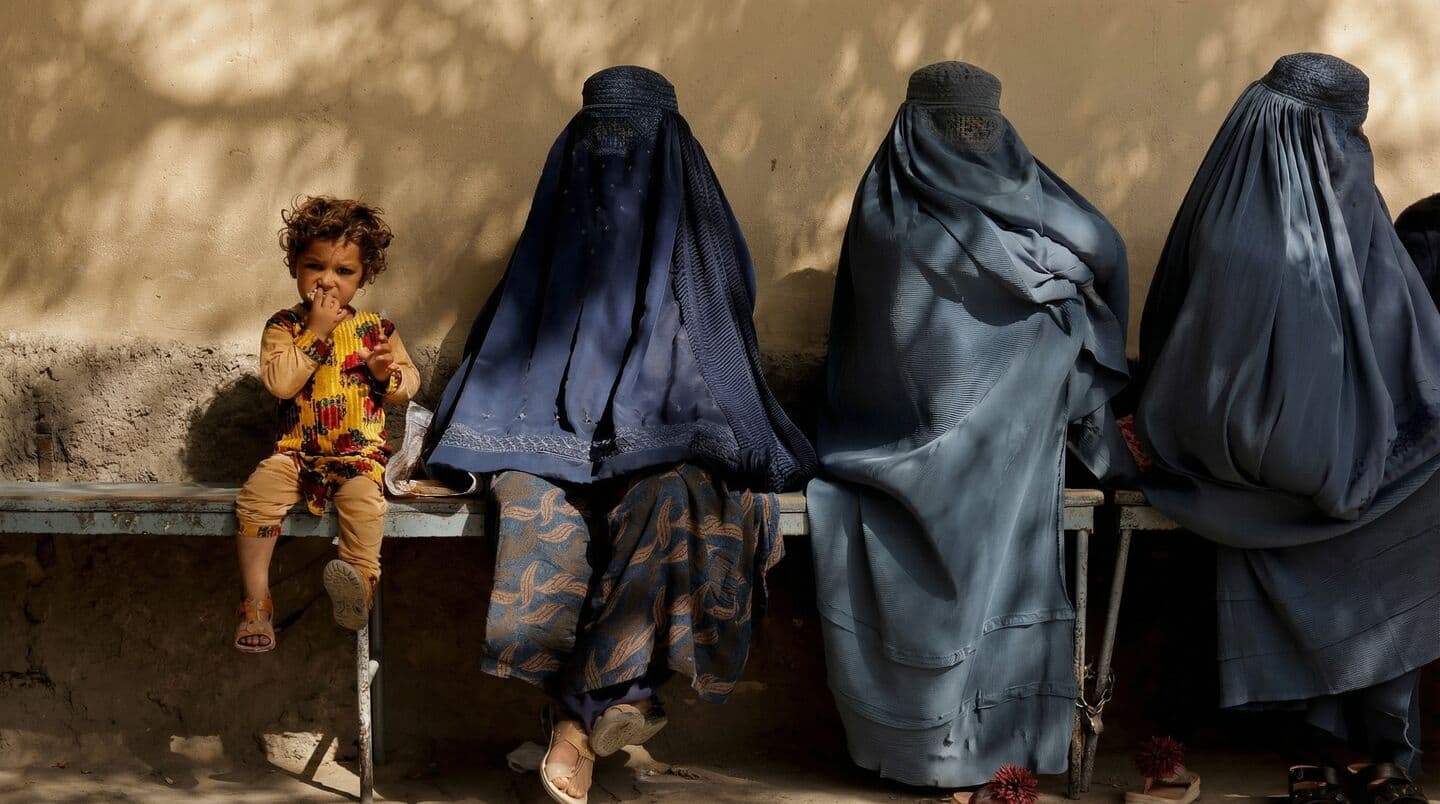
This is nearly impossible, as women must be fully covered in public and must appear in court with a husband or male chaperone, usually the abuser himself.
Legal erosion
Women can be imprisoned for visiting relatives
The new code also allows a married woman to be imprisoned for up to three months if she visits relatives without her husband's permission, even if she's fleeing violence.
This development effectively treats wives as their husbands' "property" and removes previous legal protections like the Elimination of Violence Against Women (EVAW) law enacted in 2009 by the former US-backed regime.
The EVAW law had strict punishments for forced marriage, rape, and other forms of gender-based violence.
International outcry
Human rights group demands immediate halt to new penal code
Exiled human rights group Rawadari has slammed the new penal code, saying it legitimizes "abuse, maltreatment, and punishment" of women and children.
The group has demanded an "immediate halt" to the implementation of this law in Taliban courts and called on the international community to stop it from taking effect.
Since returning to power in 2021, the Taliban has progressively restricted women's rights.
Religious discrimination
Code intensifies persecution of religious minorities, especially non-Hanafi Muslims
The new legal framework also intensifies the persecution of religious minorities by declaring non-Hanafi Muslims as "heretics."
About 15% of Afghanistan's 42 million population are not Hanafi Muslims, including Jafari Shias, Hindus and Sikhs.
The code has drawn criticism online, prompting the Taliban to issue a separate ruling that even discussing it is an offense.
Shaharzad Akbar from Rawadari said this system creates a caste hierarchy where punishment depends on social status rather than crime severity.