Trump's Board of Peace unveils $2.45 billion Gaza plan
What's the story
The United States President Donald Trump's Board of Peace has unveiled a $2.45 billion recovery plan for Gaza. The announcement was made during a meeting on the sidelines of the United Nations General Assembly. The funding will be allocated to 66 programs over six months, focusing on housing, diesel generation, waste removal, and other essential needs in the war-torn region.
Funding gap
Funding shortfall hampers reconstruction efforts
Despite the $2.45 billion announcement, the Board of Peace admitted that it still needs substantial donations to reach its goal.
While $18 billion has been pledged, only $280 million has been received so far. The board estimates that full recovery and reconstruction will require about $71 billion over the next decade.
No date was also set for when reconstruction in Gaza will begin.
Stalemate
Board of peace formed under Trump's Gaza peace plan
The Board of Peace was established as part of Trump's 20-point Gaza peace plan, which he announced with Israeli Prime Minister Benjamin Netanyahu last September.
The plan's key sticking point has been the disarmament of Hamas, which has agreed to give up its weapons in exchange for a phased Israeli troop withdrawal from the 60% of Gaza currently occupied.
However, Israel insists on full disarmament before any pullout.
Aid progress
Challenges remain for reconstruction and recovery
US envoy Steve Witkoff said "real progress" has been made over the past year, citing the return of hostages and ongoing humanitarian efforts.
However, violence continues with near-daily Israeli strikes, and living conditions for the 2.1 million people living there remain deplorable.
The plan also faces challenges such as ensuring security for those operating in Gaza and finding consensus between Israeli and Palestinian officials.
Recovery hurdles
UN estimates over 60 million tons of rubble in Gaza
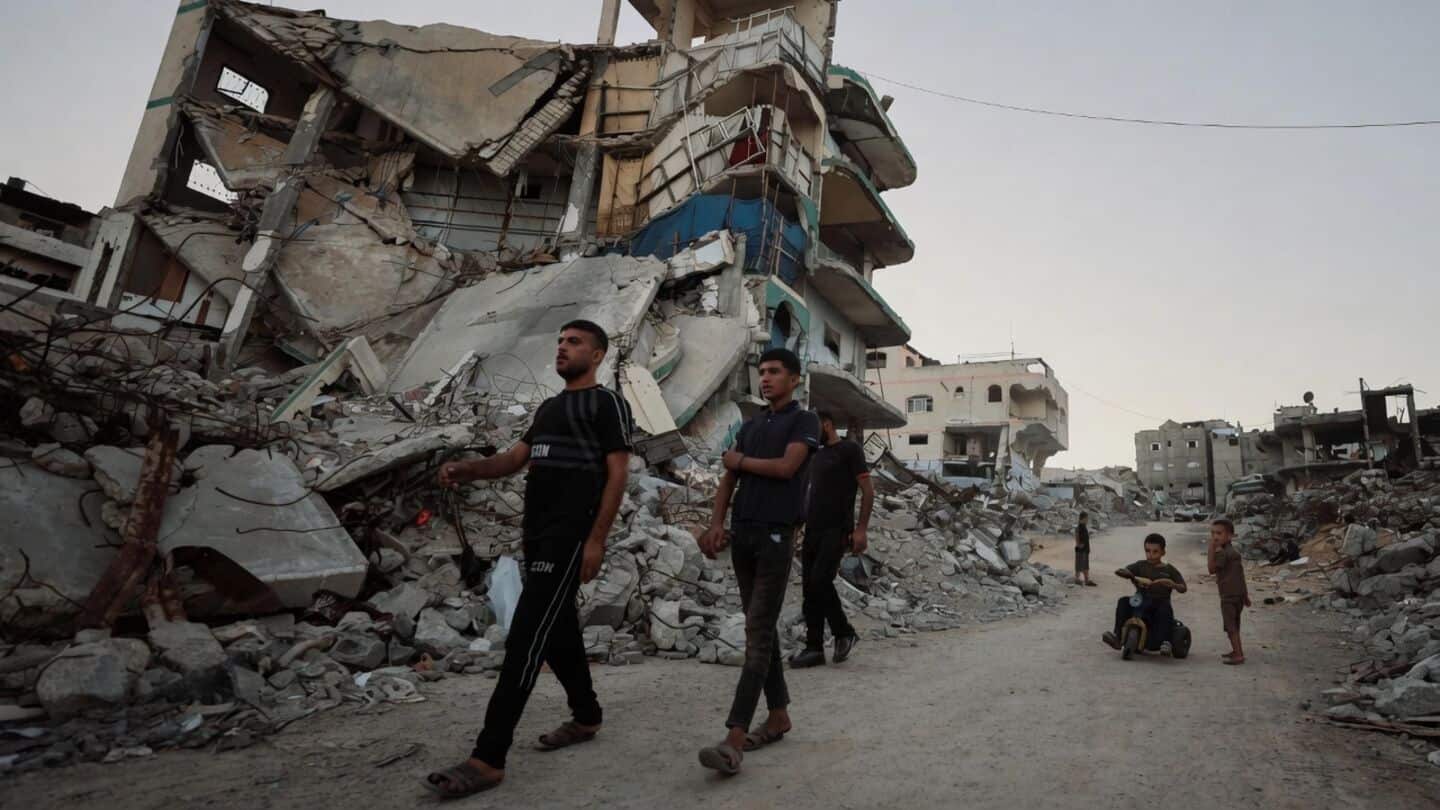
The UN estimates that 80% of structures have been destroyed or damaged during the war, leaving over 60 million tons of rubble.
More than 1.9 million people, or over 90% of the territory's population, have been displaced, many of them many times, the UN said.
Furthermore, 1.2 million are currently living in tents or improvised shelters with little access to clean water and sanitation.